Category Archives: Writing

Three Stories About Poop

Posted on

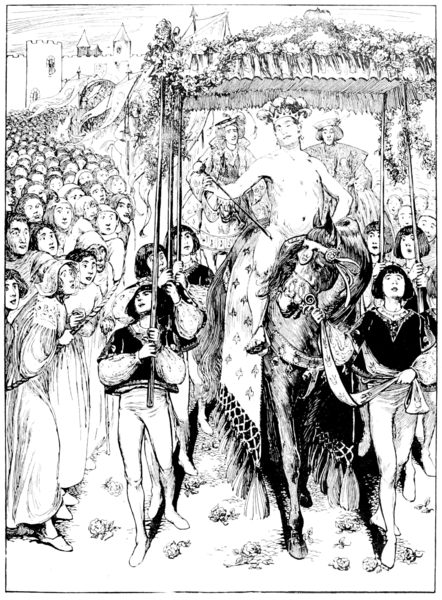
From an 1899 edition of The Emperor’s New Clothes, illustrated by Helen Stratton.

Today, I take a turn from the sacred and beautiful (kd lang, Leonard Cohen, Maya Lin, Pablo Neruda) to the profane and silly. It is time for a summer change of mood.

I have always loved Hans Christian Andersen’s The Emperor’s New Clothes. In my younger years, I identified with the child who cried out, when no one else would, that the Emperor was “wearing nothing at all.” Now that I am older, I sometimes still identify with the child who finds the b.s. absurd and sometimes with the naked Emperor—if only the world could see my finery even though it exists mostly in my mind, if only I didn’t wish to believe in a more wonderful version of things than what is true.

As a writer, I am always fascinated by the vagaries of human behavior, and the way that expectations interact with interpretations often rises to the top of the list. Saturday, when Bruce and I drove around Orlando doing errands, we stumbled into a set of humorously-themed reminiscences about this very thing and had a good laugh.

* * *

Much can be disguised with chocolate.

When I was growing up, we fortunately had lots of books around the house, and one story from one of these books came back to me when I was broken-hearted by a hapless fellow during grad school. I recalled the story from one of Willie Morris’s memoirs about growing up in Yazoo, Mississippi—probably his first, North Toward Home. Morris would later become well-known for his book and the subsequent movie My Dog, Skip, but even earlier he was fond of tales of rambunctious shenanigans from an earlier era. He particularly loved dog stories.

The vignette involved a schoolteacher or some other figure of authority who had punished Morris as a boy. He struck upon a perfect revenge, and wrapped up a beautiful package that he sent as a gift through the mail: he filled the pretty little box with dog shit from his faithful companion pet. Appropriate hilarity ensued.

I never acted on my own desire for revenge—such pranks are no longer considered harmless—but I spent a good bit of time fantasizing about taking cat turds out of the litter box with toothpicks, slicing them up, and dipping them in melted chocolate so they would look like fine homemade candies. I just knew that if I left a pretty box of these bon-bons on my ex-boyfriend’s front porch, he and his housemates would dig right in. This household of men-boys had several female “friends” who would leave homemade goodies and farm produce for them in a hippie-cool people-alternative culture version of the age-old adage that a way to a man’s heart is through his stomach.

Over and over, I imagined the horrified surprise on the faces of those guys—the way they would smugly accept the anonymous gift, thinking it their fine lot in life to have such offerings at their doorstep, how whoever found it would show it to the others and they would gather around for the greedy unwrapping, how they would ooh and ahh, and then one would reach out with his long fingers and pop a candy in his mouth. I even thought that perhaps I could make the turd bits small enough that it would take a few bites for reality to dawn.

Sometimes, even I, all Miss Genuine though I generally am, see the advantages in creating mistaken perceptions. This little idea made me laugh enough to get me through a tough time.

* * *

“It’s too big to be a dog’s.”

My step-granny’s face expressed genuine horror one morning when she returned from a short walk before breakfast. One summer week in the sleepy year before I finished high school and went off to college, Billie and my granddad were visiting from Middle Tennessee. She stood in the kitchen with her mouth open in disbelief.

“What’s wrong?” my father asked her.

It was as if she had lost the ability to speak. She started and stopped a few times. Finally, she shook her head, and said, “Well, I don’t know how to say this. But apparently someone—some person—has taken a crap right out in the middle of the street in front of the mailbox. It’s too big to be a dog’s. Who would do such a thing?”

“What on earth?” My father frowned and looked at my brother and me, as though we would know. Shocked horror went around the table. My brother and I were “good kids,” and we’d grown up in suburbia, not a Willie Morris small town.

“I didn’t know what to think,” Granny Billie said, her pretty mouth pursed. “I’ve never seen anything like that.” She shook her head. Since Billie was a nurse, we knew she had seen her fair share of human excrement and should be a good judge.

After breakfast, my father went out with a spade and bag to clean it up. He eventually returned to the house as stunned as Billie. “It looked as though someone just dropped it right there,” he told my mother in hushed tones.

The incident haunted us all for several days—a tiny bit like having a cross burned in your yard, I thought at the time. Who could hate us so much? Since we didn’t have any real candidates on a list of enemies that bitter, we speculated that someone else had been out walking and just had an overwhelming urge, barely getting their trousers down in time. But we couldn’t imagine that they’d leave it there or not at least dash behind some shrubbery. Billie quit taking morning walks, and we all stayed just a little closer to home, the mystery hanging in the air as thickly as any smell.

A few days later, however, we learned the truth—our neighbors the Griegers had just gotten a new German Shepherd after the death a few weeks earlier of old Blitz. The dog evidently was adjusting to a new diet with prolific poops and was still oriented toward using a paved kennel-floor for his business rather than woods and leafy ground.

The question remained, of course, why the Griegers, perfectly respectable folks who we knew quite well, had left it there. I have to say that we always wondered. I still do.

* * *

Since Marcel Duchamp’s 1917 Fountain, it’s hard to determine the bounds of art.


One semester when Bruce was living in New York city on a sabbatical from Augustana College where he taught, his friend Keith visited him from Alberta. They embarked on a tour of numerous art galleries, painting being Keith’s profession, and gallery walks being one of their favorite city activities.

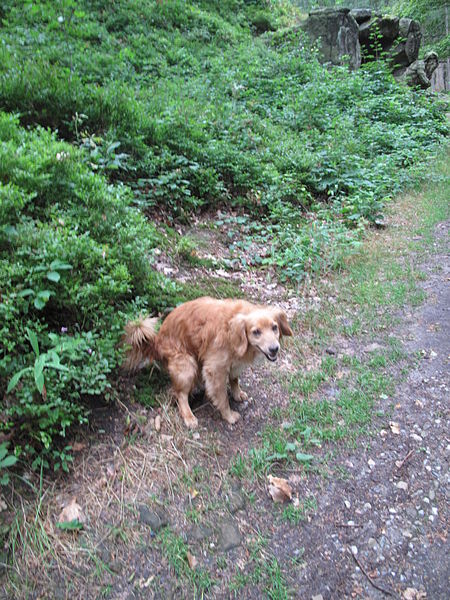
At one point, they stepped into a vast, echoing gallery space and began walking around. No one seemed to be there—not a gallery clerk in sight—but a large pile of what was apparently dog poop sat neatly in the middle of the floor, still seemingly steaming.

Bruce looked at Keith, and Keith looked at Bruce, and they both looked at the pile. There were several sculptures scattered about the room, and they looked to see if any of the others had kinetic properties such as steam or smell. They leaned over the pile to see if it might be made of anything but the real stuff.

Was it dog poop or was it art? They didn’t feel quite sure and laughed over the conundrum.

Soon enough, the gallery host returned to the room and came toward them with the usual slightly officious style. As he crossed the expanse of floor toward Bruce and Keith, his eyes encountered the pile, and he jumped back with a gasp.

“Oh, my,” he said, “how awful.” He ran to the back for a roll of paper towels and a mop.

* * *
Sometimes, I try to remember that even mis-apprehension can be productive, as long as it makes us wonder about the world around us. This week, I’m going to remember these stories and try to take a closer look around. Even though I am a devotee of something called “the genuine,” it is good to remember that it’s a wonderful and often hilarious part of life that things are not always what they seem to be.

“Poetry” by Pablo Neruda

Posted on

Poetry

And it was at that age … Poetry arrived
in search of me. I don’t know, I don’t know where
it came from, from winter or a river.
I don’t know how or when,
no they were not voices, they were not
words, nor silence,
but from a street I was summoned,
from the branches of night,
abruptly from the others,
among violent fires
or returning alone,
there I was without a face
and it touched me.

I did not know what to say, my mouth
had no way
with names,
my eyes were blind,
and something started in my soul,
fever or forgotten wings,
and I made my own way,
deciphering
that fire,
and I wrote the first faint line,
faint, without substance, pure
nonsense,
pure wisdom
of someone who knows nothing,
and suddenly I saw
the heavens
unfastened
and open,
planets,
palpitating plantations,
shadow perforated,
riddled
with arrows, fire and flowers,
the winding night, the universe.

And I, infinitesimal being,
drunk with the great starry
void,
likeness, image of
mystery,
felt myself a pure part
of the abyss,
I wheeled with the stars,
my heart broke loose on the wind.

(Translated by Alistair Reid)

I have borrowed the text of this poem from PoemHunter.com.

Rita Dove, Marjorie Perloff, and the Failure of Success

Posted on

The “Poem Tree,” carved in England by Joseph Tubbs in the 1840s.

I apologize for the length of this post, my longest one yet. Sometimes it takes longer to examine what’s underneath an argument than to make one in the first place. As long as this post is, I kept it relatively short by focusing on this latest attack on Rita Dove’s anthology rather than Helen Vendler’s earlier one in the New York Review of Books. Dove very handily dealt with Vendler already and she chose to address primarily the racism and mischaracterization exhibited by Vendler, rather than another subject that Vendler veils even more than Perloff but one they both must see as another key culprit in the inclusion of the “many, rather than, few” poets: the MFA program and the presence of creative writers within the academy. Scholars have lost this battle, and creative writing is now well established in academia, so it seems that subject has sunk just below the surface. But it is never far below, and I believe we still need to address it directly.

Everybody Is a Poet

You know something is really wrong when someone mourns the success of a field she purports to love. Maybe love is the wrong word, so let me rephrase. You know something is really wrong when someone mourns the success of a field she has made her life’s work. The first line of Marjorie Perloff’s recent “Poetry on the Brink” in the Boston Review is “What happens to poetry when everybody is a poet?”

First, you would think that all lovers of literature and the arts would be jubilantly celebrating in the streets. I mean, my god, the novel may be dead, and support for the arts may be at an all-time low, but EVERYBODY has become a poet!!! How grand and unexpected an outcome is that?

But, no, according to Perloff, the popularity of poetry is a bad thing that ensures its mediocrity, or, as she puts it, “moderation and safety.”

Now, let me back up a minute. Is it true even that everybody is a poet these days? Obviously, in any literal sense of the word “everybody,” this is ridiculously untrue. Perloff bases her sense that everyone is now a poet on numbers provided in a lecture by poet and University of Georgia professor Jed Rasula: colleges and universities now employ 1,800 faculty in graduate programs, and that is only at the 177 graduate-degree-offering ones of the 458 institutions that teach creative writing, which “swells” the number of faculty teaching creative writing (now not just poetry) to 20,000. OMG, in a nation of 312 million, there are 20,000 employed teacher-writers. At least, thank god, their teaching keeps them busy a lot of the time, so they aren’t writing even more poems.

However, my next-door neighbors on either side don’t write poetry: the nurse, the retired engineer, the paralegal, and the fellow who owns a car dealership. None of them write poetry, and as far as I know, none of them read it either. When my undergraduates arrive in our introductory creative writing classrooms here at UCF, most of them have never read a poem by a living poet, and, though some of them may have written shortened lines of anguish in their online journals, or even in a notebook they keep under their pillows, they do not consider themselves poets. Their mothers, fathers, sisters, brothers, and aunts don’t write poems, and the first time they venture to call some words they’ve written down a poem, they don’t feel safe at all. That is even more generally true for the F-school elementary students and the ex-cons and the nursing home residents that my friend Terry encounters in the Literary Arts Partnership she directs.

This is not to say that I don’t sometimes grow exhausted by the number of would-be writers I encounter in everyday life. Just about every week I do meet someone who wants to be a writer. The first I recall was a psychology professor who ran a fellowship program I was in during grad school—he became very insulted when I declined to read his novel manuscript. Then there was a stranger in a meditation class I took, who brought me rafts of poetry that I didn’t have the time or inclination to read. My hair dresser wants to write, as does the wife of a physician I worked with in the medical humanities. The Buddhist monk who ran the meditation retreat I attended a few weeks ago is working on a book. Every freaking doctor or nurse seems to want to write a book, except my next-door neighbor. (The plethora of medical writers is a post for another day.) At least once a semester, I get an email from a random person who has found my faculty website and who hopes that I will “edit” his or her manuscript for him or her for free, out of a “love of writing.” I don’t do it, but this is not out of any sense that none of these people has a story worth telling or a poem worth shaping. It is not out of a sense that they shouldn’t be trying to write. I celebrate their attempts, though it’s beyond my capacity to help them all, just as I imagine a doctor or a lawyer recognizes the legitimate health and legal concerns of many in the population without offering to treat or represent them all.

I’m also from a family of writers, some professional, some not, and I can say with certainty that the richness of that background has led me where I am today—not a famous writer, perhaps not even a particularly memorable one, but one who makes her living by the word. The many writers in my family—from my great-grandfather the journalist who published two books of natural history through my grandmother with her religious verses through my amateur-novelist parents (both of them!) and my long-time blogger brother—have not detracted from my own modest accomplishments, but made them possible.

Perhaps it is for that reason that I don’t think that a large number of poets in society is a bad thing, to the extent we even do have a large number of poets. I think, in fact, that it makes the likelihood of great poetry emerging out of the plethora of mediocrity all the greater. Even if most of the poetry today is basically compost, it creates a rich soil for a much wider possibility of poets.

I would like to point out, in fact, that even with the numbers that Rasula cites, we are talking about 0.0064% of the population making a living as writer-teachers. Hardly everybody, even if we trust his numbers, and I’m not sure if I trust the numbers of someone who equates 0.0064% with “everybody.”

That teeny-tiny percentage also includes writers who write primarily in genres other than poetry, but it doesn’t include the many published writers (especially those many in literary journalism and genre fiction) who don’t also support themselves by teaching. It isn’t those independent writers, however, that concern Perloff and Rasula, only writers who also try to survive the academic gauntlet and are thereby rendered “safe” and predictable as writers.

Note that Perloff is not arguing against the kinds of standards that she seems to think force creative writers in academia to become safe and mediocre. She is not suggesting that tenure for such writers in academia should be judged in some way other than the number of awards they’ve won or the number of poems they have published in journals any more than she is arguing that scholars of American literature should be judged by a standard other than the number of awards they’ve won or the number of articles they’ve published in academic journals, in spite of the fact that the readership of scholarly journals of criticism is lower and the percentage of work accepted also generally higher than in most creative writing journals. She is simply arguing that not so many of these writers should exist.

She is also not arguing that academia has produced a corrupted uniformity and mediocrity in literary criticism, which, if the logic holds, would also be the result of the tenure and publication process therein. Perhaps we should entertain the idea that all critics are dulled by academia and need to make their way as reviewers. There are certainly those in our state legislatures these days who aren’t sure that our public universities need so many of them.

Can you imagine a physician coming out with a public statement decrying the general population’s attempts to eat better or exercise or get vaccinations? Can you imagine a lawyer who would discourage folks from using an inexpensive online will-document or living-will service if they couldn’t afford a private attorney? Can you imagine a doctor noting that nurses are valueless just because they have R.N. degrees instead of M.D.s?

It strikes me as very strange indeed for someone like Marjorie Perloff—professor emerita at Stanford and the author of numerous books and articles from the academic press—to imply that the academic environment corrupts poetry. Jed Rasula, too—a full professor at the University of Georgia, whose publication career includes both scholarly work and a couple of books of small poetry from small presses—seems to have benefitted from the support of academia. (This is a point I will come back to later.)

The Ivory Tower, this one a castle built c. 1780s in Neath, Wales, and no doubt fought over until a ruin.

The Struggle Over Academic Territory

People, this is not about “everybody” becoming a writer. It’s a power-struggle over academic territory. Reading between the lines, what I find in Perloff’s lament are the following:

1) The idea that if you can’t be somewhere as illustrious as she is, then you shouldn’t be messing with poetry. If fewer people did it, then discussions of poetry would remain “lively and engaging debates about the nature of poetry and poetics,” as she thinks they were in the 1960s, even in the 1980s. (I don’t recall the former, of course, but the latter seems to me to have been just as full of territorialism.) Maybe it is okay to democratize engineering, but not poetry. It should still be an elite endeavor, protected from popularity and the masses of would-be writers.

2) The idea that the kind of poetry that Perloff promotes—“language” or “experimental” poetry—is the only truly innovative kind, even though that type of poetry is more linked to the institutions of learning that support it than any other kind. Though it is academia that she thinks supports a mediocre poetry, the poetry that has a better chance of popular success and survival outside of academia is, in fact, the “lyric” poetry that she finds so abhorrent. It is not Jed Rasula or even Charles Bernstein that sells poems outside of a narrow academic audience, but the likes of Billy Collins or, yes, Rita Dove, who comes in for such a beating from Perloff.

3) So, it’s not that Perloff doesn’t think there should be writers in academia or that academia should not support some writers. It’s that somehow academia isn’t only or primarily supporting the more “elite” kind of poetry that she supports—that is, poetry that has its roots in theory and intellectual ideas about language as opposed to what she considers banal imagery and feeling.

4) In other words, Perloff is doing what academics do, especially in times like these when resources are shrinking—she is conducting a turf war, an argument about what should be taught in the academy, and she is arguing for the styles she personally favors. Period.

The truth about this is that most (and I don’t mean all) “language” or “experimental” or “Conceptual” poets come out of a scholarly background. They came to writing via literary history and theory. There is absolutely nothing wrong with that, and most writers I know have nothing against the pursuit of this kind of writing by those drawn to it. However, the resentment that exists in English departments between the scholarly (PhD) people and the creative writer (MFA) types abounds. It always has. I guess, alas, it always will. The likes of Marjorie Perloff cannot be satisfied unless literary theory and intellectual debates about the nature of language come to dominate the creative writing parts of English departments. They do not see the success of creative writing (as it currently exists) as part of a shared success of the field of English studies, though I think they should, especially during times when many elements of our political world would like to eliminate the study of the humanities almost entirely. Instead, the rise of MFA and undergraduate creative writing programs threatens their hegemony and dominance.

The cover of one of my great-grandfather’s books, Rhymes, Roughly Rendered by T. J. Campbell, 1902.

The Place I Speak From

I feel I can legitimately speak to this because of my own liminality, not to mention my own lack of importance. I have an MFA in creative writing, and I have a PhD in American literature (a regular English PhD, not one with a creative-writing dissertation and a few extra lit courses). I even did one of my comprehensive exams on the subject of literary theory. I feel a great appreciation for and protectiveness of both of these veins of study, though it is true that my career has focused on creative writing. But you just don’t get MFA faculty attacking the very existence of the scholarly study of literature the way you get scholars attacking the creative writing endeavor. A few snide comments, sure, but mostly defensive ones. Occasionally these rise to invective, as in my former MFA mentor, the inestimable (and, for the record, entirely “experimental”) Paul West referring to scholars as “corpse-fuckers.” But nothing like the continual, in-print, organized, and elaborate attack on the existence of mere writers in the academy. Our muddling along as untheorized observers of the world, illuminators of the “small epiphany,” and explorers of intimate sensitivities is often (though thankfully not always) anathema to some (but thankfully not all) of our scholarly colleagues.

Trust me, I see many problems in the arena of academic creative writing. I am nauseated by the insularity of the prizes, the clubbyness of professional organizations, the back-scratching that so often is what leads to publication. I despair over the continued sexism and white dominance in spite of the “identity politics” that Perloff thinks produces only slight variation. (See, for example, evidence in the VIDA count and a recent report by Fairness & Accuracy in Reporting.) I could write expose after expose, rant after rant, bitch-fest after bitch-fest about the limits and bad advice that have been imposed on me and those I know within the tenure system, not to mention the disintegrating publishing industry.

Instead, I end up reading over and over again these disses against MFA programs, from within the academy, sometimes even from within MFA programs themselves..

I think of a conversation I had with my neurologist a few weeks ago, after it became clear that he had originally misdiagnosed a problem I was having. I like him—he had made the referral to the Mayo Clinic that finally resulted in a different diagnosis, because he recognized his own uncertainty, and he was modestly apologetic. “Sometimes,” he said, “I wish I were an orthopedist. I could say, ‘Oh, you have a broken bone.’ It’s clear and direct. Neurology is more complicated.” Maybe an orthopedist would disagree with this characterization, but seldom would one of these specialists be enough of a foolish ass to aver that the other kind shouldn’t exist.

Yet just that kind of thing is common in English departments and in online and print publications that are responsible for carrying on discussion of our literary culture.

The Adoration of the Magi by the Master of the Llangattock Epiphany from the 1450s, back when epiphanies could be large.

Perloff’s Complaints About Contemporary Poets

In this case, I find the following a selection of questionable assertions in the first half of Perloff’s essay:

* In Perloff’s outline of the three characteristics of contemporary poetry of which she disapproves, she notes “irregular lines of free verse, with little or no emphasis on the construction of the line itself.” This is an outlandish claim, and I know of no poets who think or teach little to nothing about lineation. How can she even say that? Of course, she bothers to give exactly no evidence or example. Free verse, of course, means that lineation must be constantly and individually attended to, not formulaic.

* She claims that another characteristic is “graphic imagery or even extravagant metaphor.” The adjectives here, of course, are simply a matter of taste and debate, so what she is objecting to is the foregrounding of imagery and metaphor in themselves, which are indeed key elements of most poetry. If one takes out the adjectives, one sees that Perloff must, then, be arguing against their use. Go ahead, I want to say, see where that gets you.

* What it gets us to is the third characteristic that Perloff dislikes, the “expression of a profound thought or small epiphany” that I mentioned before. Usually, Perloff notes, this is “based on a particular memory, designating the lyric speaker as a particularly sensitive person who really feels the pain, whether of our imperialist wars in the Middle East or of late capitalism or of some personal tragedy such as the death of a loved one.” I suppose Perloff would rather us celebrate or forget those things. At least, they are so trivial as to be beneath her. And it is here that Perloff really begins to show her own imperialist tendencies, but more on that in a minute.

* Perloff also claims that “[w]hereas scholars gain cultural capital as they move up the academic ladder and can—by the time they become full professors—feel relatively comfortable in their careers, poets are always being displaced by younger poets.” This statement made me laugh out loud. First, as so often with this article, I think that the fabric here contains only the thinnest thread of truth. If Marjorie Perloff doesn’t think she bears any threat from younger scholars, then she should be careful about how many times she hails the 1960s and the 1980s as a fabulously superior time to ours. Granted, perhaps it is so that youthful sexiness is more vaunted by the commercial publishing industry where creative writers hope to place their work than by the university presses that publish the scholars. Indeed, author photos do not hold the same sway in the scholarly world as in the creative. Indeed, even when a creative writer places a book with a large publisher, if sales are not meteoric, it may get harder to publish subsequent books, whereas scholarly presses accept a very modest definition of popularity and will often therefore continue to publish a scholar who is hardly a bestseller. But this is one thing that poets (as opposed to novelists and creative nonfiction writers) have in common with the scholarly writers—modest expectations of sales of books has led to long careers. Donald Hall, who Perloff mentions, for instance, has published 22 books of poems (plus numerous books of biography, short fiction, memoirs, and textbooks) since 1952, the most recent in 2011. Robert Pack has published 15 books of poetry and 6 of prose since 1955, with again the most recent in 2011. Perloff disproves her own remarks in this regard, perhaps out of some sense that poets should not ever become full professors. I hate to break it to her, but they do with regularity these days. If their publishing challenges are so much greater for them than the scholars, all the more reason to admire them.

* Perloff cites this insecurity in aging poets’ careers not as a lament, but as an excuse to note that they write the same basic thing over and over again in their books, that “somehow the fourth book, no better or worse than the previous ones, gets less attention.” “Ezra Pound’s ‘Make it New’ has come to refer,” Perloff sorrows, “not to a set of new poems, but to the poet who is known to have written them.” Ironies abound here.

Perhaps paramount is the utter repetitive nature of Marjorie Perloff’s work itself or that of almost any scholar in academia today, where we are trained not to be generalists (for better or for worse). Perloff has commented on an impressive array of modernist poets’ work and she has pounded in a variety of ways about the banality of lyric forms of poetry, but does her work really range more widely than that of most contemporary poets? Does her focus on the rhythmic and metrical, on the language aspects of modern and post-modern poetry really encompass that much wider a world view or strategy?

But, also, Perloff cites Ezra Pound’s “Make it New” as a rebuke to current poets for not being innovative enough and then goes on to note that statements about emerging hybrids between experimental and narrative poetry “don’t quite carry conviction” because “’an avant-garde mandate’ is one that defies the status quo and hence cannot incorporate it.” I know that Perloff has read Pound, and I am sure that she knows her Pound far better than I do. But we all also know that rebellion from the status quo and reverence for the forms and insights of the past were both key to Pound’s work. Perloff contrasts Whitman, Williams, and Ginsberg (those committed to “the emotional spectra of lived existence”) with Pound’s “collage mode.” So it seems to me that Perloff confounds two issues here: 1) age and tradition and 2) “feeling” versus “collage,” the latter meaning text sources of inspiration.

Any given poem and its construction beforehand is a struggle between all these forces or, perhaps, on a good day, a beautiful dance between them. This does not, as Perloff insists, mean that the choices are arbitrary or that they have nothing to do with the historical moment or the cultural context. Individually, they certainly do. But that does not mean that they cannot all coexist with the field of poetry or even within a single poet. It is not a war where there need be a battle to the death.
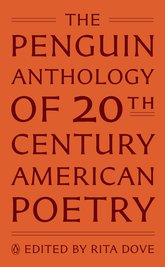
The cover of Rita Dove’s anthology.

The Meat: Perloff’s Complaints About Rita Dove’s Anthology

After this, Perloff gets to what it is that seems to have recently set her off: the publication of the new Penguin Anthology of 20th Century American Poetry, edited by Rita Dove. A long chastisement follows, in which Perloff takes issue with the omission of Random House poets that Dove and Penguin chose not to include because of prohibitive copyright costs. Dove has recently explained this decision in an AWP Writer’s Chronicle article, as well as in the introduction of the new anthology, but Perloff is not buying it and places the blame firmly on Penguin. “How,” she asks, “could a leading publisher such as Penguin fail to get publication rights for materials so central to a book’s purpose?” She does not mention that Dove has indeed explained this quite fully in print elsewhere.

Aside from whose fault the omissions are, this issue is a dodge that allows Perloff to critique the selections Dove has made, as well as her sense of literary history. Perloff claims that “one evidently wants to read her anthology not to learn about American poetry of the twentieth century but about her likes and dislikes.” In other words, Dove’s tastes are not adequate for the job, at least not in Perloff’s view, because Dove has not made the same selections that Perloff would have made.

At least not past the modernist era—Perloff notes that “however individual and intuitive Dove’s judgments on contemporary poetry, her Modernist canon… is more or less everybody’s Modernist canon.” Here is where Marjorie really begins to sound old. Here is where she returns to her earlier hint that she mourns the loss of a simpler time when everyone supposedly held a consensus about who the great poets were. She notes that before World War II everyone agreed on what the canon was. Alas, however, “the lack of consensus about the poetry of the postwar decades has led not, as one might have hoped, to a cheerful pluralism animated by noisy critical debate about the nature of lyric, but to the curious closure exemplified by the Dove anthology.”

Her lament about what Dove includes is then exemplified by Natasha Trethewey’s poem “Hot Combs.” Perhaps the oddest thing about Perloff’s reading of this poem is that, based on Trethewey’s own mixed-race heritage, Perloff assumes that the narrator of the poem is the poet herself. She complains that the poem, with its “easy conclusion that beauty is born of suffering, would seem to place this poem somewhere in the 1960s or ‘70s” but that it was published in 2000. Yet, Trethewey is known for combining her own personal experience with historical settings, including in her 2002 book Bellocq’s Ophelia, about a fictional prostitute living in the early 1900s. Perloff seems to willfully misread or oversimplify her reading of Trethewey’s poem.

But Perloff also makes another strange move here. She claims that “Hot Combs” exemplifies the three typical (and inadequate) characteristics she has noted above in the mediocre contemporary lyric poetry she is criticizing (no attention to line or word per se, prose syntax filled with imagery and metaphor, and the presence of a small epiphany. But only one of the the numbered list she gives in attacking this poem matches her list above in her second paragraph. Instead, she lists: 1) a present-time stimulus, 2) a memory, and 3) an epiphany (only this one matches). She does mention “prose syntax” and she insults Trethewey’s diction by putting “literary” in quotation marks before reciting a few of her descriptive phrases. But there is no coherence to the argument here. It’s just that Perloff doesn’t like this particular poem.

An example of “experimental” concrete poetry by Vasily Kameysky, 1914.

Perloff Turns to Supporting the Few

In the second half of her essay, Perloff goes on to write a manifesto about “a growing group of poets who are rejecting the status quo” with “what is now called Conceptualism.” The phrase “what is now called” seems to me to imply that she is simply talking about a different kind of status quo or tradition—in a direct line from the “language” and “experimental” poets of the past several decades. It also strikes me that somehow the fact that this is a “growing” group is used here to legitimize these poets, whereas the increasing size of the group of lyric poets somehow delegitimizes them. Go figure.

Perloff notes that the “main complaint against Conceptual writing is that the reliance on other people’s words negates the essence of lyric poetry.” She goes on to restate that Conceptual poetry is accused of having “no unique emotional input,” and that the question asked about it is, “If the words used are not my own, how can I convey the true voice of feeling unique to lyric?” As usual, Perloff doesn’t cite any examples of this argument, and perhaps it is true that some people have said this kind of thing. But most poets, even the lyric poets that Perloff seems to think are utterly stupid, are not that naïve. They don’t claim that the words they use have never been used before, and they often pay homage to other poets in their work. In fact, they often themselves produce mash-ups, and many of the literary magazines that Perloff suggest contribute to a uniform mediocrity send out calls for poems that do just that (For instance, here’s one from Crazyhorse: Cross-Off Contest). It is part of the conversation that is literature, no matter the style.

Perloff then asserts that the musicality used by John Cage in his re-working of Allen Ginsberg’s Howl is “absent in most contemporary poetry,” a slam that literally stuns me. She chooses one example “at random” (I doubt it) that she then turns into prose and notes that Cage’s poem “cannot be turned into prose” because of its “very formatting.” Well, really, I could turn it into prose, but, given that the Cage lines are further from usual prose syntax than the lines she quotes from Dove’s anthology, is Perloff really suggesting that prose can have no musicality? And has she read the same contemporary poetry that I have? Plenty of it is musical and rhythmic, and if some of it is less so, why should poetry have to conform to a formula of musicality any more than a formula of tripartite “observation—triggering memory—insight” or the 14-line form of a sonnet?

For example, these few lines from “The Golden Shovel,” written by a young poet I’ve recently discovered, Terrance Hayes:

When I am so small Da’s sock covers my arm, we
cruise at twilight until we find the place the real

men lean, bloodshot and translucent with cool.
His smile is a gold-plated incantation as we

drift by women on bar stools, with nothing left
in them but approachlessness. This is a school

I do not know yet. But the cue sticks mean we
are rubbed by light, smooth as wood, the lurk

of smoke thinned to song. We won’t be out late.
Standing in the middle of the street last night we

watched the moonlit lawns and a neighbor strike
his son in the face. A shadow knocked straight.

[from Lighthead, Penguin, 2010]

To describe this work, and work like it, as having no musicality requires an unimaginably deaf ear. I know Marjorie Perloff cannot have such a deaf ear. So why does she make such an enormous, vague, insupportable claim? She seems to me to be grasping at some kind of legitimacy for poetry she feels is unappreciated, and she goes on to analyze the work of four poets she likes.

Death is a common subject in many styles: The Death of Henry VII represented in a medieval miniature.

Perloff’s Four Poets

First, she discusses That This by Susan Howe, who she notes was not included in Dove’s anthology but who nonetheless “would not call herself a Conceptual poet.” In addition, Howe’s book focuses on the sudden death of Howe’s husband, Peter Hare, that subject matter of “personal tragedy” that Perloff earlier criticized in lyric poetry. The difference is that Howe reconstructs her poems out of fragments from other sources.

Don’t get me wrong—Howe’s work sounds fascinating to me, and I fully plan on looking it up. Perloff is at her best when she writes passionately in support of work that she finds interesting. She convinces me that Howe’s work is worth a look.

* Likewise with another set of poems that Perloff analyzes in some depth—from another poet she characterizes as “not primarily a Conceptualist”—Srikanth Reddy’s re-working of the memoirs of former Nazi and president of Austria Kurt Waldheim into a work Reddy calls Voyager. And again Reddy seems to partake of a subject matter that Perloff has criticized—sensitivity of feeling about “our imperialist wars.” Reddy’s work is different not just because he has re-worked an earlier source, but because his poems are “free of all moralizing or invective on the poet’s part.” I understand that there are shades here, but I am not sure how Reddy’s “critique” of Waldheim’s hypocrisy and of “political mendacity in general” is free of moralizing. His project and its outcomes seem inherently (and appropriately) moralizing to me.

Both of these books also sounds as though they need to be seen in their entireties—in book form—to be fully understood and appreciated, something that it’s difficult to present in an anthology. Perloff even says this herself: “Like Howe’s” book, Reddy’s “has to be understood as a poetic book rather than a book of individual poems.” How, then, would she suggest that Dove anthologize them?

* Recognizing this issue, Perloff then turns to recent short work by Charles Bernstein. Bernstein, she notes, has been criticized for becoming “easier” in his more recent work, but she argues that the trickiness of assessing Bernstein’s tone in such lines as the following renders his work still compelling:

No, never, I’ll never stop loving you
Not till my heart beats its last
And even then in my words and my songs
I will love you all over again

Bernstein, Perloff notes, is posing the question of “how to come to terms with this embarrassing bathos.” That makes the bathos interesting, though, of course, it is not an excuse that is allowed the “status quo” poets that she criticizes.

* Perloff’s last example of a poet she deems worthy is Peter Gizzi, who has written a collection called Threshold Songs “in response to a series of deaths—his mother’s, his brother’s, one of his closest friends—so overwhelming they can hardly be processed.” Again, because it “avoids the unsayable by its appropriation of other voices,” Perloff believes that Gizzi has written a more legitimate series of poems about his own personal tragedies than people who write more directly from their experience.
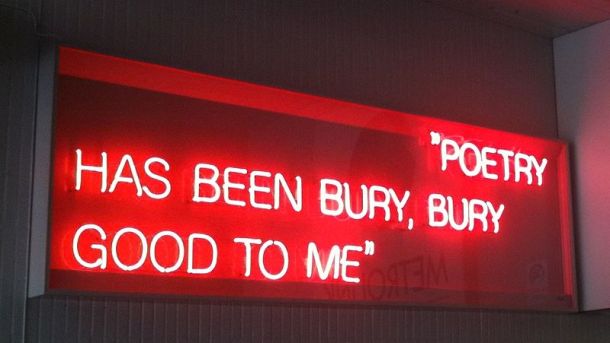
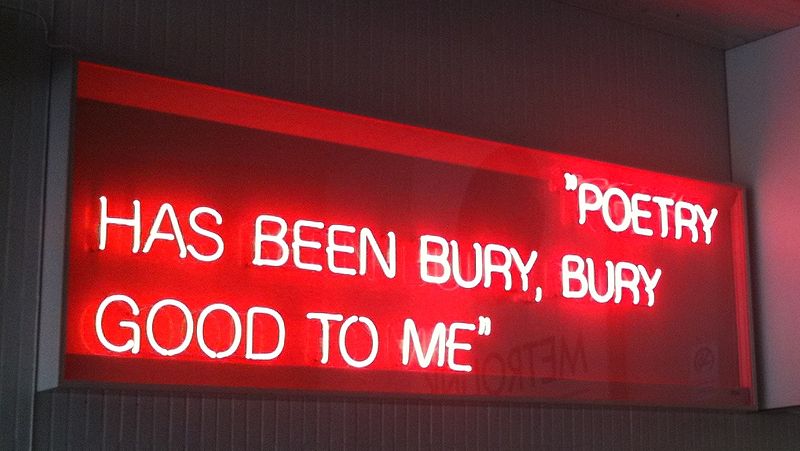
Ron Stillman’s neon sculpture “From Northern Soul (Bury Neon),” Greater Manchester, England, 2011.

Concluding the Inconclusive

Perloff ends her essay rather suddenly by noting that, “Increasingly, the ‘true voice of feeling’ is the one you discover with an inspired, if sometimes accidental click.”

Honestly, I don’t even know what she means by this last statement. Does she mean poets themselves or readers of poetry? And, while I guess she’s been making the case for a particular mash-up strategy of writing, she seems to have lost the point of arguing against the tradition of lyric poetry. Surely, she doesn’t mean that the only legitimate way to write poetry is to re-write other texts?

And for someone who is here to champion hard-core experimental and Conceptual work, Perloff has now given us examples from two people who don’t consider themselves Conceptualists and two examples of Conceptualists, one who has softened the Conceptual line around his work, and another who has taken up the lyric subject of his own personal tragedy. Does she really believe, then, that hybridity is impossible and an unconvincing storyline as she asserted early in the essay when she briefly mentioned Cole Swensen and David St. John’s anthology, American Hybrid? Her own examples seem to me to prove its healthy existence.

I do, however, agree that, as Perloff states early on, “Formal choices are never without ideological implications.” I believe that Perloff’s choices certainly have them, and that her ideology most clearly supports an elite of the elite. Writers and readers of poetry are quite an elite all on their own, and when you sift out the grandmother-amateur-poets, they are even moreso. But Perloff seems to me determined that poetry will also remain shuttered from lived experience, centered in the halls of intellectual academe, and upper crust, if not essentially white and male (Reddy, of Indian descent, attended Harvard and the University of Iowa). She does not celebrate the vernacular found in poetry she would call unmusical, nor in the actual experience of loss or suffering, only in sublimated versions. A poetry based in the middle class or the working class must be anathema to her, just as any but the most intellectualized ideas about poetry are.

I want to make clear that I do not think that debates about quality are not relevant or appropriate. But what I see in Perloff’s essay is fundamentally a grasping to preserve the values of a time long past—a pre-World War II era when scholars defined quality, when poets themselves were largely excluded from the academy, before they had infiltrated it in creative writing programs and had begun to find the platform to assert their own definitions of quality that were often at odds with their more theoretical scholarly colleagues. Perloff notes indignantly that Rita Dove’s anthology “depends not on … its capacity to satisfyingly delineate a poetic canon or make some claim about the nature of poetry in a certain time or place—but on the prestige of its editor.” It seems outrageous to her that Dove is “prestigious” in spite of her 13 books.

It is entirely possible that Dove has made selections for this anthology based more on a creative writing sensibility and pedagogy than that of a scholarly literary one. Indeed, the delineation of a canon or the examination of the cultural and historical aspects of poetry is often not the focus in creative writing courses, though creative writing students are always required to take numerous literature courses in which they are. It is also true that creative writing pedagogy and traditions often function with a more idiosyncratic and artisanal model of teaching and learning than do scholarly ones. Perloff clearly believes that this is wrong-headed, as do many in the scholarly literary field, and she insults these methods by stating that she wonders if the intended audience of Dove’s anthology is “junior high students.” It is true that creative writing pedagogy in the wrong hands can be too easy and indulgent, but in the right ones it can be rigorously powerful and empowering. There are many variables that contribute to particular outcomes. I just wish that Perloff would admit that what she is doing is longing for a time before creative writers per se had a place at the table of deciding what poetry has merit. She wishes it were only the scholars and the few scholar-poets who had the kind of “prestige” that Dove now shares.

If Dove has constructed an anthology suited to her own reading and teaching preferences, what is wrong with that? Is it not the same method that Perloff herself uses when she edits anthologies and decides what works she will include on syllabi? As Rasula notes, in academia, we are trained to be “specialists,” and Perloff herself is not asked to teach courses in the Victorian novel. I can fairly safely assume that she has never included a Rita Dove poem on her syllabus in spite of the fact that Dove has published more books and has been more widely read than some of the post-modernist poets that Perloff favors. It is probably true that most poets teaching in academia weight their teaching toward the lyric, and even poets in that tradition (such as Carolyn Forché) have worked to open it beyond the personal to a more political consciousness. But these poets have asked that the door be opened, not that another door be closed.

The second half of Perloff’s essay, though not particularly logically consistent, nonetheless serves a valuable purpose: supporting four poets whose work she finds compelling. I am all for that.

Yet I must point out that Peter Gizzi is a full professor of English at the University of Massachusetts Amherst, Charles Bernstein a named professor of English at the University of Pennsylvania, Srikanth Reddy an assistant professor of English at the University of Chicago, and Susan Howe retired as a named chair at the University of Buffalo (formerly SUNY Buffalo). Of the four poets that she mentions early on that she feels were neglected in Dove’s anthology—Harryette Mullen, Will Alexander, C. S. Giscombe, and John Yau—all but one has a full professorship at a prestigious university, and even the one (Alexander) has taught in several places while making the choice to remain in his native L.A. All of them, in spite of some of their and Perloff’s protests, have successful careers legitimized within the very academy Perloff wants to blame otherwise for the mediocrity of contemporary poetry. They are all also writers whose work is deeply connected to the scholarly, theoretical, and historical tradition.

Academic historians and theoreticians of music and the visual arts can’t so easily cast out the practitioners of music and art—their media require a different kind of technical facility than the scholars have. But when the medium of art is language, too often the scholars don’t believe they need anyone but themselves.

And this turns me again back to the first half of Perloff’s essay, which seems to me an unacceptable diatribe about MFA programs in creative writing and the influence of academia on poetry, that is, on poets within academia who do not toe her rarefied intellectual line. I do believe that we can debate the merits of specific poems—and the Trethewey poem that Perloff critiques will likely never be one of my favorites. I agree that we can debate what the most important elements are in poetry, too. But this kind of hand-waving, overgeneralized dismissal of MFA programs and lyric poetry is less than we deserve from our well-known public intellectuals in the field. I am a relative nobody, with no doubt a less lofty education and certainly fewer credentials on which to stand than Perloff and her Harvard and Berkeley cronies, and even I can think beyond this.

We need to celebrate in the streets—and in print–the rise of creative writing’s popularity in the public imagination and in our colleges and universities, or else we really could end up dancing on the grave of poetry one day soon. Just about 99.9936% of the population may not even notice.

Maurice Sendak

Posted on

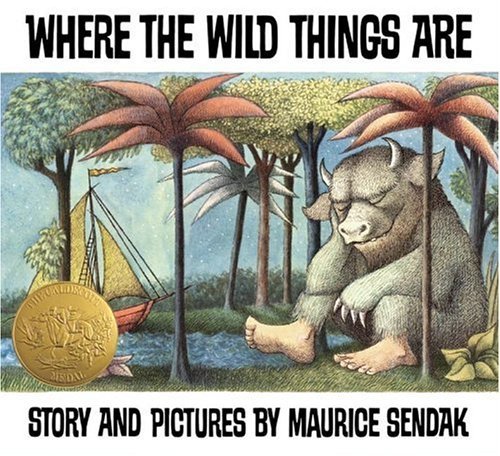
Over the past few days, Maurice Sendak’s name and many accolades in his honor have been on the air and in print due to his death on Tuesday at the age of 83. I don’t have much to add to those surveys of his life and career, so I will link to a few of them below.

But I can add that, though I hadn’t dwelled on Sendak in years, he was a great influence on me, and I was in the very large camp of enthusiasts about his work. The New York Times obituary notes that his “books were essential ingredients of childhood for the generation born after 1960 or thereabouts, and in turn for their children,” and I was one of those children (born exactly in 1960). For many long years–long after I moved on from story-hour childhood–I had a Sendak poster on my wall—the one with Max swinging from the trees with his monster friends. I still have it tucked away somewhere, those nightmares and dreams of childhood put away but not forgotten.

It strikes me, too, that Sendak was a person after my own heart and in keeping with the themes of this blog. He was indeed a Joyous Crybaby, one who brought the sorrows of children into the light and made it okay, even imperative, to acknowledge them. It’s hard to imagine how it is that so many children have loved this quality in his work for so many years and yet so many adults have grown up to retreat into a hyper-cheerful denial with their memories of childhood’s insights buried all too far in the closet. Sendak believed in the “rightness of children’s perceptions,” and he has often noted how the demons of his own childhood—the Great Depression, World War II and the Holocaust, the kidnapping of the Lindberg baby, and his own experience of measles, pneumonia, and scarlet fever at a young age—did not go unnoticed in his own psyche. If, as Sendak’s work has always asserted, children can and do face the demons in their world, shouldn’t adults be able to acknowledge their existence, too?

Sendak was a touchstone of genuine emotion. He will be sorely missed.

Washington Post (contains numerous good links to other commentary)

New York Times

NPR’s Fresh Air

Cracked.Com on Crazy Cat Ladies

Posted on

I’ve been stretched to my limits the past couple of weeks, even though I have been spared the final grading stress and have skipped out on attendance at graduations and reunions. So, today, I really needed a laugh til you cry episode of crying, and, fortunately, Bruce greeted me with Cracked.com’s “8 Books That Prove Cat Lovers Are Insane” first thing this morning.

In my search for the genuine, it is good to be reminded that even the genuine can be far from helpful, and even the completely ersatz can be wonderfully whacky. In contemplating how to write about animals intelligently, it’s also great to have some examples of what not to do…. Except, except, they all seem to be having so much fun.

Don’t forget page 2. The wigs are to die for.

I just want you to know that this is not the kind of writing about pets I ever hope to do, much as I love it.

Beware the Enthymeme!

Posted on

It's bad enough to debate complex issues in slogans, but even worse when the slogans so cheerfully lie.

In Florida, as in many states, there are a variety of license plate designs for car owners to choose from. I always think that these, like bumper stickers, are a strange way to express oneself, though I’ve been known to slap a bumper sticker on my car now and then. Last presidential election cycle, I had two Obama stickers stolen off my car, and I have a long-term one that says, “Please don’t breed or buy while shelter pets die. Opt to adopt.” Other than one time when a friend at first thought it protested the breeding of humans and was an insult to his parenthood, that one has been uncontroversial. At least as far as I know. And I guess that’s the joy of broadcasting one’s opinions this way. Unless you meet up with a crazy person who will bash into your vehicle, you are safe from argument.

One of the popular license plates around here is a yellow one with red crayon-like boy and girl figures that imply they were drawn by a child and that says “Choose Life.”

It might be an okay message if it really meant what it says. Of course, most of those who sport this license plate don’t actually mean that. What they mean is that they would rather force every pregnant woman to bring any pregnancy to term. What they mean is not “choose life,” but “choose to support laws and organizations that offer no choice to women.” And, as this Slate article reports, “the legislation in most states [that have these plates] expressly provides that any program offering referrals or even discussing the option of abortion is barred from funding.” In other words, these plates support lack of choice, not a choice.

There is an odd way in which the language gets twisted like this. Of course, progressives and liberals do it too, but what I notice lately is the way that Republicans and right-wingers do this all the freaking time. No doubt, we are gearing up for a maelstrom of misused language in this coming election season.

What I also notice is that progressives have a hard time correcting these misuses of language. I guess they don’t want to be accused of nit-picking about semantics or something like that. But the use of language is one of the most important things we can pay attention to. This is one of the things that rhetorical analysis is good for, and it pains me that so many can get through high school and freshman comp and even four or more years of college and still not be able to understand the manipulations of language to which they are subject on a daily basis.

I will never forget one of my early teaching experiences, when I was laboring as a freshman-composition TA at Penn State during the fall of 1991. At the same time, playing out in the media, were the Senate confirmation hearings for Supreme Court nominee Clarence Thomas. Anita Hill, who had worked as his assistant some years earlier, arrived on the scene with her testimony about Thomas sexually harassing her.

Hill’s testimony lasted only a few hours, but the discussion of it went on for weeks and months, even years. The issue even resurfaced in 2010, when Clarence Thomas’s wife called Anita Hill and suggested she should apologize.

In spite of the fact that Hill subjected herself to a polygraph test that indicated her testimony was honest, whereas Thomas refused a polygraph, and in spite of another woman’s affidavit that she had received similar treatment, Hill’s testimony was vehemently called into question. And one of the prime reasons people gave for their disbelief was that Hill had continued to work for Thomas rather than quitting her job, had in fact even worked for him at a second position after the time during which she said he harassed her. This line of discussion had been begun during her Senate testimony when Republican senators Arlen Specter and Orrin Hatch strove quite clearly to discredit her. (The entire hearings are available via C-Span. About half-way through Day 1, Part 3, Specter grills her about why she continued to work for Thomas).

This discussion nagged at me and nagged at me. Finally one day when I was set to teach the enthymeme, I realized why. Dully, I had been writing a traditional enthymeme lesson (that had been provided to us new TAs) on the chalkboard:

Johnathan lives in Japan.
Johnathan speaks Japanese.

And then out to the side the missing link: People who live in Japan speak Japanese.

In a fit of inspiration, I erased it and wrote instead:

Anita Hill claims she was sexually harassed by Clarence Thomas.
She’s probably lying.

“How many of you agree with this?” I asked. More than half the class raised their hands, most of the men and a few of the women.

For the next half hour, we explored the possible unstated assumptions behind the conclusion. The students eventually had to admit that the basic assumption they were making was that women should always put their “purity” above their careers. Certainly, that was the assumption that the all-male panel of senators who had grilled Hill clearly made. If this were not true, there might be a host of other priorities that Hill would put before quitting her job to escape Thomas’s advances and inappropriate comments.

Once we teased these assumptions out into the open, there were very few students (maybe only one) in the class who agreed with the statement that women should always put their “purity” over their career advancement. Most of them found themselves confronted with an assumption they didn’t agree with but that they had allowed to underpin their opinions on a matter of national importance.

A few of the young women in class began to make the connection to their own experience. “Oh, yeah,” one said, “I have a manager who is so offensive—he always stares at us waitresses too much and puts his hands on us whenever he can—but I haven’t quit my job! We all just ignore him. And it’s a nothing job.” Every female in the class could cite at least one instance of sexual harassment that she had let slide. We agreed that none of us would quit a job over it unless there was actual threat of rape or a high level of severity and directness in the harassment, but that this did not erase the fact of the harassment. It was a daily part of our collective lives.

By the end of class, because they could understand why Anita Hill might have stayed in her job in spite of harassment, they no longer deemed her a liar. I will never forget their mouths hanging open in disbelief at what they had been duped into repeating from the media to friends and family members. They rushed off after class to correct themselves. Thomas, of course, had already been approved as a Supreme Court justice.

I wonder about this kind of thing in the media. It seems to me that both the “neutral” media and the progressive factions do too little to correct this kind of blatantly stupid and unsupported claim. They do too little to monitor the use of language in blatantly deceptive ways. Some, including, of course, FOX News, are notorious for participating in this kind of ridiculous bias themselves (several examples here and one here that’s particularly about twisting of language). Lately, even our senators and representatives have felt free to make utterly false and ridiculous claims, and later to say they didn’t mean them as factual or to insist on defending their mischaracterizations. Only in these most blatant of examples are they called out on it.

For instance, in response to an email I sent to Florida Governor Rick Scott’s ridiculous decision to sign off on establishment of a new (unneeded) state university in Florida, I received a reply containing this statement: “Governor Scott’s top priority this legislative session was adding $1.06 billion in new funding for K-12 education.” First, nothing in Scott’s email responded to the subject I had addressed. And second, this is bull. Scott has been ballyhooing his great increase in state funding for K-12 education this year, after he cut $1.3 billion last year. A few reporters note toward the end of their articles that Scott’s budget doesn’t even replace what he has previously cut, but the headlines mostly remain that he is raising the budget. (Notice that this blogger put a more accurate headline on the same article published with an innocuous-sounding headline in the Palm Coast Observer. But, hey, at least the reporter mentions the facts.)

I believe that these twisted uses of language are one of the reasons why our society has become so divided and discussions so disharmonious. I think that we need to do all we can every time we hear these false uses of language to stop them in their tracks, even if it means making conversation halting. The fact is that it’s one thing to disagree about the substance of things and another for someone to lie in order to exaggerate our disagreements.

There are many examples, but I have gone on long enough. Today’s exhortation, again in support of so many friends who are ending long semesters of teaching freshman comp (and other courses that attempt to teach critical thinking), is: REMEMBER THE ENTHYMEME! Talk about the enthymeme. Pick apart the enthymeme.

School’s Out & The Little Red Schoolbook

Posted on

Today’s song (lyrics here) is a little old anthem to help all my friends get through the next week or so (or more for those in el-hi) to the end of the school year. It took me a long time to realize that teachers feels the same sense of relief at the end of the year that students do.

Alice Cooper’s “School’s Out” dates to 1972, but I was still a goody-two-shoes child then and didn’t fully appreciate it until I was in high school and going through my own teenage rebellion. Even then, I was rebellious in a goody-two-shoes way. I wasn’t smoking in the parking lot, at least most of the time, and I wasn’t yet drinking or losing my sexual innocence. I was just disobedient and disrespectful to my teachers.

Watching the above version of “School’s Out,” filmed at a concert in Sweden, made me think of one of my inspirations for my rebellion, The Little Red Schoolbook. (I mistakenly thought it originated in Sweden, but it was Denmark.) The Little Red Schoolbook made the rounds in the U.S. about the same time “School’s Out” did.

I don’t remember much about my own rebellion, except that I got thrown permanently out of geometry class and that the school administrators summoned my parents to confer about how to make me behave. My geometry teacher frequently assigned students who whispered in class to copy out passages from books as extra homework. He often suggested the Bible as a source. When I received this punishment one day, I chose The Little Red Schoolbook as my source—a passage about how authoritarian teachers are actually insecure. “All grown-ups are paper tigers…” “If you’re bored, you only learn how to be bored.” And so on. Mr. Houser greeted this with outrage. The one detail I will never forget is the shade of red his face turned when his eyes fell on the words I had copied out in my prissy schoolgirl hand. I was satisfied with that.

It’s interesting to me how those mixed feelings about school have stayed with me even though I chose a life in education. That doesn’t mean that I don’t enjoy teaching, but I feel a constant tension with these issues of authority. And even my fellow academics, most of whom I believe generally love school more purely than I do, get burned out and look forward to summer or whatever short breaks we may get.

We don’t get cut many breaks in education these days, especially not in public education. When I found a video excerpt of a documentary about the Australian release of The Little Red Schoolbook, called As It Happened: The Book That Shook the World (2007), I was struck by its emphasis on the possibility of students striking. I had just posted on Facebook about the sorry state of higher education funding in the state of Florida and noted that “IMHO it’s time to start thinking about strikes, though we are all too grateful just to have a job.” I guess the rabble-rousing Little Red Schoolbook is still somewhere inside of me, though I have long since been absorbed into the status quo and the nation has backslid in terms of progressive education.

Below is the short strike-related documentary excerpt, and a longer, more general one is here.

Here’s to dreams-soon-to-come-true of summer, freedom, and much-needed rebellion.

First, They Came for the Romantic Relationships…

Posted on

Conversation has become a luxury. The Conversation by Kobe de Peuter.

I think of my generation as the one in which the meaning of “love” shifted and became larger (a good thing) but also more confusing (a bad thing). My female college friends and I both celebrated and mourned the loss of the clarity that most of our mothers seemed to have about what love meant. To them, it meant marriage.

To us, it meant so many other things. For one thing, marriage wasn’t available for those among us who were gay. Yet it was becoming clearer and clearer that gay love was a reality that needed to be acknowledged. And at the same time, our heterosexual relationships were undergoing massive upheavals—marriage, though we didn’t wish to deny it to our gay friends, seemed to many heterosexual women like a “property relationship.” We wanted our love to be free, not attached to economic or child-rearing promises.

The men I knew often took perhaps unfair advantage of this. Even when what they felt was clearly not love to them, they might claim to love us, but to just not to want to participate in the strangling institution of marriage. For the most part, women still wanted to be loved. This made for a lot of broken hearts, and many women eventually “got over” their liberation from marriage. Women and men (gay, straight, and bisexual) began to redefine marriage in multiple ways that (we hope) retain the goodness of an institution of intimate commitment and jettison the woman-down or gays-denied aspects.

Not that the redefining of romantic love is over, but lately what I find shifting more radically is the meaning of friendship.

This weekend I read an article in the May 2012 issue of the Atlantic called “Is Facebook Making Us Lonely?” by Stephen Marche. It is one of many litanies lately about the dangers of our reliance on social networks on the Internet. Bruce also sent me a link of a TED talk by psychologist Sherry Turkle, who is mentioned in the Atlantic article and who has changed her once-upbeat take on the social network into a lament for the depth and spontaneity of real conversation.

These two commentaries bring so much to my mind. Mainly, they resonate. I myself can experience great loneliness in spite of the ever-enlarging circle of Facebook and blogging friends that I have. Blogging sometimes brings about more substantive exchanges, but even that is not real companionship.

And I have noticed that even my dearest friends no longer want to talk. Now, I am a “long-talker,” as my boss once told me, and I have tired people out for many years in that regard. But I feel more and more removed from this quick-take social interaction that has become the norm. I worry that my pleasure in and need for complex, digressive, even desultory conversation is becoming more and more anachronistic. My friends love me, and I love them, but we don’t have time to talk with each other. Conversation has become the ultimate luxury.

People don’t even like length in writing any more, as literary magazines shrink and shrink the length of manuscripts they will even consider for publication and as those of us teaching creative writing shrink and shrink the length of assignments we accept from our students because we have more and more students and therefore fewer and fewer hours to devote to critique of their work. We indeed are living in an aphoristic time.

Turkle, in her talk, reports that one 18-year-old, “who uses texting for almost everything,” told her “someday, someday, but certainly not now, I would like to learn to have a conversation.” And it is true that sometimes my students today have a hard time participating in a workshop at all. I have even had a few students so afraid that I had to coach them outside of class about how to manage to participate in class. I had to teach them how to have a conversation.

So, another thing that came to my mind is the continuing value of the creative writing workshop model. In creative writing workshops, we still talk. This may be on its way to becoming a lost art, but it may also be something that we should emphasize as part of the value of a liberal arts education. Rare skills can become extremely valuable, after all. And the magic that can sometimes happen in a creative writing workshop (the minds melding, the contributions mixing, the starts and stops coalescing into something new that no one thought of alone) will never, I believe, be replaced by even the most detailed online critique.

That some 18-year-old, who probably has hundreds of “friends” on Facebook, can have all those friends without conversations strikes me as odd. Yet I know that I have some friends on Facebook I have never met, or have met once or twice, or who simply “liked” some brief quip I made in response to someone else’s post.

And this phenomenon of friends we don’t really know is more and more being extended to relationships that have nothing to do with actual friendship and everything to do with business. I offer a mere two examples, though I could go on all day with more:

* I just recently had to purchase a new insulin pump. I’ll save the internecine details of this most recent set of frustrating health care exchanges for another time, but here I at least want to object to the constant reference by the insulin pump company to their being my “partner.” In fact, the company website refers to us as “partners for life.”

Forgive me if I view this with cynicism. I had to order a new pump because my previous one went completely kaput a few days after the warranty expired, not because I desired any of the minimally new features. (Most of which, I am finding, have created a kind of neurotic, nagging, numbing effect with lots of extra alarms.) Since the new pump takes a while to “process,” the company offered a loaner pump for the duration. However, they informed me that if I canceled my order, and didn’t buy my next pump from them, I would be charged $3600 for 90 days with the loaner.

If this is a “partnership,” it’s a coercive one.

* At least the pump company still uses a neutral word like “partner.” In other business news, however, Brighthouse has launched a new advertising campaign in which they pull out all the stops and go right to calling themselves my “friend,” your friend, everybody’s friend. That friendship could be offered to all comers for the price of subscribing to Brighthouse services totally perverts the meaning of the word, of course.

At first the only clue to the identity of who was paying for these prime-time and expensive Hello Friend ads was the combination of blue and yellow in the text portion of the ads. Now, they are gradually introducing ads that move from soft-touch pleasantries to out and out courting. Brighthouse wants to be your friend, the ads say.

How, I wonder, can anyone take this seriously?

Bruce tells me that the campaign is likely a response to the horrible customer service reviews that Brighthouse has received in the past on Internet complaint sites. “Brighthouse,” he said, “gives notoriously bad service. There are all kinds of comments like, ‘DirectTV is bad, but Brighthouse is the worst.’”

In fact, the campaign may actually indicate an actual change in policy that could be important. This would never have occurred to me if the folks who helped put in our new flower and garden beds last week hadn’t accidentally cut our Brighthouse cable. When we realized what had happened, I thwacked myself in the forehead repeatedly, cursing the fact that I’d mistakenly believed all the cables were away from our dig areas. How much would they have to dig up again, and how much would this foolish oversight cost us?

Within 24 hours, the repairman came, made a quick fix, and charged us nothing. I was so relieved not to be punished that I have to admit I felt almost like this man was my friend.

The ads, however, have made me feel simply that the world is more pathetic than ever. I wondered if it’s true that people are just getting more and more disconnected from other real humans and more lonely than ever. That such ads could be deemed effective seems to coincide with the research that Turkle and others report about heavy Facebook users being lonelier than those who use it less or not at all. And with the fact that more and more people use it regularly.

In addition, I think it’s a documentable fact that more and more of our daily needs are met through these large corporate entities. There are few family-owned corner grocery stores, gas stations, drug stores, hardware stores, and pet food stores, so we don’t have even the same kind of superficial acquaintances that we know over a long period of time and that might bloom into something like genuine friendliness, even if not intimate knowledge. I visit the same stores over and over again and hardly ever see the same clerk twice because they are chains that move people around and that people leave at the next best opportunity.

We also have witnessed the rise of various kinds of stealth marketing, where people who purport to be our friends are actually (or also) trying to use us for financial ends. To me, these practices are particularly heinous because I like to know when a spade is a spade. But many young people today live lives much more merged with advertising than an oldster like me is comfortable with. They see nothing wrong with defining themselves with logos, with trying out free sample products and sharing them with friends, and so on. For them, there is no private sphere.

(And there are so many how-tos and analyses of these kinds of marketing that I can’t find a single link to represent them, but if you’re interested, the key terms are stealth marketing, viral marketing, word-of-mouth marketing. And don’t forget product placement!)

These secret agendas also exist in terms of pyramid schemes like Amway, Landmark Forum, and Stargate. Whenever someone approaches you with some ulterior motive, there’s a kind of strain. This person is not approaching with an open mind or with curiosity, but with a pre-determined agenda: to get you to join so that they can get a discount on their own self-help seminars.

One of the most disturbing trends noted by Stephen Marche in the Atlantic is this: “In 1985, only 10 percent of Americans said they had no one with whom to discuss important matters, and 15 percent said they had only one such good friend. By 2004, 25 percent had nobody to talk to, and 20 percent had only one confidant.”

And so we also pay others to listen to us. Marche also reports on the dramatic rise in the numbers of psychologists, other kinds of therapists and counselors, and life coaches. This marketplace is more legitimate—at least most of the time you know what you are paying for and it’s about your own needs, whereas the stealth marketers are lying to you to meet their needs. But sometimes even that gets confusing. In my dealings with Landmark Forum, I encountered several members who had also become independent life coaches—they had little in the way of credentials I would recognize for advising others about their lives, but there is no licensing necessary for life coaching. Even in the realm of professional “friends,” the stakes can get confused these days.

What many commentators have begun to notice, including Stephen Marche and Sherry Turkle, is that what many of these online friendship forums promote is a kind of uber cheerfulness, an editing of our personal lives into success stories and personal p.r. campaigns.

I think, however, this trend goes far beyond and certainly doesn’t originate in online social networks. Landmark Forum, Oprah, Dr. Oz, Kris Carr, and the whole host of self-help gurus have over the past decade moved so deeply into the superficial tenets of positive psychology that this kind of self-editing has become ubiquitous. Everyone, nowadays, fears being a “drag,” whether in person or online.

Marche’s article thankfully makes this connection, and he cites a recent study by Iris Mauss and others at the University of Denver that finds that valuing and seeking happiness can doom people to disappointment. Mauss and her fellow psychologists all consider themselves to be working in the arena of positive psychology, and in other writings that I found, she seems a true believer, even in “positive neuroscience.” They apparently expected happiness to be like other goals—those that value academic achievement usually make better grades in school. But they found the opposite—at least in situations of low stress, the valuation of happiness correlated with lower happiness and life satisfaction and higher symptoms of depression.

So, I believe that what Stephen Marche points out about Facebook’s pitfalls is actually something that spreads beyond the online environment. I suppose it’s a chicken-and-egg question whether our online habits have created the changes in our psyches concerning friendship, but I do know that it’s not only online that this issue exists.

However, in a live chat about his Atlantic article, Marche just now referred to another article he wrote—for Toronto Life—about his institution of a Digital Sabbath. I know that I agree with him fully that simple pleasures have become filled with distraction. He mentions playing Legos with his son; for me, this shows up in a variety of ways. How often do I sit quietly with a cat on my lap without checking Facebook and email on my phone every few minutes? How many nights do I wake up and cuddle with a Scrabble game rather than with my sleeping husband? How often when I’m talking on the phone with my mother am I also answering emails?

It seems a supreme irony that we learn so much on Facebook and other online forums and yet also isolate ourselves this way. We won’t give them up, and doing so even on a Sabbath seems unlikely for many. I do hope, however, that we can strive to use them more thoughtfully. No doubt, the meaning of “friend” has changed permanently. But it’s good to remember what’s at the core of it. Else, I fear, friendship will see a worse fate than the changes wrought in the world of romantic love. Sex, after all, still cements romance in the physical world. Friendship may not have such a tangible hold.

Wislawa Szymborska’s “Slapstick”

Posted on

I try to be careful about copyright here on this site, and I only share an entire work when it’s already available on the web. That seems backwards a little bit–if it’s already available, why do I need to share it? (And it’s no guarantee that the previous poster is not breaking copyright.) But we do follow different strands of the web, so I hope that doing so will bring more people to the work I share. Here is a poem that I value–and that suits my themes–for obvious reasons. But that’s the only thing that’s obvious about the work of the wonderful Polish poet Wisława Szymborska, who died in February.

Slapstick

If there are angels
I doubt they read
our novels
concerning thwarted hopes.

I’m afraid, alas,
they never touch the poems
that bear our grudges against the world.

The rantings and railings
of our plays
must drive them, I suspect,
to distraction.

Off-duty, between angelic-
i.e. inhuman—occupations,
they watch instead
our slapstick
from the age of silent film.

To our dirge wailers,
garment renders,
and teeth gnashers,
they prefer, I suppose,
that poor devil
who grabs the drowning man by his toupee
or, starving, devours his own shoelaces
with gusto.

From the waist up, starch and aspirations;
below, a startled mouse
runs down his trousers.
I’m sure
that’s what they call real entertainment.

A crazy chase in circles
ends up pursuing the pursuer.
The light at the end of the tunnel
turns out to be a tiger’s eye.
A hundred disasters
mean a hundred comic somersaults
turned over a hundred abysses.

If there are angels,
they must, I hope,
find this convincing,
this merriment dangling from terror,
not even crying Save me Save me
since all of this takes place in silence.

I can even imagine
that they clap their wings
and tears run from their eyes
from laughter, if nothing else.

I believe this version was translated by Joanna Trzeciak for the volume The End and the Beginning, published in 1993 and now available as part of Szymborska’s Poems New and Collected (Harcourt, 2000).

T. S. Eliot’s “The Waste Land” and My Garden

Posted on

The glories of spicy jatropha contrast with T. S. Eliot's cruelest April.

I’ve had cause the past days and weeks to think a lot about life and death and resurrection. My little old cat marshals on, happy at the same time that she is not perfectly healthy. It’s been a lot of work getting her through her recent crisis, and we don’t know whether she has lymphoma, which will kill her in a matter of weeks, or inflammatory bowel disease, with which she could live on for quite some time. All we can know right now is that for the time being she jumps up on my lap for a cuddle and she rolls around on the patio bricks in the sunshine.

Early spring sunshine in Florida is incomparable. This is the time of year to be here.

With the help of a couple of wonderful gardeners last week, Bruce and I also finally took steps to make the yard beautiful—we replaced the dead grass in the front with shade-loving camellias, crepe myrtle, impatiens, and lorapetalum. We (or rather Lois and Allan) ripped out and relocated (some of) the overgrown ligustrum, put an herb garden in the side yard, and filled in our formerly sunken area by the patio with a butterfly- and hummingbird-friendly rim of firebushes, spicy jatropha (seen above), plumbago, shrimp plants, and tea olives. The confederate jasmine I planted last year is in full, fragrant bloom, and the gardenia that Pat gave us for our wedding three years ago is budding. I have been reveling in it.

And so it is that I was reminded of T. S. Eliot’s most famous line, “April is the cruelest month.” I think that April has this reputation for cruelty for many reasons. I used to always think about it during Pennsylvania Aprils—the alternation of snow and new green plants trying to poke through the muddy ground, the ice that would so often fall from the sky and kill those new green shoots—those were cruel weather days indeed, and days that could easily remind a person of the vicissitudes and unpredictability and fragility of life.

Here in Florida, we don’t really have that kind of cruelty, though, of course, we have the threat of hurricanes half the year (and their occasional massive actual destruction), and we have the suffocating heat and humidity all summer long that create our own upside-down indoor season. The way the flowers blossom so riotously all year round, however, often gives us the delusion down here that life is never-ending.

But we have to remember that the resurrection that so many celebrate at Easter entails death. A former student sent me a message asking if I would like to adopt a stray cat she found. The answer is “not right now,” but the timing points out to me that eventually my old kitties will all be gone, and they will make way for new kitties. The same is true of all of us, even for the Nobel Prize winners such as Eliot, and lately I have been experiencing this fact more concretely than usual. Not because I’m near death, but because I have been enjoying life so much and letting go of my desire to be immortal.

So much of our usual human endeavor (but perhaps especially if we are writers, artists, or intellectuals of some kind) is an attempt to be immortal. This comes in different forms, from having children to making ourselves important or indispensable at work somehow. Sometimes it comes in the form of grasping for fame or notoriety. Sometimes people even see beyond the surface fame to a desire to create something lasting in the way of art. Sometimes we have a desire to change things beyond ourselves, to have a positive effect on a culture that seems unhinged. These efforts sometimes result in good work, and I don’t mean to castigate anyone for making them. Certainly I haven’t entirely stopped myself. I’m just in a different place, at least mentally, right now.

I am finding it enough just to be. I know, cluck, cluck, this should be too simple.

Last night I heard Cameo the cat chirping and mewling low in the dining room. At first I thought this was a symptom—she might be in pain or distress of some sort or about to throw up—and I leapt up to go see what was wrong, as I have so many times in the past few weeks. But as I stood, she came running into the living room and put a small dark object on the rug in front of me. I bent down and poked it, the largest dead spider I had seen in years.

Cameo the cat had been hunting. I couldn’t believe it. She’s never been a big hunter to begin with, and I certainly wouldn’t expect it in her current state of health. But she had made the most of some accidental opportunity, and she’d brought me the proverbial cat gift. I praised her and petted her and apologized for taking the spider away (I certainly didn’t want her to eat it).

I feel silly and trivial for the small, domestic frame of my life these days. I feel retrograde and haus frau–like. Yet it is not that I have forgotten about the larger world or the social, political, and intellectual issues of our day. In fact, when I got out Eliot’s famous poem because of its first line, one of the things that struck me was how prophetic it is. If Eliot thought that the first decades of the twentieth century were fragmented and confusing and grim and showing signs of cultural decline, what would he think of the first decades of the twenty-first century?

What would he think of the strength of our anti-intellectualism, the put-downs of the “reality-based community” that Bruce mentioned in his guest post last week? What would he think of the dominance of the short-short form of fiction and nonfiction (which I adore like everyone else), or the impatience with reading that even writers show so often (which I despair of)? What would he make of the fact that, though I love poetry, I hesitated before taking the time to read his entire long, allusion-filled, complex, five-part poem?

I paused, but I then took the time to read it. Then I listened to it on a compilation of YouTube videos (all of these feature T. S. Eliot reading, except part IV, which is the voice of Ted Hughes). And I don’t mean to blame anyone else who doesn’t take the time. I’m on sabbatical, after all, and taking the time is what it’s for. But even a short dip into listening is a good thing.

I. The Burial of the Dead (with the overall epigram) 5:07 minutes
II. A Game of Chess 5:29 minutes
III. The Fire Sermon 8:05 minutes
IV. Death by Water (read by Ted Hughes) 48 seconds
V. What the Thunder Said 6:30 minutes

Art, I believe, takes time, and that has to be okay. I wish it were as easy to make that claim for politics—that it could get beyond the sound-bite, beyond the knee-jerk, beyond the name-calling, beyond the superficial answers that answer nothing. However, the mass scale of politics is a challenge to any slow unfurling or contemplation. Would that it were not so and that “The Waste Land” were not indeed still so relevant. Would that the call to peace in its last line were more optimistic and less wishful thinking.

Eliot’s poem builds to that end with a reference to Dante’s Arnaut—“I … who weep and go singing; contrite I see my past folly, and joyful I see before me the day I hope for.” Though interpretations of Eliot’s poem vary widely in terms of the lack or presence of hope, I believe it leaves us with the inevitability of both. A grim outlook does not disavow hope. And at least sometimes the greatest activity can be disguised by a quiet and self-contained demeanor, the greatest complexity in paying attention to the smallest things.

In other words, spring will happen with all its implications. I like feeling my eyes open to it as well as my mind. I like hearing T. S. Eliot’s nasal and weary voice—and Ted Hughes’s more gravelly and pleasant one—marching out the syllables. I like observing how unflawed their delivery is—how neither ever trips over a word. You can tell that they have spent a lot of time memorizing and reciting poems. They did that instead of playing Scrabble on the iPhone, no doubt.

Ah, these choices about how we spend our short time.