Category Archives: Writing

TimeSlips

Several years ago, I participated in a National Endowment for the Humanities summer seminar in medical humanities at the Hershey Medical Center. We resided at the medical center for a month, had daily lectures and discussions with experts in the field, and had the opportunity to do things like shadow physicians and nurses through the hospital and attend grand rounds. It was a fascinating experience in many ways. The thing that sticks with me the most, however, is TimeSlips, a program developed by Anne Basting, director of the Center on Age and Community at the University of Wisconsin, as a way of engaging Alzheimer’s patients in storytelling.

Basting’s motto is “Forget memory; try imagination.” When she began working with Alzheimer’s patients and storytelling, the emphasis was all on trying to get them to tell their own life stories. But this was a disaster for everyone, as it only agitated those having trouble with memory. So Basting decided that she’d change the frame a bit and developed a technique whereby a group of patients tell stories in response to striking photographs like the famous one of an elephant trainer sitting with his hand on his elephant or the one of a bunch of nuns in a Volkwagen bug. The emphasis is on the here and now and the use of speculation and fantasy, much easier on those who not only can’t remember but fear their loss of memory.

The stories are not traditionally coherent by any means, but what happens is that many of the patients have fun. When I first saw the film Basting showed us at Hershey, I was stunned to hear Alzheimer’s patients break out in song and laugh at the variety of wild ideas that came out of the group. All fifty of us in the room watching that film wept at the evidence that people so often dismissed as “gone” could express joy and pleasure and participate in a creative group activity.

Unfortunately, there’s nothing available on the web now that’s anything as powerful as the film I first saw. I’m not sure why—perhaps it has to do with privacy issues or with the fact that TimeSlips offers paid, professional training in its techniques. But here is a tiny taste.

Stone Reader

Posted on

I’m getting ready to head up to Vermont for a week-long writing retreat. The fellow running my workshop asked us to bring along any questions we have on our minds, and this has intensified for me some issues I’ve been trying to sort out for myself since last November after my near-death experience. My questions may go beyond what my workshop leader has in mind, but I’ll likely raise them anyway.

One of them is: What does it mean to be a writer? How can I balance between what originated in me as a profound passion for its own sake and the kind of careerism that surrounds me?

In recent years, I’ve become a bit disillusioned. Some of this is no doubt sour grapes based upon poor career decisions I’ve made and the sheer difficulty of maintaining a literary publishing practice. It has never been easy to have a calling to be a literary writer. I remember reading Ted Solotaroff’s essay “Writing in the Cold” years ago. Starting with the fact that so many young writers disappear from the magazines and journals after promising beginnings, he outlines some of the challenges writers face in keeping going.

Solotaroff wrote that essay in the 1980s, and I wonder what he would make of the challenges literary writers face today. Even though Solotaroff noted the winnowing of promising writers, he had not faced a world in which a writer’s career need be instantaneously successful (as opposed to building a following over years) or risk perishing. He wasn’t talking about a world in which writers were expected to fit writing their next novel in between Twittering, Facebooking, and blogging their way into the hearts of millions in order to get that book published. When he wrote “Writing in the Cold,” he didn’t need to address the crumbling of the publishing industry in the face of online amusements, the near-complete dominance of genre fiction in publishing, even the encroachment of genre into an academia that has become almost as corporate as the publishing world.

I was reminded of how different things are today when I watched Stone Reader, a documentary film that came out in 2002. It’s a wonderful film that tracks a guy, Mark Moskowitz, who finally reads a book he bought in 1972 but never got around to reading. Like the New York Times reviewer who first inspired him to buy it, he thinks it’s a masterpiece and sets out to read everything the author, Dow Mossman, has ever written. He can find nothing else.

So, like one of Solotaroff’s promising young writers, this one vanished from the publishing scene. The filmmaker sets out to find him and ask him why he hasn’t published anything else. Along the way he talks to various professional readers including the original book reviewer, the author’s faculty advisor at the University of Iowa Writer’s Workshop, a book editor, even the famous literary critic Leslie Fiedler. In some ways, it is a book focused on reading—even the trailer notes that the film is “for anyone who has ever loved a book.”

But by the end, the film also becomes about the tenuous lives of writers. It’s a film that made me cry about the loss of talent and promise that is so common. I cried for all of us who have published only one book, and for all those talented writers who never even get that far.

Another aspect, however, might be even sadder to me, and that is the depiction of a world of conversation about books and writing that I believe is disappearing. (The NEA also believes this.) One of the negatives of Stone Reader is that everyone Moskowitz interviews is an old, white guy. It’s one sign of the antiquated nature of a passion for books. One of these men is one of my former professors at Penn State, who attended Iowa about the same time Dow Mossman did. I was rapt as I listened to Bob Downs talk about writing, about his career. Even though it’s only been about fifteen years since I finished my MFA, I felt as though I was going back in time to a completely different era, a lost world. While I’m not sorry that the literary world is more diverse now, I am sorry that it has lost a shared sense of the sacred nature of literature, of the higher, non-commercial purposes of art. We still had it in the early 1990s, and you can hear it in the old guys in the film, but I wish I would encounter more of in the literary world these days. When I do find it, in a few friends, we keep it under wraps. We should no doubt be schmoozing instead.

Not Sexy, Just Crazy

Posted on

Probably every single person who reads this will have made use of at least some of positive psychology’s tenets and recommendations at some point or another: visualize success, believe in yourself, take charge of your life, think good thoughts and good things will come. All fine to a point.

When it comes to discussions of health and illness, though, this makes me crazy. Not sexy, just plain crazy. Yes, there is much we can do to positively affect our health. No, we cannot cure illnesses with positive attitudes and wheat grass, not unless they are psychosomatic.

One of the purveyors of the idea that we can cure ourselves and defy illness is a woman named Kris Carr of Crazy, Sexy Cancer fame. This woman is a charlatan, and yet she has been trotted out by all kinds of experts as an example of a cancer patient who cured herself with her positive attitude and alternative therapies including a vegan diet. She started off with a documentary film about herself and followed that with three Crazy, Sexy Cancer books. She has become a New York Times bestseller, lectured at universities and medical schools, and, I presume, made a killing. She has a huge following as a cancer lifestyle guru.

On Carr’s website she calls her illness merely “a rare and incurable stage 4 cancer.” This sounds dire indeed and is the one and only credential that has given her the right to tell millions how to live. Yet, after the original film, we find in her work very little discussion of the cancer she has: epithelioid hemangio-endothelioma. Her focus is all on nutrition, yoga, support groups, and can-do attitude. However, H.E.A.R.D., a support group for this and other vascular cancers, notes on its webpage that, due to the variable rate of tumor growth in this cancer, “Some cases are totally asymptomatic (no adverse symptoms) for more than 15 or 20 years,” and “some cases … have been known to go into spontaneous remission.”

I don’t mean to say that receiving such a diagnosis would not be daunting and that it wasn’t a meaningful moment in Kris Carr’s life. I don’t object to her writing or making films about her experience. I have done so about my own illness experience, and I have read many truly wonderful and insightful memoirs about people’s illness and disability experiences. It is quite true that illness can be a wake-up call and can affect the life choices we make.

But for her to claim that she cured her own cancer, and for her to note that, “I created the ultimate blueprint for a healthy and happy life, and I want to share my secrets with fabulous you!” is a grotesque trickery. Her blueprint for life dumbs down illness experience and panders to the desperate masses over any kind of integrity and truth-telling. In the film, her own father tells her that he caused her cancer by putting stress on her during high school. Who can take this seriously? It is magical thinking, no matter that there are even physicians, supposed men and women of science, who participate in it.

The variable progression of Kris Carr’s disease has little if anything to do with whether or not someone takes up a macrobiotic diet and takes to meditating. It is simply a variation in the disease. If I can find this out with a few Google searches, why don’t the journalists and physicians who promote this woman bother? How can they not know that this woman is a sham? Or do they know and simply decide that her “positive” message is more important than what ails her or doesn’t? Why would that sort of misrepresentation seem worthwhile to them?

We have a strong social impetus these days to believe stories like this. It’s all part of a highly scripted “reality” TV that has nothing to do with real life and that casts us into a highly social Darwinian universe. Maybe it’s one thing when it has to do with the supposedly democratic selection of the next American Idol. Even when it’s the loonies in Landmark Forum convincing people to pay to be told that they create their own destiny, I can laugh and roll my eyes. The ideas that we live in a meritocracy and that talent rises magically to the top over the advantages of power and wealth seem to be part of the American fabric. I’m used to that.

But when they start talking about health that way, I get angry. Barbara Ehrenreich has noted about her own experience with breast cancer how she became disturbed by the constant celebration of survivors, as though they were somehow better people than the ones who died. David Rackoff, after a second type of cancer before age 50, published Half Empty with an anti-positive psychology twist, and noted, “It is the duty of society to take care of its individuals, plain and simple. We will never be healthier than our sickest member.” Years ago, in a wonderful book called Teratologies, Jackie Stacey noted how the discourse around cancer was designed to make people feel responsible for their own illnesses. As far back as 1978, Susan Sontag’s Illness as Metaphor noted how the discourses around cancer often harm patients further. So, I am not alone, but we are shouted down by the people who want us to believe that it’s all a matter of will power and positive thinking.

I have to keep repeating this to believe that it’s true: in the U.S., people believe that if you are sick it is your own damn fault. If you can’t cure your own cancer with yoga and spinach, then there’s something wrong with your character as a human being, not just your body. If you can’t cure your diabetes (my illness) with herbs and exercise, then you are weak. If you have cancer, you must have brought it on yourself. If you are obese, it is because you are lazy and worthless.

Part of this has to do with our desire to understand causation. Think of the biopic Erin Brokovich and how the title character set out to uncover the poisoning of a California community by Pacific Gas & Electric. The Chromium 6 they had allowed to leak into the ground water had caused rampant cancer. Think of Terry Tempest Williams’ Refuge that outlines the increased risks of cancer to those living in Utah when the A-bombs were tested. Even in terms of responsibility that has a personal (as opposed to corporate and governmental) element, think about cigarette smoking: the National Cancer Institute attributes 440,000 premature deaths a year to lung cancer and other diseases caused by smoking. There are indeed cases where blame can be cast legitimately, though in the case of individuals that may not be a helpful strategy.

One U.K. study I read, for instance, conducted on cardiac patients, showed that many of them blamed themselves for their illness, said they got what they deserved based on their bad smoking and eating habits. They even avoided medical care because of fear that doctors would be disgusted by or dismissive of them and would blame them further. Perhaps most telling, the study found that these attitudes were more common among the economically disadvantaged.

When Kris Carr suggests that you interview your doctor as you would someone you were hiring at your corporation, she breezes over the fact that many health care plans don’t allow such options. I’m all for patients being active participants in their own care, but those who don’t have top-of-the-line insurance and a ton of money in the bank can’t turn their cancer into a full-time “self-transformation” project.

Nor does her story point out that what has turned many cancers into survivable illnesses is not mainly the lifestyle stuff she promotes, but actual new or newly refined detection techniques, medical treatments, and drugs. In the hands of positivity health gurus, causation becomes a twisted story of personal overcoming.

Part of the reason we are so drawn to the overcomers among us may also be that illness has become more complicated, more long and drawn out, more chronic, the causes more complicated. With the advent of antibiotics and vaccines in the 1940s, and the development of effective vaccines in the 1950s and 60s, many long-term lethal scourges—TB, polio, mumps, measles, smallpox, chickenpox—were knocked so far back as to become almost irrelevant in most people’s lives. Nowadays the raging (yet identifiable) germ that comes out of nowhere is a rarity, and contemporary illnesses stem from vague and multiple sources. And they have more variable outcomes. The doctor has no simple cure, so the cure is put on the shoulders of the ill.

Chronically ill people also can be a long-term burden. I myself have been living with Type 1 diabetes for nearly 40 years. It’s understandable that people around me get tired of taking care of me. I get tired of taking care of myself. My illness won’t end until I’m dead, and that could be another 40 years down the road. Recently, in my different kind of medical experience—a brain hemorrhage that fortunately turned out to be benign—I had cause to think about the different kind of care I was getting. The attitude toward this acute illness was heroic and sympathetic—I got round the clock care, myriad expensive tests, a plethora of support from friends and family. But the chronic illness gets boring.

The cost of treating a major illness, whether acute or chronic, is enormous in our current medical system. (My own recent brain event cost well past $100,000, and I and my insurance providers have spent thousands on my diabetes, too.) People who are ill sometimes can’t work or otherwise contribute economically. Sometimes they can’t support themselves. As far back as 1951 (in The Social System), Talcott Parsons pointed out that because of the “privileges” of the sick role, ill people also have the “obligation” to try to get well as quickly as possible, even though Parsons notes they are not held responsible for their condition.

Also because of these privileges, there are many scam artists of an even greater severity than Kris Carr. Every now and then someone without any diagnosis whatsoever is discovered claiming (usually) cancer and putting on a show to borrow money from family and friends and collect donations in public places, including on the web. In an ironic twist, many of these, including Ashley Anne Kirilow, Ann Crall, and Dina Leone, have now been labeled as having mental illnesses rather than physical ones and are still considered in need of help.

And since the ill take so much from the healthy in the way of financial support, emotional succor, and attention, we want them to get better in miraculous ways. If we believe that people can visualize themselves healthy, then there’s a theoretical way for everyone to improve their lives. There is no limit on health—not based on wealth, not based on health insurance availability, not based on health insurers paying for needed treatments, not based on chance.

There are even many so-called political progressives who believe that we are individually in control of our health (and by association to blame if it goes bad), and I wonder how they can fail to see the radical-right implications of that. Oprah Winfrey, one of the biggest promulgators of positive psychology (and one of Kris Carr’s promoters) has also conceived of herself as a crusader for social justice. For Oprah, it seems to be all about “empowerment”—giving people tools for improving their lives. Yet, she doesn’t seem to see that taken to an extreme the implication is that if an individual can’t triumph over illness it’s a personal failure. In other words, it’s a blame-the-victim stance that doesn’t take into account the myriad circumstances that can contribute to failure. I have a great deal of respect for Oprah—anyone who could keep the country reading books for so long has my admiration—but this aspect of her storyline is a huge disappointment to me.

The crux of the fundamentally conservative layer of assumptions in positive psychology is the delusional belief that we humans can control our own fates, not just to some extent, but virtually completely. Perhaps in a world where more and more seems beyond our control, it’s understandable that some people need to feel as though we can determine at least our own bodily fates. And no doubt it’s good to do what we can do for ourselves—I exercise regularly and eat fresh foods, too. But to be a true “liberal,” even just to be a person who is not living in a dream world, we need to remember that, do what we can, illness will come. The body does not last forever. People do not always get what they deserve. It would behoove us not to condemn the truly ill and not to celebrate those who turn their triumph over illness into a claim of personal achievement.

I wish that instead, we could offer support and encouragement to ill people without offering snake oil. I wish that tales of overcoming could be tempered with honoring those who don’t overcome. I wish that the media in our culture would practice some responsibility and not promote shallow, pretty people who have turned illness not so much into insight, but into a business opportunity.

I would rather stand with the people who have died of cancer instead of remaining in spontaneous remission for seven years with no sign of a symptom anywhere. I stand with those vomiting into the basin from their chemo, who don’t look so great with their hair falling out in clumps from the brutal treatments that will extend their lives. I stand with the ones who make meaning out of their experiences and appreciate the good days they have even though they know that cancer is not a gift, that even if a person with cancer sometimes can be sexy, the disease itself never is.
From “How It Adds Up”

Posted on

This is an excerpt from Tony Hoagland’s poem “How It Adds Up” (from What Narcissism Means to Me, Graywolf Press, 2003). This is a lovely poem about the delicacy of happiness and about the beauty of what is created by being human even when you’re not happy.

Happiness, Joe says, is a wild red flower
		plucked from a river of lava
and held aloft on a tightrope
		strung between two scrawny trees
above a canyon
		in a manic-depressive windstorm.

Don’t drop it, Don’t drop it, Don’t drop it—,
And when you do, you will keep looking for it
everywhere, for years,
while right behind you,
the footprints you are leaving

will look like notes
				of a crazy song.

“Give Positive Reviews”

Posted on

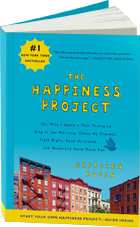
One very popular popularizer of positive psychology (as opposed to academicians like Martin Seligman) is Gretchen Rubin, author of The Happiness Project: On Why I Spent a Year Trying to Sing in the Morning, Clean My Closets, Fight Right, Read Aristotle, and Generally Have More Fun. In her penultimate chapter, one of the goals she sets herself is to “give positive reviews.” It seems to be part of a strategy played out in her final pages to upend possible criticisms of her own book. I’ve really never seen a writer do this so blatantly.

I am not going to obey her, though I want to say that her book was not as bad as I thought it would be. There’s plenty of practical advice in it that’s perfectly good on one level. Rubin even gives the book a veneer of self-criticism here and there, and she doesn’t present herself as perfect. She qualifies things and even notes that “Happiness doesn’t always make you feel happy” (79). I liked that she didn’t sell her intelligence short by being really simplistic, though it can’t be avoided completely in this kind of book. And I truly liked her focus on the ordinary. This is one piece of “stunt nonfiction” that doesn’t take us off to a war zone or an exotic adventure. It’s rooted in the home, which I found appealing. In that way, others truly could use her as an example for their lives if they wanted to, at least in bits and pieces.

Yet, one of the main things that kept slapping me in the face as I read this book is that Gretchen Rubin is basically a very wealthy and well-educated woman who threw her career over to become a housewife with a boatload of resources and time at her fingertips. I don’t want to judge her negatively for that fact, but none of this is presented particularly honestly; rather it is skirted. It’s not that she lies exactly, but nowhere does she mention the fact that her father-in-law is Robert Rubin, former U.S. Secretary of the Treasury and someone reputed to have received more than $126 million in cash and stock during his eight post-government years as an executive at Citigroup. Before he worked in the government, he was a member of the Board and Co-Chairman of Goldman Sachs; lord knows how much money he made there.

To me, this matters. I like to know who I’m taking advice from and how her circumstances are likely to affect the advice she gives.

Not that the Rubins are not good people. Robert Rubin, though a very wealthy man, is a Democrat, and web sources note that one reason he gives for that is that the world is not just and that not everyone has the same opportunities that he had and has. He feels that Democratic social policies contribute to a more fair nation. So, he is interested in social justice, and I appreciate that kind of philosophical generosity in a rich man.

I don’t know if Gretchen shares her father-in-law’s concern. In one odd little aside, she notes that “I … accepted my idiosyncratic reluctance to read any book (or see any play or movie) that centers on the theme of unjust accusation. I was never going to be able to force myself to read Oliver Twist, Othello, To Kill a Mockingbird, Atonement, A Passage to India, Burmese Days, Crime and Punishment, or Arthur and George if I could avoid it—and that was okay” (229-30). Certainly not all of these books are about class and racial injustice, but most of them are. Though Rubin said nothing else on this topic, this one sentence revealed to me a huge willingness for her to ignore whole realms of dire experience and certainly a lack of interest in how the other half lives.

The first thing that made me feel right away that something was wrong in Happiness Project-land was that I couldn’t imagine how anyone would ever have the time to spend on all these little projects that Rubin describes. My god, she wrote a novel in a month (NaNoWriMo style), she kept a resolutions chart; she kept a food diary and a gratitude notebook; she started a new blog that she posted on six days a week, created a huge scrapbook of clippings, established memento file boxes for each year of her children’s lives, self-published several things through lulu.com, and made countless scrapbooks and photo albums for her family members. She also ran multiple reading groups, threw numerous large parties, joined an expensive new gym with a personal trainer, volunteered at the local library and her daughter’s school, cleaned out all the closets in her house, and did her sister’s Christmas shopping for her. To me this did not sound like someone with a day job.

Rubin writes of herself as having made a “career change.” She decided that, in spite of the fact that she graduated from Yale law school and clerked for Sandra Day O’Connor, the practice of law was not her thing, and so she decided to become a writer. Now, this decision for her did not imply near-starvation or long years of struggle. She speaks of working with her agent as though she is dropping off dry cleaning. Anyone could do it. She notes that after she started her blog on the Happiness Project, she was delighted to find that she had made the Technorati Top 5000 without even trying. (Yet somehow she is aware that Technorati exists.) At one point, because her husband has been diagnosed with asymptomatic Hepatitis C, she reads up on organ donation issues and then “joined the board of the New York Organ Donor Network” (291). Just like that. There is no discussion of how her connections influenced these accomplishments or whether her “career” as a writer included living off what she had made as a writer before The Happiness Project became a bestseller.

While this occurred to me in the first half of the book, the real downturn for me was Chapter 7 on “Buy Some Happiness.” This chapter was chock-a-block full of stuff that comes from a wealthy person’s perspective, even if many not-so-wealthy people also buy it. It was also full of the sentiment that although money is not the only thing that gives happiness, it is certainly a good in itself. There is no discussion whatsoever of the corrupting possibilities of money. She does, however, note that money should be spent “wisely” in order to contribute to happiness. “People at every level of income can choose to direct their spending in ways that take them closer to happiness—or not,” she claims (171). She never discusses why they don’t—why, in particular, poor people might make a lot of spending decisions that better-off folk would consider short-sighted and even destructive. This edges very near to a blame-the-victim stance. It was pretty much downhill from there.

One of the most disturbing parts to me had to be when Rubin decides in contemplating spiritual issues to read “memoirs of catastrophe,” mostly those about illness and dying. Her entire response to these memoirs is that they made her recognize how much better her life was than those of the authors or subjects of the books she read. She admits that she feels a little guilty about this, but then moves on by saying that these authors “emphasized the importance of cherishing health and appreciating ordinary life” (202). That may be true, but it still seems to me incumbent on a reader to muster some sympathy for those in terrible situations, and Rubin strikes an odd note at the end of that section when she asserts that “I don’t think these memoirs would cheer me if I’d had more brushes with serious illness” (202). She hasn’t even bothered to understand the genre enough to know how many people are comforted by knowing that they are not alone in hard times. In other words, her rather self-centered reasons for “enjoying” them are the only reasons she can conceive of.

At the end of that same chapter (8), which focuses on the need to “Contemplate the Heavens,” she trots out all the reasons why someone might resist happiness: it’s not a worthy goal (it’s self-indulgent), it is associated with a lack of intellectual rigor (it’s not “cool”), some people use unhappiness as a guilty control mechanism, and some people fear that being happy will tempt fate to bring disaster down on them. She dispatches all these arguments in a mere three and a half pages, which, I must add, she does with very little intellectual rigor. Then she notes the ultimate cause of resistance: “Happiness takes energy and discipline. It is easy to be heavy, etc.” (218).

She reiterates this at the end of Chapter 9, on “Pursue a Passion,” when she encounters a naysayer who quotes John Stuart Mill as saying, “Ask yourself whether you are happy, and you cease to be so.” She dismisses this idea in exactly sixteen lines. And she concludes, “you must make the effort to take steps toward happiness” (233-34). I think about the happiness that has flooded me at completely unexpected moments, and I wonder. But there is no serious self-questioning here.

In Chapter 10, “Pay Attention,” she decides that the traditional Buddhist koans aren’t for her, but that she has some quotes that can serve the same function for her. This is a very funny section because none of her “koans” are koans at all. She spends more time contemplating the meaning of Samuel Johnson’s “He who would bring home the wealth of the Indies, must carry the wealth of the Indies with him” than she did Mill’s statement at the end of the previous chapter. Her interpretation of this statement, however, is no deeper than her dismissal of the other. All it means to her is that happiness inheres purely in the individual and not in circumstances.

In the section of Chapter 10 already mentioned above, on giving positive reviews, she notes repeatedly that it is easier to give negative ones. While some of the assertions she makes in the book about happiness are supported, at least marginally, by some scientific studies, she gives absolutely no evidence for the claim, repeated numerous times in the last few chapters, that it is easier to be negative. I myself have to say that I find writing this kind of review, where I try to be thoughtful and fair about saying even critical things, far more challenging for me than simply writing, “Oh, what a cute book. It’s so true.” I work hard for a fair and balanced critical mind, and most of the intellectuals, writers, and scholars that I know do, too.

These last few chapters of the book are filled with material seemingly designed to dismiss criticisms that Rubin seems aware may come up. Perhaps the funniest of these is that she spends numerous passages quoting from people who have posted on her blog to the effect of how much her blog helped them. How could this handful of readers of her blog be wrong? She even quotes her sister and her husband to prove that she’s become a happier and therefore better person over her year of effort. I mean, would you quote your sister or husband as proof of anything? That’s like someone in a creative writing workshop telling everyone that his mother liked his story so it must be good.

However, if the bestseller status of Rubin’s work is any indication, this strategy seems to have worked, much to my chagrin. She’s now working on a Happiness Project for children. I can’t wait to get those kids in classes I teach. It might make me cry.

Really, it’s not that I don’t want people to be happy, but I just can’t believe that this is the way. It leaves too many other important values in the dust.

The Dollmaker

Posted on

This Tuesday, I will take a break from the weekly song posts and talk about a book that makes me cry. My friend Anna had mentioned on Facebook a few weeks back a big, weep-inducing Victorian novel she loved, and it brought to mind my own literary crying experiences. If you have any to offer, let me know.

It was a very seventies chair, the one I sat in while I read and cried over Harriet Simpson Arnow’s novel The Dollmaker. The chair was huge and low-slung, was upholstered with lime green ribbed velvet, and had an ottoman the size of a swimming platform. It was a chair that thoroughly enveloped its occupant, or occupants, as it was possible for two to sit together in it quite comfortably, even non-lovers. It was the greatest place for reading I’ve ever known.

The chair and my middle-class, suburban, 1970s life contrasted sharply with the poverty-ridden, rural and then urban, 1940s world of The Dollmaker. Yet much of the novel was set in my beloved Appalachian Mountains, and Arnow’s descriptions of the piney smell and caressing air resonated with me. She had the place down. When the main character, Gertie, packs up her kids and moves to Detroit, where her husband has found war-time factory work, I felt the dislocation along with her. After all, my family had moved several times during my childhood, and I had my own sense of dislocation.

Gertie is tough as nails. In the opening scene of the novel, she is racing to a clinic on a mule with one of her children, who is so ill with congestion that he is near choking to death on mucus. Finally, she stops and cuts a hole in his windpipe so he will survive til she gets him to a doctor.

Gertie, however, is also an artist who sells out. She is a whittler, but once in the city, she turns her craft to cheap and simple results that she can sell for extra income. No reader could fault her for this, as she’s contributing to the survival of her family, but I felt the pain of her compromises. I came to see that art is not created in a vacuum and that talent does not always come to full fruition.

What made me sob over this book, though, was the character of Cassie Marie. (I later named a cat after her.) One of Gertie’s children, she is lovely and imaginative and dreamy–and ill-equipped for the big city slums. She dies, of course, in one of the most harrowing scenes I’ve ever read anywhere in literature, run over by a train while pursuing her imaginary friend, Callie Lou. Both the mother, desperately and futilely trying to get her to the hospital and save her, and the daughter, lost to a brutal world she doesn’t belong in, are tragic to the core. I still identify with Cassie Marie in a world where there seem to be fewer and fewer places where the dreamy and impractical can survive, much less belong. Gertie could adapt; Cassie Marie could not.

It may be that now in my life, I feel more like a combination of Gertie’s determination and toughness and Cassie’s diffuse enchantment, but I sometimes wonder if in fighting for survival I have given up too much of my whimsy and day-dreaming. I also feel for so many of my students, the “creative types” who don’t want to become part of the corporate machine, but who find few other avenues open in the narrowing trends of our work world. The Dollmaker taught me some of my first lessons in the challenges of a creative life without wealth.

Hubris and Art

Posted on

Maybe “hubris” is too strong a word. But the recent tragic and avoidable death of a former colleague has made me think about how we see ourselves as creative people. There’s a lot of baggage that comes with being a musician or an artist or a writer, at least in the popular image. It’s baggage that drags many people down. While I love Janis Joplin’s music, I don’t love that she died of a heroin overdose at the age of 27.

My former colleague died in a single-car accident when she lost control on a freeway. Her car was a convertible with the top down, and she was not wearing a seatbelt. She was thrown from the car when it hit a guard rail. Just a few days earlier, I’d had a conversation with a woman who’d had an eerily similar accident, but who’d been wearing a seatbelt and survived without injury. Neither car had flipped.

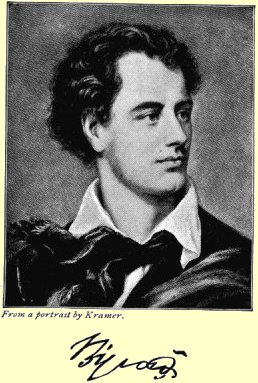
Last year I taught a course for Creative Writing students called Mad, Bad, and Dangerous: Images and Roles of Writers in Society. One of my purposes in teaching the course was to try to address the enormous mythology that surrounds artists of all types. Based on the prototype of Lord Byron–and the wit of Lady Catherine, who called him “mad, bad, and dangerous to know”—we tend to believe that writers and other artists have to be at least a little bit crazy and all the better to be bat-shit crazy. Crazy = creative in this formula. The idea goes back to the Greeks.

What surprised me was how completely unwilling many of my students were to even contemplate that this might not have to be true. I plied them with studies that demonstrate that the connection between creativity and mental illness is minor at most, and that many other factors are far more important in terms of what creates a writer (such as reading a lot). I asked them to read essays by famous, mentally well-adjusted authors. We read about how “blandness” is an aesthetic value in Chinese culture and how the role of artists in that society is different than in ours. They didn’t care. I knew the myth was powerful, but I hadn’t realized that even information and alternative models wouldn’t quell it.

So many of us have an image of ourselves as rebels and daredevils. And there is a kind of truth in it in that we need to be willing to take certain kinds of risks, at least intellectually and financially.

It is also necessary for writers and artists to have a healthy dollop of ego in our personalities. Without it, we would never have the nerve to go for it, to assert that we have something important enough to say for others to listen, and for us to survive the constant rejection and criticism that is always a part of a writer’s life. Frequently, that ego becomes defensive and overwrought in the face of so many fears and difficulties. And because another of our cultural myths is that artistic production is the result of genius, writers frequently begin to find it necessary to believe in their own invincibility, superiority, and exceptional nature. To put it crudely–and I just can’t think of a more apt term–it’s a mind-fuck.

What this too often leads to is a kind of bravado that involves drinking too much, taking drugs, acting irresponsibly and selfishly in the context of friends and family and self, and all manner of other wild behaviors. These habits by no means belong strictly to the arts, but in the arts we justify them with phrases like, “Genius takes its toll” or “Artists are crazy,” followed by sighs and eye-rolls. Everyone else who acts like this is just a jerk with problems, but we’re supposed to live on the edge. We are de-legitimized if we don’t.

Maybe this seems like an odd complaint, considering that my blog is about increasing intensity of feelings and not being vanilla and fake. Part of what I feel, however, is that, based on living this exaggerated if not false image, many of us in the writing world are losing touch with the real intensity of what it means to be creative and artistic. I even sometimes find in my students—and others— more of a desire to “be a writer” with all that implies about celebrity and lifestyle than to actually perfect their writing. The writing world is reaching a point where we will soon have our own Paris Hiltons. That may be inevitable, but let’s remember that writers and artists and musicians are distributed along the personality spectrum. Yes, some of us have mental health issues, but we don’t need to celebrate that. And no doubt there is some value in having a wild streak. Even I claim one. But we don’t need to drive each other further into stereotypes that end up killing us.

The Meadow Mouse

Posted on

Today is the birthday of poet Theodore Roethke, who chronicled the natural world and his own loneliness for many years. This poem combines those two themes and reaches a kind of connection to the larger world that we might call empathy.

The Meadow Mouse

1

In a shoe box stuffed in an old nylon stocking
Sleeps the baby mouse I found in the meadow,
Where he trembled and shook beneath a stick
Till I caught him up by the tail and brought him in,
Cradled in my hand,
A little quaker, the whole body of him trembling,
His absurd whiskers sticking out like a cartoon-mouse,
His feet like small leaves,
Little lizard-feet,
Whitish and spread wide when he tried to struggle away,
Wriggling like a minuscule puppy.

Now he’s eaten his three kinds of cheese and drunk from his
bottle-cap watering-trough–
So much he just lies in one corner,
His tail curled under him, his belly big
As his head; his bat-like ears
Twitching, tilting toward the least sound.

Do I imagine he no longer trembles
When I come close to him?
He seems no longer to tremble.

2

But this morning the shoe-box house on the back porch is empty.
Where has he gone, my meadow mouse,
My thumb of a child that nuzzled in my palm? —
To run under the hawk’s wing,
Under the eye of the great owl watching from the elm-tree,
To live by courtesy of the shrike, the snake, the tom-cat.

I think of the nestling fallen into the deep grass,
The turtle gasping in the dusty rubble of the highway,
The paralytic stunned in the tub, and the water rising,–
All things innocent, hapless, forsaken.

Not Easy

Posted on

Yesterday I had a naturally weepy day. At first I didn’t know why, but I realized it had to do with a dream I’d had about the dead body of someone I knew recently killed in a car accident. One of these days I’m going to post some lighter entries, but yesterday I was feeling in touch with the risk that life is, how it can end at any time, how we live on that edge, how temporary it all is.

In November of last year I had a brain hemorrhage and could have died. Luckily, I didn’t, but lately death has seemed closer. One person’s near-death experience is just that, while another’s edges over into death itself. The distinction seems so tiny and which side we’re on such a matter of chance. And it’s difficult to hold on to valuable perspective that the proximity gives, perhaps because we tend to flee in fear of the unknown.

My friend Don Stap wrote a poem that speaks to this. It was originally published in The Northwest Review Winter 2010. Thanks to the author for permission to post here.

Not Easy

Not easy to not go back, to remain
in the moment of crisis, that clarity:

my crooked smile, my slurred speech.
Not easy. I’m not going back,

I said over and over one day on the porch,
tears and all, and then wrote it

down to read each morning as if
the ineluctable years between long ago

and now were less or more than the two
clocks I keep in my room so

from any angle I can see how many minutes
are mine–as if it matters that sometimes

I turn their small faces to the wall.
And yesterday, when I was away

but had not left it behind,
I sat on the embankment by the water,

a quiet place, mares’ tails in the high blue,
and when I wasn’t looking for anything

there in front of me was a honeybee,
small golden blimp, floating from tickweed

to tickweed, one flower to the next
with no apparent pattern, no method,

and I wondered how,
in the constancy of his randomness,

how did he know where he had been
and where he had yet to go?