Author Archives: Lisa Roney

Painful Positivity at the Gym

My Y uses these new computerized bikes, too. Photo by Mass Communication Specialist 3rd Class Joshua Nistas of the U.S. Navy.

Mindless positivity is rampant at the Y where I belong. It’s all part of the gung-ho, cheerleader/coach kind of thing that is supposed to help motivate us non-athletes to get in better shape and, more subtly, part of the prosperity gospel that implies that God wants us to be happy and healthy, not to mention rich. Recently, the YMCA changed its official name to just “the Y,” and I had a momentary hope that the more supercilious aspects of the Christian basis of the Y would abate. It was only momentary.

* * *

There’s one indoor cycling instructor who otherwise teaches a great class. But at the end of each one, she calls out to each departing participant, “Have a blessed day.” She says “blessed” with two syllables, and I cringe every time.

* * *

One day, another spin instructor surprised the class with a lecture on excuses. “We all have problems,” she said. “Your back or your knee or your whatever shouldn’t get in your way. You just have to push yourself beyond it.” I looked around the room at us middle-aged professionals mixed with the occasional housewife. “I don’t let my aches and pains get in my way,” she smiled. “So, no excuses. You’ve got to get out of your comfort zone!”

For a long time, it’s been well known that effective training takes sensitivity to where you are in the moment and is most effective when you push yourself only hard enough, not too hard. Haven’t these people ever heard of target heart rates or the ten-percent rule? I stared at the heart rate chart on the wall and wondered that no instructor in my spin classes ever mentions it.

I realized that most of these young-ish people who exercise several hours a day in their role as instructors simply think that most of us are lazy. They must get frustrated at not producing fitness “successes”—those who lose and keep off the extra pounds or who turn into ideal amateur athletes. But what I see is that their methods drive people away. The expectation of transformation is unrealistic. It’s hard to get past that sense of failure and just keep on muddling along at our distracted, so-so, not-top-priority way. Every January, I watch the result—the full classes that will gradually winnow down and then fill up before beach season with a whole different group. The Y will keep hounding us to bring in new members.

Last summer, in fact, I nearly became a total gym drop-out. I’ve belonged to the Y for several years, and have had some great instructors. But trends sweep the field of fitness just as they do other arenas, and lately one particular indoor bike company sold its bill of goods to my Y. These are sleek bikes with computerized screens, similar to the ones on the treadmills and Stairmasters upstairs. The old Schwinns are out.

Now in every class, we are constantly barraged with numbers. We are told repeatedly just where our RPMs should be. As a sometimes nod to the variability of our fitness, the instructors might say, “I won’t tell you where your tension level should be, but keep your RPMs up with the rest of us.” Others simply say, “Everyone should be running at 90 RPMs and a pressure reading of 14.” This is insane.

No doubt the numbers on the screen could be well used by individuals to compare their performance between one ride and the next, but the way the instructors have been taught by the company to use them, they create a Procrustean bike. They have eliminated one of the best things about previous cycling classes, which is their ability to accommodate anyone with any level of fitness. Our Y has already started designating which spin classes are “basic” and which are “advanced.” This is a totally unnecessary move and one that simply complicates busy people’s schedules. By golly, though, they have got to be using the technology in a high-profile way, and the only way to do that is to talk out loud about the numbers.

The bikes create a lot of these tail-wagging-dog issues. Spinning has for many years been done in dark rooms. The first time I ever went to a class, the fellow next to me told me that he’d managed to lose twenty pounds over the previous two years by sitting in the dark on the back row where no one bothered him. I myself enjoyed the darkness because it helped me concentrate on my own workout instead of watching what other people were doing, as is so often a problem in other kinds of exercise classes. Now, however, we are told that cycling in the dark is bad. Supposedly this is a general industry-wide discovery—“engagement is better”—but I recognize in it that one bike company’s influence. Their computer screens are not back-lit and can’t be used in the dark.

I have watched as the classes have become more and more dominated by younger people and the middle-aged people like me revert to the individual machines upstairs and drinking coffee in the lobby. But maybe, I think, this is the intention. Get the riff-raff out of the spin classes. Return spin to the kick-ass reputation it sometimes have. It is all about that image of what the Y is, and I imagine that attracting younger, more stylish members is a marketing goal.

My mind reels back to decades ago when I made my first decision to start working out. At the time I was a staff member at a university, and I convinced my friend and co-worker Charlene to go with me to the university gym. At one point, in the middle of our ride on the stationary bikes, she said, “Lisa, I don’t think we are really the types for this.”

It was true that we got some stares in the weight room. At the time it was inhabited mainly by men who looked as though they belonged there. We fielded a few mild insults and shaken heads over the low weights we would use. The guys would stand over us impatiently and sigh as we did our reps.

“Charlene,” I said, “I am just tired of letting the assholes have everything.”

I have seldom looked back from that moment, and I have belonged to a gym constantly since then in spite of not being the type. The recent regime changes at the Y, though, have made me wonder. My mother has been lifting weights since she got diagnosed with osteoporosis a few years ago, but she has stayed fit well into her seventies mainly by walking.

* * *

Another spin instructor one day before class was holding forth about how she doesn’t believe in therapy. “You can’t change the past,” she proclaimed to her captive audience. “You just need to forget whatever it is and move on.”

“Ah,” I said from the middle of the room, “but you can change the past.” I finally got her to admit that you can at least change the way you think about the past. But I could tell that she didn’t think that mattered.

I accept this kind of supposedly motivational positivity as par for the course in the world of health and exercise. Taking control of your life and letting go of the negative go hand-in-hand with movement, evidently. I have to say I prefer the positive style over than the one where the instructors yell at you and tell you that you’re failing. But sometimes the two seem to me to be two sides of a coin.

* * *

Before an indoor cycling class a few weeks ago, the instructor whirled through the small anteroom where several of us were changing our shoes. I hadn’t been to her class many times before, but I was trying to change my schedule around a bit. She tossed down her bag on the instructor’s dais and stomped back past us to the water fountain.

“I just can’t believe people,” she said, glancing toward one of the other women. She bent over the water fountain, filling her bottle. “You’d never believe this client I saw just now.” She explained with a sweep around the room that she’s a home health care worker. “We try to help them,” she said. “I tried to be nice.” She turned her head to the side. “But he was so un-American.”

I steeled myself. The other women murmured their sympathy and went back to tying their shoes. But the instructor bull-dozed on. “I mean, he’s… Well, he’s fat,” she said, screwing her nose up a bit. “And he’s diabetic and all that. I keep telling him that he has to eat better, and what does he say? He says it’s all because he lives in America!” She sputtered. “I just can’t tolerate that kind of anti-Americanism.”

I didn’t really know her well enough to get into it, so I sat horrified as she went on. “You know, I live in America, and I’m not fat! It’s all his own fault and he wants to blame the greatest country in the world.”

This exchange (or lack thereof) has haunted me since. That so many of the Y instructors use themselves as the measuring stick to judge other people haunts me. That this particular woman’s inability to sympathize with an immigrant who has left his native culture and perhaps the loving support of his family haunts me. That he lives in some crappy apartment with a stove that hardly works and so chooses to eat fast food haunts me. That she believes that the best way to help him is to blame him haunts me.

Well, a lot of stuff haunts me. I think that over the past months of my genuine emotion exploration, what has been most useful have been reminders about self-compassion and compassion for others. It’s even a tenet of positive psychology. It’s just a part that a lot of positivity enforcers forget.

The Sweet Hereafter

Today’s post commemorates Mychael Danna‘s soundtrack music, but also the film it was written for, The Sweet Hereafter, directed by Atom Egoyan, and the novel of the same name by Russell Banks. The novel and the movie, though distinct, both illuminate the aftermath of a tragic accident of a school bus and how it changes the people of a small town.

This is as wintry a tune as can be, and, though we don’t have much in the way of cold weather in Florida, I know that many are going about new semesters at school (or just another work week) in the snow or chilly rain or snappish air today. May this song make us all take a moment to remember to be careful in all our rushing around.

All of us, no matter the weather, suffer the blame game. We give it and we receive it from others and ourselves. At times designating responsibility is perfectly appropriate, but often the anger that goes along with blame masks the emotion that’s more at root and more genuine: sorrow. That old human condition is as tough as it is beautiful.

Here’s the trailer for and review of the film, and a brief interview with Russell Banks about his inspiration for the novel. And here’s an auto playlist for Mychael Danna in case you have more time for peaceful, interesting music in your day or evening.

There’s Something Wrong with Aunt Diane

Lately, I’ve been pretty far from my original subject matter of crying. It’s been important for me to explore other kinds of genuine emotional expression, and I’ve enjoyed my thought travels in that regard. Last night, however, simply by accident, I ended up watching the HBO documentary film There’s Something Wrong with Aunt Diane. It’s a truly tragic story that you may remember from original news reports after July 26, 2009, when Diane Schuler drove the wrong way on the Taconic Parkway, causing a horrible traffic accident. She killed herself, her daughter, her three nieces, and the three men in the vehicle her van hit head-on, and injured her son, who was the only survivor in those two vehicles.

The case is indeed one that has no sure answers: There is no denying that Diane Schuler had a blood-alcohol level of 0.19 with more undigested alcohol in her stomach. Her blood also contained THC, indicating that she’d been smoking marijuana. Her family—and the documentary—make the argument fairly convincingly that this was completely unlike her, in fact, unbelievable. Both she and one of her nieces had called her brother from the road and said that something was wrong, that she wasn’t feeling well, and she had stopped, apparently sober, to try to buy some pain relievers that the convenience store didn’t carry. They believe that she must have had some other kind of health emergency first—likely a stroke caused by an abscessed tooth. But her autopsy supposedly ruled that out even before the toxicology results came out.

Watching this film is hard, and there is no uplifting ending, so it made me think not only about suffering but about narrative, and the attractions and pitfalls of nonfiction. It’s instructive to compare the documentary, even with its clear sympathy for Diane Schuler, to the fictionalized version in Law & Order’s episode “Doped.” In that version, the police end up proving that its fictional driver had been doped with alcohol in a smoothie provided by someone else and with propofol, an anesthesia drug, in her asthma inhaler. It turns out that one of her colleagues at a large pharmaceutical company has drugged her because she intends to blow the whistle on a bad product.

The fictional TV show is very straightforwardly satisfying: the mother ends up being entirely faultless, her husband it turns out did know her well in his insistence that she didn’t drink, the bad guys are identified and punished, there is a clear explanation for why these terrible events occurred. At the end of the story, we may have sorrow, but we don’t have any questions. They’ve all been answered.

Of course, that is a TV tradition more than it is a habit of great fiction. And most great fiction leaves us with many unanswered questions. Most great fiction is more like nonfiction than TV episodes are. I need only mention Ford Madox Ford’s The Good Soldier and Emily Brontë’s Wuthering Heights. Think of anything that William Faulkner wrote, especially that ending of Absalom! Absalom! wherein Quentin protests that he doesn’t hate the South and we are left with the same question he is—what his relationship with the South really is and will be. Great fiction doesn’t try to erase the mystery that comprises actual human experience for the sake of a tidy story.

Yet it is true that one of the great difficulties of writing creative nonfiction is that life doesn’t always follow clear paths. The debate in the Schuler case goes back and forth: Are the people who have lost people (Schuler’s brother and his wife, the families of the men killed in the other car) simply looking for a way to file this event in the “explained” file so they can move on? Are they too eager to condemn? Or are her husband and another sister-in-law in denial about what she was capable of? Lawsuits and counter-suits are being filed, and that’s tragic in itself. The whole question of how and why people respond so variously to one event floats in the air as unanswered as the cause of the accident.

For me, when a woman who is not generally much of a drinker and only smokes pot to get to sleep at night is determined to have been smashed and totally stoned at midday with a carful of children she loved, it’s easy to believe that something else was going on. There’s Something Wrong with Aunt Diane demonstrates that she was a woman who might very well be reluctant to ask for help if she was ill and might think that she could just tough it out until she got home. She had been self-medicating her insomnia for years, and she might have self-medicated herself to death if she were in pain.

Having had that extremely painful hemorrhagic stroke in 2011, I can imagine it. I rode the bicycle a mile and a half home with my head pounding as though being repeatedly hit with a nail gun. I didn’t know what else to do, though I had a cell phone and my husband could have called for help. I am very glad that I was not driving a car at the time, and I am a person not averse to medical help, so I can imagine a person like Diane Schuler trying to ignore her situation and carry on.

Having also had more than one serious medical situation that has no clear explanation, I can also believe that something happened to Diane Schuler that her autopsy didn’t detect. If they can’t always get to the bottom of things when you’re alive to tell the tale, it seems to me that with someone dead, there is a lot that’s easily missed in the body. Once the toxicology report came in, there was no interest or motivation in pursuing anything else. Those who wanted one had an explanation, and it was that Schuler was an irresponsible drunk, in spite of all the evidence of her life to the contrary. In some ways that seems to me like a fictionalizing tendency, or I should say, an oversimplifyingly fictional one just as much as the wholesome-mother version on Law & Order.

That doesn’t mean that I am satisfied by There’s Something Wrong with Aunt Diane. It starts out with the same optimistic tone of any whodunit. But by the end its insistence on the unknowability of what happened is appealing at an intellectual level, but devastating at an emotional one. It’s the kind of movie where you don’t know quite what to do with yourself when it’s over. I myself remain unsure whether that’s a flaw in the writing and arranging of the documentary or whether it’s realistic and good. It might feel just a little too much like life. But I know I won’t forget it.

Raised on Promises and Ruby in Paradise

For the New Year, I thought I’d come a little closer to the twenty-first century in my weekly artistic selection. I’m still twenty years away, but, hey, I am progressing. Sam Phillips’ 1991 song “Raised on Promises” is one of my favorite anthems for change and rebellion, born partly out of her own escape from a record label that insisted on marketing her as “the Christian Cyndi Lauper.”

Part of the reason it became that for me too is that it was used as music for Ruby in Paradise, an early Ashley Judd film about a young woman who slams out of her white-trash life in Tennessee and goes to Florida to find her way. When I first saw it, of course, I was living in Pennsylvania and had no idea I might end up in Florida. But I identified with the longing for escape and independence, not to mention the accent. Ashley Judd played the character with a delicate yet stubborn subtlety she’s rarely displayed since.

This artistic pairing has me thinking about new starts and about the promises we make and break (to ourselves and others). These seem like fitting contemplations for the start of 2012.

Curry and Kindness

A 1683 map of Sri Lanka from Geographicus Rare Antique Maps

Yesterday I picked up some friends at the airport after their holiday travels. In all the pre-holiday hub-bub we had not communicated all that well so I was early, and the plane was late, so I went round and round the airport drive too many times in the crisp Florida sun. At first I was listening to disheartening stories on the radio, but then NPR’s Talk of the Nation featured an interview with S. H. “Skiz” Fernando, author of the recently released Rice and Curry: Sri Lankan Home Cooking, and I perked up.

The guy sounded awkward and smooth at the same time, which always fascinates me. And then the show featured a call-in session. At first this annoyed me—each and every one of the callers just wanted to talk about herself. One, who admitted to living in some isolated place like Wyoming, even wanted to talk about the difficulty of obtaining kefir lime leaves, which Mr. Fernando had immediately said are not part of Sri Lankan cuisine. Another said she met Mr. Fernando when he performed in Paris a decade ago—and the radio host interjected to explain that he is also a hip-hop artist. Clearly, Mr. Fernando did not remember the caller at all, though he treated each caller gently.

But then the radio show host read a few emails, including one from a guy, now living in Florida, who wrote that he had fond memories of the Sri Lanka Curry House in Minneapolis from when he’d lived there a couple of decades earlier. He noted that it has since closed, and that it didn’t include “mild” on the menu.

I laughed at the collision of time and place and suddenly found myself more sympathetic to all those who called to display their memories. I too live in Florida now but lived once in the Twin Cities. The Sri Lanka Curry House was a long way from my home in St. Paul and required a car to reach, so I only ate there once. But I remember it, though it was important only because I discovered something bad about myself. I had gone there with a large group of women, some of whom were my friends. I’m not sure of the occasion, but it might have been after a lecture given by Germaine Greer. We had been provided tickets by a friend whose mother had been one of the organizers. So, if my memory is correct, we were a bunch of feminists. Several of our crew were also lesbians.

It’s hard now to even remember how big a deal that was in 1979 or -80. I had some mixed feelings at the time, not so much about how any individual expressed her sexuality, but how the politics played out. Frequently, one of my lesbian housemates had told me that sooner or later I would see the light. Surely, she said, I would evolve. I could accept that she was a lesbian, but she could only accept that I wasn’t as a temporary setback.

The peer pressure was enormous, and with my many man troubles, I sometimes wished that I could at least claim bisexual status. But I have never been one to cave in to peer pressure. Instead, I get stubborn and resentful. Until that dinner at the Sri Lanka Curry House, I hadn’t really felt that consciously.

One of the women at the restaurant that night was named Marcie. I didn’t know her well, as she had repeatedly snubbed me at various house parties due to my retro-hetero status. As the waitresses put together several tables for our group, Marcie strutted up and down, sorting out where to sit. She noted repeatedly how much she loved hot food and how much she looked forward to this. The rest of us shuffled out of her way. Finally, she chose the middle seat on the table’s opposite side from me. I sat near a corner.

From what I recall, the Sri Lanka Curry House did have a “medium” designation on the menu, and they recommended it to all non-Sri Lankans. Most of us acceded to the waitress’ recommendation and ordered our curries as mild as possible. Not Marcie. She insisted that she was a pro with curries and that she loved her food hot. The waitress tried to talk her out of it, but she shook her head for emphasis. “Very hot,” she said.

Soon enough, the food came, steaming cardamom, cinnamon, turmeric, coriander, cloves, cumin, and fennel. I was not knowledgeable enough to smell the hot flavors of the chilis and mustard, and I wondered that the strongest tasting things often don’t have the most identifiable aromas. We oohed and aahed around the table, eager but tentative, taking mostly small bites and passing each other the condiments of coconut flakes and tomato relish.

Marcie lifted her heaped fork to her mouth and dug in. After a moment, her face blanched and sweat popped profusely out of her forehead. I had never seen anything like it. She grabbed for her water glass. “No!” someone yelped, too late. Marcie gulped water and then grabbed her neck as if to strangle herself. “Water is supposed to make it worse,” the helper said.

“It’s fine,” she said, gasping just a little. “Amazingly hot. But I’m okay.” She dragged her fork across the dish and lifted it again, more slowly this time.

Everyone looked at her, then we went back to taking our own small bites of our own super-hot “medium” dishes. I didn’t figure that Marcie would eat all of her dinner, but I found myself not minding. I found myself feeling a little mean.

After a bit of dawdling with her food, Marcie ventured a second bite. As soon as she took it, the sweat began running down her cheeks. She blinked twice, slowly, and pushed the plate away from her. Suddenly, she was face down on the placemat, groaning slightly. “Here,” her neighbor gestured to the waitress. “Bring a lassi. Mango lassi, please, quickly.”

Soon enough, the wise waitress appeared with the sweet, milky drink, and Marcie’s neighbor at the table clapped her on the back and coaxed her to sit up. “Here,” she said, “this will cool you off.” Marcie shook her head no and gasped out that her throat felt burned.

“You’ll feel better,” her helper said. “Really. It will soothe your throat.”

So Marcie alternated between rolling her head side to side on the placemat and sipping the lassi. Eventually she sat up and wiped her face with the cloth napkin, though the sweat continued to pour. Everyone cooed around her, asking if she would be okay, patting her on the back, and reassuring her that the food was “insanely hot” and that she couldn’t have known. Most everyone ordered lassis to keep her company.

I recall growing quieter and quieter as the evening went on. I didn’t order a lassi because I knew it would be too sweet for my diabetes, and no one talked about how great the food was except for the lassis. (The food was great.) One thought kept echoing in my mind: Machismo is dumb whether exhibited by a man or a woman. I had also discovered my own inescapable judgmental nature, and I knew this wasn’t a nice thing about me.

This is something I have struggled with ever since. Judgment is something we all need, but need to temper with kindness. I never would have set Marcie up for such a painful episode, but the fact that I really didn’t feel all that bad for her demonstrated to me my propensity to blame people for their own ills. It might have been easy for me to do that in such a clear-cut case, but most cases of blame are not so clear.

I have always had a hard time making excuses for people of the “you couldn’t have known” variety. And this has made me very hard on myself as well.

Lately, I have been thinking further about the way that language can be shaped to an interpretation. Some of this has come out of my reactions to all the “lucky” and “blessed” labels bestowed on me in recent weeks. But it goes beyond that to thinking about how our interpretations in the world of politics can be so different when reality is presumably the same (or at least close) for all of us. And to thinking about so many self-help endeavors that claim that if you view things positively, you will do better. I want to make more distinctions in all of this about what we can affect this way and what we are lying to ourselves about with euphemisms. I want to be able to tell the difference.

In teaching introductory creative writing, I often do a lesson about denotation and connotation. What, I ask my students, is the difference between red, maroon, scarlet, vermillion, cherry, rust, and cerise, not just in shades of hue, but in implication? What is the difference between wine and claret? Within individual word choices, of course, lies the way to truthfulness and accuracy in our writing. But they can also lead to manipulation.

These days I have been noticing these differences in day-to-day description even more. I am thinking about what the difference is between the opposites that we use for the same situations and things. The weather reports long ago changed from “partly cloudy” to “partly sunny” to try to keep people happier with the newscast. Someone said to me the other day that she wasn’t sure if her holiday had been relaxing or frantic. “I could describe it either way,” she said, “and both would be true.”

There have long been issues like this that are hard to split. In another memory from my college days, I actually remember having a conversation about whether or not all “nice” guys were also necessarily “boring.” Having since been trapped on many a date with a boring man, I can say that I no longer think the two words synonymous. In fact, now I think that the kind of man typically described as “exciting” might be boring in his likely narcissism and avoidance of depth. I wouldn’t use the word “exciting” to describe such a person at all. I would describe my husband both as exciting and as one of the nicest guys on earth.

What, I might ask, is the difference between mild, medium, hot, and very hot?

I am setting as one of my New Year’s resolutions to think about how to make these relationships between words and the world meaningful, and also to at least consider a kind interpretation when I can. Marcie, after all, could never have known how hot “very hot” was, even though I still feel a touch of satisfaction that she found out. Wink.

May we all have spicy kindness in the new year.

Vivian Maier and Art for Art’s Sake

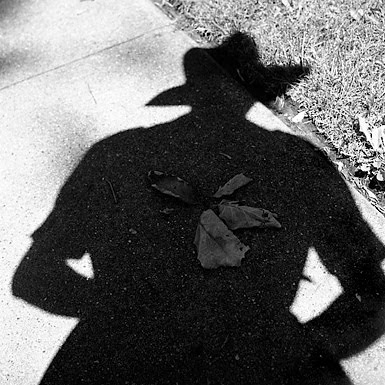
Vivian Maier self portrait from John Maloof's vivianmaier.blogspot.com

Bruce is in the kitchen sharpening our old, dull knives on the electric knife sharpener he got me for Christmas. It was nice that we both got and gave several presents that we will clearly share and share alike. We had a lovely day yesterday—a quiet morning together, an afternoon buffet and more gift opening with family and step-family, and an evening with our friends D and T at their new home, eating a little chicken curry and sharing the results of last week’s baking. We watched a digital fire on the TV screen since it is much too hot in Florida these days to even think of building a real one.

In the afternoon, while we were at Rick and Susie’s, I brought up what was probably my favorite gift this year—a book of photographs by Vivian Maier that Bruce had secretly ordered for me last April. Rick was still experimenting with a new remote device for their TV, and Bruce pulled up a slideshow of Maier’s work while we sat chatting, to test out the slideshow function on the remote and to show everyone what we were talking about. Soon everyone was mesmerized by the images on the screen. There are several portfolios on vivianmaier.com and on vivianmaierprints.com. I find her photos truly stunning.

Maier provides a good bridge for me between the fleeting Christmas holiday and the looming New Year’s one. Though the spreading recognition of her work probably won’t make any of the mass media’s “Top Events of 2011” lists, I consider my learning of her work one of my favorite discoveries of the year.

In fact, it was early in 2011 that I first heard of Vivian Maier and shared on Facebook this news report from WTTW in Chicago. Attention to her work has continued to grow this year, including a more recent report on CBS News (sorry about the unavoidable ad). More details of her life have emerged.

It’s interesting to me that, on the CBS video, gallery owner Howard Greenberg says repeatedly that Vivian Maier was “certainly no amateur.” In fact, what inspired me most about her story last year was that she was entirely an amateur. She took photographs not for any monetary, professional, or reputational gain. She took photographs because this was how she saw the world, because she was an artist and she clearly loved the art.

Amateur status has come to mean to most people an inferior result, but what Vivian Maier gave to me this time last year was a way to see my way forward through a return to working at my art because I love the activity, not because of some elusive potential professional gain. That is the more precise definition of the term “amateur,” and it suits Vivian Maier perfectly. She was an amateur who was also a master, and what she spent her time and effort on was her work, not on self-promotion or networking or salesmanship.

There’s a bit of a tragic element in that, as she died shortly before her work began receiving its due, and we all tend to assume that she would have enjoyed the recognition. But for all artists, it is difficult to sort out the love of the work and the daily practice of the work from the attention-seeking. Where is the right balance? We don’t know whether Maier ever walked into a gallery and showed her prints to a dealer, but it seems highly doubtful. Instead, she emphasized the “10,000 hours” of practice that are necessary for anyone to become a master at something and that Malcolm Gladwell noted in Outliers.

So I have found a new twist on the phrase “art for art’s sake.” In the nineteenth and early twentieth centuries it was used to indicate the opposite of social realism or other art with a moral or instructional purpose and was often used to criticize work like photography that contained an element of social commentary. Today, I have taken to using it to indicate instead the opposite of art with a commercial or professional purpose. Politics was once taken to pollute art, but now it may be the rank commercialism of all forms of it that corrupts it as much as politics does.

Vivian Maier took a lot of photos of poor people. She shows them in positions of vulnerability, their shoes worn, their faces dirty, their bodies thin and damaged. Yet, we see that same sense of vulnerability in the more well-off ladies with their fox fur stoles and businessmen with their white shirts. As an artist, she is a great equalizer, and I do think that her humanitarianism these days takes on political implications. Yet her pictures are never didactic. They simply open us to the world that was. And she never worried about offending or pleasing a patron or buyer. I think that shows in her work. Her devotion to her art, rather than to a career, will inspire me for a long time to come.

Holiday Makeovers

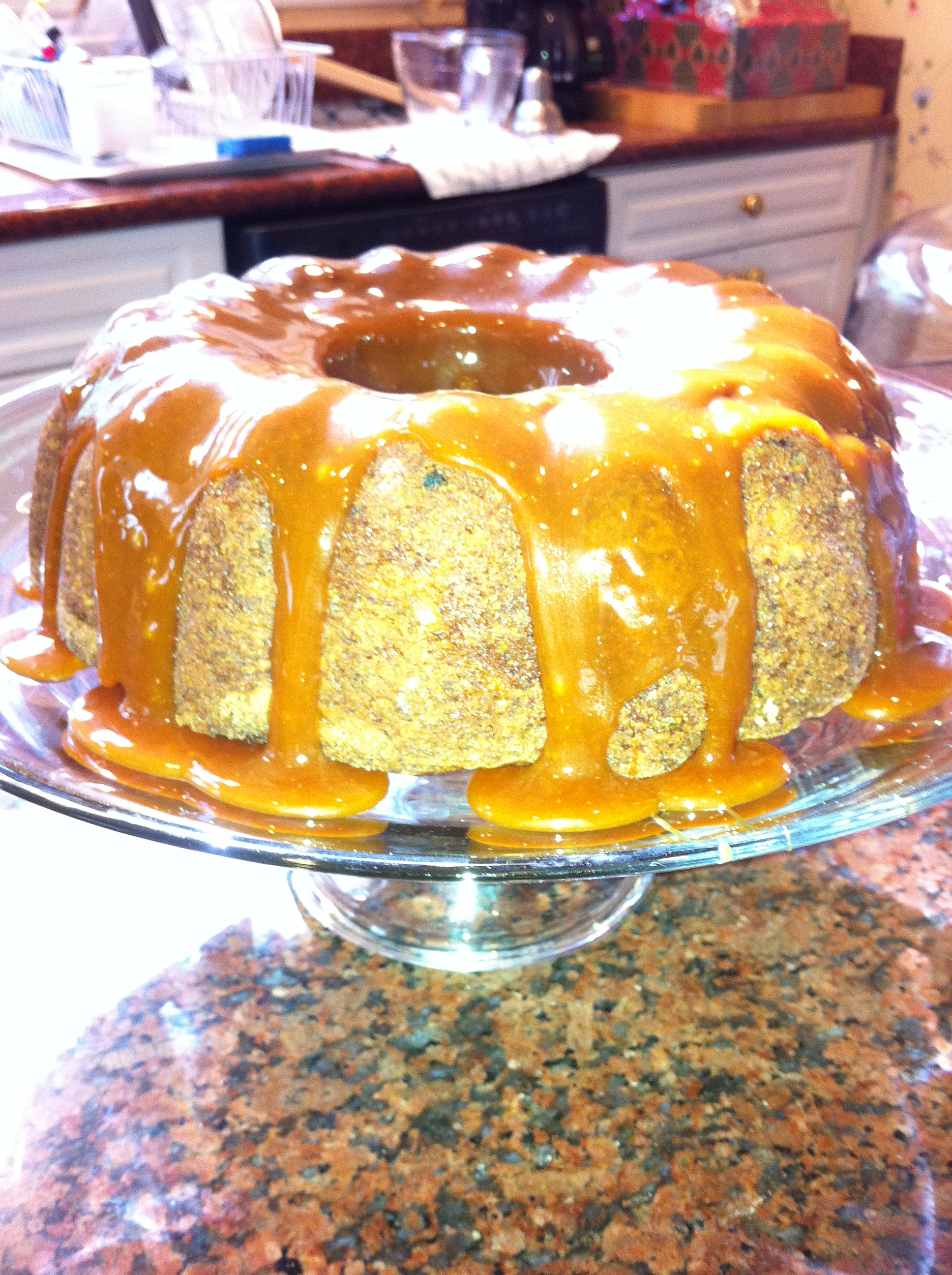
Caramel Spice Cake

Right now, I’m in the midst of making a cake. The icing-glaze is cooling and thickening before I pour it over the cake. My mom and I have stood over the new induction cooktop and the old cast iron skillet, stirring as the sugar, baking powder, buttermilk, and dollop of Karo syrup melt and bubble and foam and turn that magical, golden-brown color. The sound of the spoon scraping the bottom of the pan softened as I pulled up more and more of the browning sugar from the bottom. Finally, when just the right crisp smell arose, I turned the heat off and stirred in the butter. Now it cools.

I love this cake. Over all the holidays, it became my favorite from the numerous yummy things my mother and grandmothers baked. It is the one that I make still—not the amazing amalgamation cake, not the high white coconut cake, not even usually the dried apple stack cake. It is the humble cake that remains my favorite—dark and spicy, complex and serious.

I haven’t mentioned the name of this cake. For many years, it had an image problem. In my youthful days (before my parents divorced), we would throw parties at the holidays—friends would come by and eat well, sit by the fire and laugh, catch up after years apart at college or at new jobs. For years, few would eat this cake. It would sit unmolested while the aforementioned amalgamation, coconut, and apple cakes dwindled. I felt sorry for this cake, and for all the people who missed out on it.

So one year when I was in college, I convinced my mother to change the name. We put out little label cards for each dessert on the buffet. Lo and behold, the cake disappeared that year. Many commented on how delicious it was. It no longer had an image problem. We had changed the name from “prune cake with burnt sugar icing” to “caramel spice cake.” That was all.

Today, we laugh over the story. We feel a little conflicted still about what to call it. We talk about the ladies who created the original recipe, and how honest they were: the caramel glaze is, I am sure, not a genuine caramel as you would find in a box of candy from the Carmelite nuns. It’s a different process. And the prunes are a main ingredient, the fruit that moistens and darkens the cake and gives it that underlying rich flavor. But we faced up to the fact that “burnt” sounds bad and that people associate “prunes” with constipation relief. The latter might be a great thing alongside the overabundant and overly unhealthy food we usually fill up on at holidays, but no one wants to think about it while they indulge.

This is an image makeover that I can live with.

It’s also something that makes me think about the ways in which family traditions, especially around holidays, evolve and how that evolution is a great part of every holiday, even if sometimes we miss the way things were when we were younger. My mother’s most widely adopted holiday innovation was putting orange peel in the toll-house cookies—just the other day, after I’d given out a tin of cookies to our contractor, and he brought the tin back empty, I asked him which was his favorite. “The ones with the orange,” he said. “So good.”

My own adaptation of that standard recipe was using half shortening and half butter. The recipe says “either or,” and most cooks adamantly choose all one or all the other. The butter purists are after the flavor, the shortening folks cite its cheapness and lower saturated fat. I tried going with butter, but my cookies always spread out too much and burned at the edges. So it finally occurred to me I could combine the qualities. Voila! Perfect orange-tinted toll-house cookies.

My brother recently told me that his adaptation has been to the giblet gravy, which I gave up on entirely some years ago. He said the key is to leave out the heart and liver, which have a bitter flavor and which no one seems to want to eat. He still uses the gizzard meat and a hard-boiled egg for that chunky feel.

This year, I’m making another change—to the sweet potatoes. When I was diagnosed with diabetes, my mother took to reducing sugar all around. She immediately got rid of the icky marshmallows and gooey butter and heavy loads of brown sugar in the sweet potatoes, and she sweetened those with orange juice and just a touch of brown sugar. She would whip them up to a light soufflé-like consistency, sometimes with nuts and raisins, and they were great. But now I am married to a man from the northland who likes his regular old white mashed potatoes. So this year I decided that I wanted a different texture in one of the potato versions, and I am going to roast a medley of sweet potatoes, butternut squash, red peppers, and onions with olive oil, thyme, and rosemary.

All of these adaptations and all of this sharing of food is one of my favorite things about the holidays, along with the caramel spice cake. I love to bake, and I do it only once a year because as a chubby diabetic, the last thing I need is a lot of baked goods around the house. At Christmastime, I can give a lot of it away, though more and more people say they have too much. But there are still people who are eager to try the various attempts—the neighbors with a house full of teenagers, a few skinny friends, and others who are seizing the day.

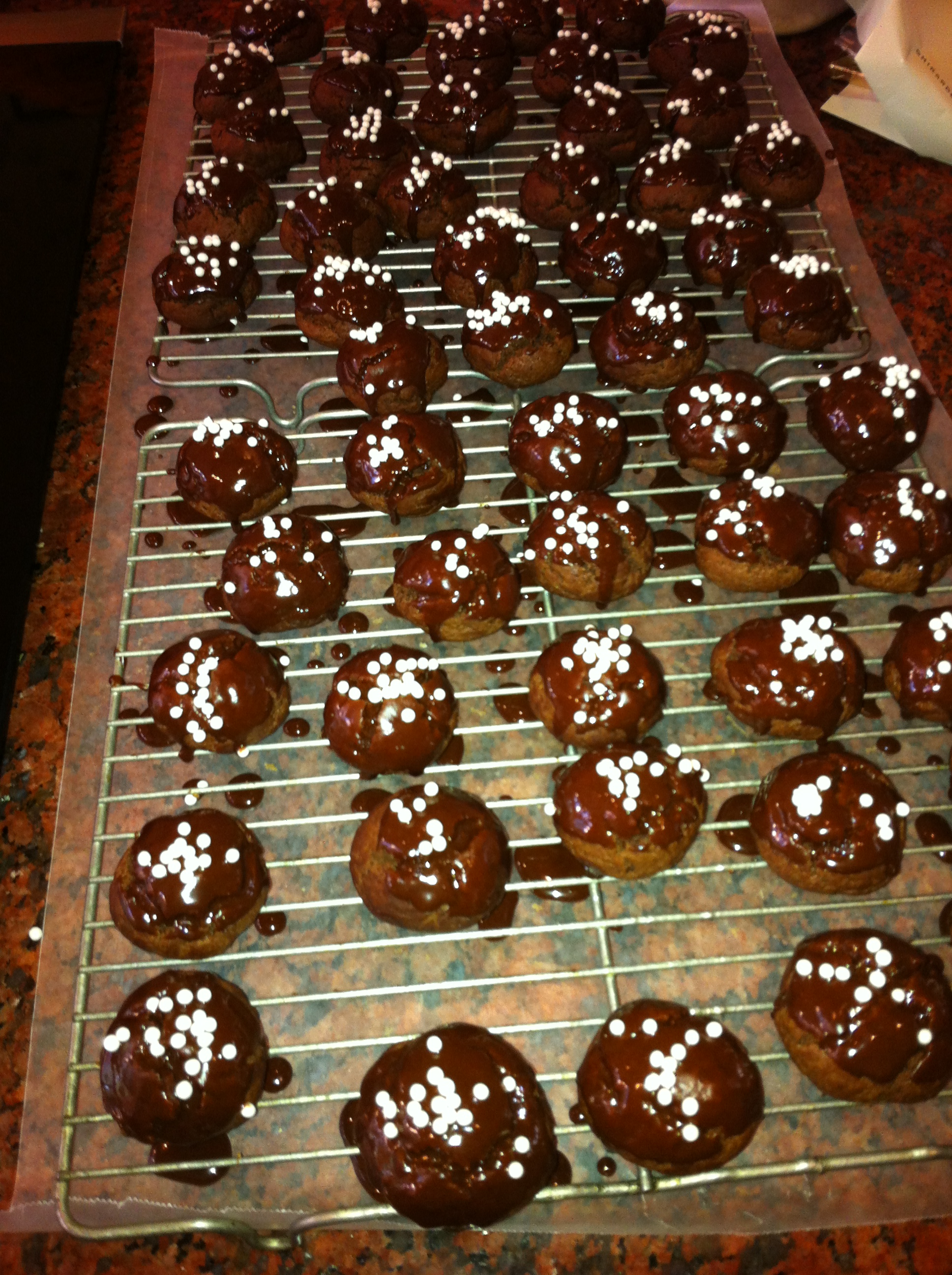
This year, I experimented a lot with cookie recipes, trying to find “healthy” or at least healthier ones. The results were mixed. The ones sweetened with only mashed banana were too soft (so I started calling them oatmeal macaroons), the pineapple-coconut ones spread into flying saucer shapes (so I started calling them scones and served them for breakfast), and I put too much flour in the oatmeal-honey-raisin ones (so I called them biscotti and served them with tea and coffee). The mostaccioli (little Italian chocolate cookies that are only mildly sweet) turned out beautifully, and the blueberry and white chocolate chunk ginger cookies are good as gold (though they need a simpler name). All around I was able to reduce sugar and butter and still have some good things to share.

Mostaccioli Cookies

And so this experimenting and this changing is an integral part of the holiday. Some nostalgia for the “way it was” is part of reminiscing, but I try to remind myself that it’s natural that the recipes change, the relationships change, the faces around the table change. Holidays are eternal, but they shift and modify, too. My wish for everyone this season is that they enjoy both the traditions and the evolutions.

Bon appetit!

Silent Night/7 O’Clock News

I often have difficulty finding time to reflect during the holidays, though it should be an important part of the season. As one year draws to a close and another looms, as the better part of the world celebrates salvation of one sort or another, and as we gather with our families, it seems that contemplation should play a role. However, in most of our Western world, the holidays are a whirlwind, a hurly-burly, almost a melee of materialism.

I debated a lot about what song to post this week—or whether to post a poem instead—and, in fact, I grew fearful of being a drag. So, I made myself go ahead and be a bit of a drag: it won’t hurt the crazy, over-the-top, excessiveness of the twenty-first century holiday if I take a little bit of air out of it. And I promise that Thursday I am cooking up something fun.

Simon & Garfunkel’s rendition of “Silent Night” with the overdub of a version of the evening news from 1966, for me, captures the ultra-mixed nature of the human condition. We have exaltation, and we also have depravity and war. We have the divine and we have the evil.

May we all, every last one of us, spend a little time on the side of peace this year.

Lucky


If I remembered nothing else about Alice Sebold’s memoir Lucky, I would remember the reason for that title. Sebold, who was raped at knifepoint while a college student at Syracuse University, was told by the police immediately afterward that she had been “lucky” not to have also been murdered.

Unlike Sebold, I have never been raped by a stranger on a dark city street, but I have been told repeatedly how lucky I am when it seems an odd concept to apply. It’s hard to argue with this statement, as, yes, things could almost always be worse. When one survives, when one has a loving family, when one lives without severe economic hardship, when one has decent health insurance, one is lucky indeed. So, yes, I am lucky.

Still, I find it peculiar that so many people are so eager to tell me that I’m lucky, or worse, that I am blessed. This came up again a few weeks ago when I was in an elevator going to see my podiatrist about the newly diagnosed arthritis in my foot. I ran into a woman that I had met through my work with the UCF Book Festival. I hadn’t seen her in quite a while, as last year I’d missed some meetings after my brain hemorrhage. When she asked about my absence, I filled her in. She looked me up and down and immediately noted that God must have been looking out for me and that I was blessed to have escaped unscathed. (A certain Christian version of “lucky” is “blessed,” though those folks might see a big difference since they believe in a huge difference between random luck and God’s beneficial intervention. To me, these two terms have substantially the same effect, which is to deny my inferior suffering.)

A couple of weeks later, I was diagnosed with another health problem, which the docs and I are still sorting out. This is potentially a very serious issue, and no doubt I’ll talk about it here once I know what is going on. At any rate, within two hours after I’d received the initial news about this new wrinkle in my medical saga, my phone rang and it was my endocrinologist’s nurse, to whom I had placed a call with a question a few days earlier. When I told her about my new diagnosis, she, too, immediately launched into a discourse on how lucky I was because what had befallen me hadn’t been more severe than it was. She went on to tell me how she had seen patients who’d had more severe versions of my problem and how “pathetic” they were.

On the whole, yes, I feel lucky. But in that moment, within two hours after I’d received news of a new, serious health problem, it seemed incredibly insensitive for her to launch on my luckiness. Didn’t she know that my chances of becoming one of those severely impaired patients had just doubled or quadrupled? I wanted to tell her to go out in the street and find someone with no major health problems at all. “Tell that person she’s lucky,” I thought.

A couple of days later I talked to one of my friends who a few years ago received a double mastectomy due to Stage IV breast cancer, and I asked her if people tell her that, too. Of course they do. She said that she’s even been told she was lucky to have a double mastectomy because she just doesn’t have to worry about that any more. Some fools, she told me, even tell her that her breast cancer should be the best thing that ever happened to her. We talked about the difference between believing that an illness is a blessing and believing that a person can take an illness experience and learn and go on with better insight. Some people don’t seem to understand the distinction. We both feel that it’s up to us to determine the meaning of our illness experiences, not up to strangers to assume a stock meaning such as “If you’re not dead or severely crippled, you are lucky.”

On the surface, of course, it’s not bad to be reminded that things could be worse. The other day I did that very thing when an acquaintance posted on Facebook the question, “Could this day get any worse?” It seemed to mostly be about things like her sports team losing, so I said, “Yes, yes, it could. But I hope it gets better.”

I hope it gets better. Even when someone has some small thing go wrong, they deserve our empathy or at least our sympathy, the latter being recognition of a feeling we might not share. I sometimes wonder why people are so stingy about such things. I’ve come to believe that it’s a very selfish defense mechanism, augmented by an oversimplified belief that being upbeat is always beneficial. I mean, I don’t care that my friend’s sports team is losing—really, really don’t care—but I can still give her a word of encouragement. And encouragement doesn’t deny reality. I’m not going to tell her that her sports team is blessed because they lost 21-14 rather than 21-0.

In fact, this lack of empathy borders on the narcissistic, and I feel as though it has become rampant in our society as the tenets of positive psychology get oversimplified and dumbed down. Because people are so filled with this idea that “positive” is helpful, they fail to even register what other people are feeling, much less to respond appropriately.

And there is a huge fear of being “sucked down,” being forced into negativity. These people who want me to feel lucky don’t want my sadness or concerns about my health to worry them. But one of the things that is often forgotten in the common sources of advice about overcoming negative emotions such as anger, anxiety, depression, and fear is that the biggest fear of all can sometimes be the fear of these emotions. What does it mean when what we have is an unhealthy fear of fear? If a drop of sadness threatens to flood us with sadness? If we are more anxious about anxiety than about its original source? We are hard-wired to have these negative emotions, and they are part of our survival mechanism. To constantly blunt them with platitudes is to live a stunted life.

I don’t mean that we should respond to every and all emotional demands. Some are inappropriate. Some we don’t have the means to deal with. But it is just as easy to say, “I don’t know what to say. Glad it’s not worse” or “Hang in there” or “I hope it gets better” than it is to tell someone else they are blessed.

I feel very lucky about many aspects of my life. But I sure as hell don’t feel lucky about my health these days. I am trying to get better at expressing my negative reaction to those who assume I feel only lucky. I did manage to tell my endocrinologist’s nurse that it wasn’t very helpful for me right now to hear about all those worse off than me. But she kept insisting that her message was one I should hear. In person I have to admit I would have been tempted to shove her across the room. Instead, I am trying to practice my words of explanation and wondering how close I have to get to “F*ck off” before I can make people like that get it. Whatever response I have to health news, it’s up to me to decide, not up to them to tell me how I should feel.

Devil Song

Having a blue and jittery day. So I share this haunting Beth Orton tune. (Be forewarned, the lyrics on the otherwise pretty nice fan page are not correct.)

Beth Orton is a contemporary artist, and she’s spoken out about the need for musicians to earn royalties, so if you like it, buy it! (Links on the YouTube site, which may be forced down any day now.) Orton will have a long-awaited new album out in 2012 and will be going on tour … in Australia.