Author Archives: Lisa Roney

The End of Illness: A Review

Posted on

We would all like to live to a vibrant old age, but this book's promises are overblown and ignore the inaccessibility of health care for too many.

I read this book with some eagerness, as I’m always glad to hear a whole-systems approach to medicine. However, I ended up being disappointed. I am sure that Dr. David B. Agus is a highly intelligent man who has made strides in his field of oncology, but I am unimpressed with the job that his ghostwriter did. The End of Illness relies very heavily on standard health advice—get plenty of sleep and exercise, eat whole foods, try to be less sedentary, etc. And even what’s offered as “new”—take baby aspirin and a statin drug after age 40, throw out your vitamin supplements, and wear comfortable shoes—are really not all that new. If you hadn’t heard about these debates and suggestions already, then you weren’t paying much attention.

That doesn’t mean that there aren’t good things about this book. I celebrate any physician who is trying to focus on preventive medicine and who believes in empowering people with information about their health. He is absolutely right that we need to do things differently in health care, and even in taking care of ourselves. He has some good ideas about what some of those things are. I do think his intentions are a step in the right direction. However, his orientation toward the wealthy and the celebrity aspects of his work lead him astray a bit. (Both Lance Armstrong and Al Gore endorse his book on the back cover, and Agus mentions several other well known people visiting him.)

This book is flawed in a few important ways and raises for me some questions that are relevant to our health care system in a way that Agus probably doesn’t intend. It reminded me of my constant (though usually low-level) mistrust because our medical system is oriented toward profit.

First of all, the entire first part of the book felt a lot like an infomercial for genetic testing. Dr. Agus admits that he is part owner of a genetic testing corporation, which he names, but that still didn’t ease my sense of having paid for a book that was a big promotion for his profit-making corporation. It was almost as if they sat around the corporate board room and asked, “How can we get more customers? Oh, let’s put out a book that is really an ad. We’ll have profits from the book AND more genetic testing customers.” It may also be that Navigenics is using the book to try to change the public attitude toward genetic testing, since it has recently been caught up in regulatory wrangles.

While Agus’s company is not a “bottom-feeder” or “scammer” corporation, as the regulatory article notes, it also doesn’t get the greatest reviews online. Even Wired, which generally supports the industry and introduced Navigenics as more user-friendly than others, noted that it is overpriced compared with similar companies. And most of us do not have health insurance that will help pay for it, nor do we have doctors that can interpret the information obtained. Dr. Agus’s fantasy of health care that is tailored to the individual based on genetic screening is both futuristic and out of the reach of most people financially (though obviously not of the likes of Armstrong or Gore).

Then, in his chapter on tossing out vitamin supplements, Agus notes two things: a) correlation is not the same as causation and b) animal and petri-dish studies don’t always apply to the whole human person. I couldn’t be happier for someone to say this. I have always had the sense that vitamin and supplement obsessions are inappropriate in this well-fed nation, just the same way the insistence on drinking bottled water is ridiculous and wasteful, when in the U.S. we have some of the safest public water in history.

Yet, as the book progresses and Agus turns to his causes, he uses the same kind of questionable study results as though correlation IS causation and as though animal and lab studies CAN be generalized to people. There are many examples, but, for instance, on p. 255, he uses a study of rats to claim that people need downtime. Now, I believe in downtime, but this study doesn’t prove its need for humans. He also does this with the issue of “positive” people living longer or surviving cancer longer—a chicken and egg question if ever there was one. And he notes in cavalier fashion that “study after study” shows that happier people live longer. Even if the research results were that clear, which they are not, that does not mean that the happiness causes people to live longer. This is a classic confusion of correlation and causation, which he criticized before. Maybe I’m missing something, and I certainly don’t have the same level of expertise at analyzing medical studies that Agus has. But, something is inconsistent here.

Lastly, Agus claims that we need to become personally responsible for our health, and I am certainly a person who has years of experience doing so. But taking good care of oneself and advocating for the right tests, medications, and other treatments can only go so far, and Agus hedges about the need for universal health care. While he does cite the brutal statistics involving our health care system (p. 296-297), he also states that “we need health-care reform at a much more basic and fundamental level before we can get to the financial end of it” (p. 279).

I think he has it backwards. In fact, Agus calls on all of us to gather our own health data and share it fearlessly and openly so that large-scale analysis of such data can be conducted. That is a great idea, but it is not likely to happen as long as the health insurance industry is able to disenfranchise any of us at a moment’s notice and as long as people are discriminated against because of their health standing, and, in fact, can’t get independent health insurance with certain pre-existing conditions. Agus notes that many corporate fitness programs do collect data anonymously and preserve individuals’ privacy. Would that I trusted that would always continue. But I know full well that those policies can change with the political climate. As long as profit is the motive for the health insurance industry, then some individuals will always have the potential to have their health information held against them. To assert otherwise is unrealistic.

In fact, Agus’s claim that if you do what he suggests, you can “live robustly to a ripe old age of one hundred or more” and “die peacefully in your sleep after your last dance that evening” (p. 2) seems way overblown. And this brings me to my Joyous Crybaby theme of authenticity. Why do people feel such a need to exaggerate their claims so, especially in the realm of health? Because I have a hard time believing that Agus really believes the exaggerated nature of his claims, my lack of trust is heightened. What, I wonder, does he really have in mind here? Do his goals really have to do with helping me live longer and better? Or is he more interested in promoting his genetic testing business and pushing for the establishment of open medical records for research purposes?

I know that there are some people who don’t feel those last two purposes would in any way conflict with a passionate interest in my own personal health. The right-wing argument about the “superiority” of the U.S. health care system is based on there being no conflict between the financial gain of physicians and the health insurance, medical device, and pharmaceutical industries, on the one hand, and consumer-patients on the other.

But this is demonstrably false, as the following relatively brief list of links demonstrates:

This rich list of studies and reports includes several that show physician denial about their own lack of objectivity in the face of profit motives.

Here is a terrific article about the corruption of medical research by the profit motive.

The government has had to step in repeatedly because of the failure of professional self-regulation.

Even within the field of medicine, the potential for corruption is acknowledged.

Even since regulations have been tightened regarding conflicts of interest, physicians are not accurate in their self-reporting.

And, even though individual research studies are now required to reveal any potential conflicts, the meta-analyses that most physicians rely on to stay current in their fields are not required to do so and often do not reveal such conflicts.
Questionable and patient-threatening research is reported in numerous sub-fields:

Diabetes drugs
AIDS drugs
Cancer
Cardiovascular health
Renal disease
and in the obtaining and use of body parts for research.
And in terms of the daily practice of medicine, even as far back as 1997, Harvard researchers reported conflicts between the profit motives of health insurers and patient care. These conflicts have only increased in the past 15 years, and they are likely much worse in HMOs.

If you want to talk about research that is definitive, the research about the lack of objectivity of privately funded researchers and physicians is what is crystal clear, far more so than the research about cheerfulness supposedly making you healthier. The evidence has been so undeniable and the results of these conflicts of interest so deadly that even anti-government right-wingers have not stood in the way of increased regulation and prosecutions by the Justice Department. Yet, in spite of decades of social science research that demonstrates profit is not the main motivator for creative and complex problem-solving (as summarized by Daniel Pink and mentioned on this blog before), our medical industry is still largely dominated by the assumption that wealth should be its main goal and that innovation will cease without scientists and physicians having the prospect of great riches as their primary reward.

I think that assumption is hogwash. I myself believe that most scientists and physicians go into their fields with a genuine desire to help humanity. And I believe that the industry emphasis on profits turns them into hollow and unhappy practitioners of half-science in the laboratory and half-medicine in the hospital. Certainly, if they can’t survive financially while practicing medicine compassionately, the financial reward grows more and more important. It is all, perhaps, that they are left with, and a sour reward it must be.

This is why I greet something like Dr. Agus’s book with such mixed feelings. He wants to help people—I truly believe that—but he ducks out on the hard issue of trust in a profit-oriented system. And, even though I will take a suggestion or two of his such as walking around while I’m talking on the phone, I can’t trust him and I don’t think this book will change people’s, and certainly not the nation’s, health outcomes.

A shorter version of this review was originally published on Goodreads.

Devious “Discretion”

Posted on

Russian pictogram for silence.


A couple of people have recently asked me if I’ll be going to a high school reunion this summer for all graduates from the 1970s. This is more likely than that I will ever go to a college reunion. My thirtieth-year college reunion occurred last summer, and I wasn’t there. I had a great education, which I enjoyed immensely, and I have donated to my college every year since I graduated. It was a time when I came into the bohemian aspects of my personality, discovered my sexuality (the pleasure meant a lot to a person who had to stab herself frequently with needles), and realized that there’s a larger world than my Tennessee hometown had indicated. I had been an odd girl in my Tennessee high school, but I fit in at Carleton.

So, why, then, am I more likely to go to a high school reunion? I mean, I was miserable in high school. But while I had high school friendships that ended, they did so simply. There were changed interests and hurt and loss involved, but never maliciousness. On the other hand, the end of my time in college was marred by the fact that a friend of mine turned rather viciously on me. I still have no idea why. After numerous phone calls and attempts to talk to her about why she’d gotten mad and would no longer speak to me—I even attempted to take a bus through a blizzard to talk with her—I retreated from an entire group that I thought at the time would be my friends for life.

None of these people would talk to me about what was going on. They said they didn’t want to get in the middle, and that I’d have to talk with her. She refused to talk with me. It was a conundrum I couldn’t solve.

La Discrétion, n.d., attributed to Claude Marie Dubufe (1790-1864). French.

One of these friends, years later, admitted that Karen had produced this effect in all of them by claiming discretion. She told others that she wouldn’t talk with them about why she had turned on me because she “didn’t want to make them think ill of someone else.” In other words, she implied that I had indeed done something terrible, so terrible that, if she told them, they would also find me repugnant. Imagination rushed in where fact was missing. Somehow, they all came to believe that I had wronged her.

Maybe even I came to believe that I had done something terrible. What else would have made her behave this way? I’m a person capable of self-reflection, and I pondered it for weeks and months, years, even, but could never figure it out. Of course, I make mistakes, like any human being. I can be harsh and judgmental without even realizing it. I can be too direct and can hurt people’s feelings by the strength of my own. Sometimes I am inconsiderate and selfish. But if I hurt a friend in some way like that, I would gladly apologize and rectify it. Not to be given a chance to do so was a huge blow to me. That my idealized college experience came to such a crashing end demoralized me for a long time.

Since then, I have, however, encountered this kind of devious discretion numerous times. Much to my chagrin most of its perpetrators seem to be women, and in my adult life they have not usually been friends but colleagues and co-workers. (I choose my friends more carefully now.) Over the years, I have discovered that there are many motivations for these people to make certain things unspeakable. It almost never has to do with the actual horrible nature of what they refuse to speak about. Rather, it’s that their reactions are logically indefensible. So they hide behind “discretion.” They work by false insinuation. This kind of “discretion” is one of the worst kinds of gossip.

Gossips, n.d., Filipp Malyavin (1869-1940). Russian. This work is in the public domain in those countries with a copyright term of life of the author plus 80 years or fewer.

For instance, I once had a colleague who was always saying things to people like, “Why is X so angry? Why is there so much conflict?” She acted distressed about these things, but, in fact, she created them, at least perpetuated them. If you asked her why she thought X was angry, she would say, “Oh, I don’t think it would be productive to tell you. It might hurt your feelings.” X might or might not in fact not be angry at all, and there might be no conflict to speak of other than the ordinary tension of people working together. But other people believe the underlying assumptions when people ask things this way and then refuse to give details.

It’s still amazing to me how effective this strategy is. I have fallen for it myself. Once, for instance, I failed to be as welcoming to a new colleague as I might have been because another person made vague allegations against her. In retrospect, I regret this. She ended up fast-tracking out of our shared work environment, and I later concluded that her accuser was less than truthful in an attempt to cover over her own insecurities.

It’s why my favorite rhetorical device is the enthymeme, and I always try to remember to question the unstated assumptions in what people tell me. What’s the evidence that X is angry? I try to go back a step and ask another question instead of leaping into speculation. I try to remember that the person who makes such vague allegations may be sincere, but may also be manipulating me into believing that X is angry. She may be trying to disrupt my work relationship with X or to create some false closeness to me. She may be promoting her supposedly more cheerful personality over X’s supposedly grumpy one. She may simply be a person who is herself terrified of any level of irritation or dissatisfaction. But one thing she is not doing is being, as this particular person often claimed, truly discreet or a positive, healing force in the workplace, trying to bring people together.

Genuine discretion might be that person asking X herself whether she is angry and what that is about. It would require that person to absorb what X said and perhaps to try to help X with her anger if she had some, without judging the person or situation that X was mad about. Discretion is about understanding that everyone in a situation, even an arena filled with conflict, probably has a legitimate and important perspective.

I have learned so much from my husband about this. My husband is a person who is truly discreet without ever sacrificing his honesty or his integrity. As a university department chair, he may work behind the scenes to try to benefit situations and people. He definitely does not blab about every frustration he has or every emotion he sees in another person. However, he’s very good at insisting that everyone has something good to offer and working to bring that out. He never pitches one person against another.

Certainly, I don’t mean some reverse sexist point by all this. I have certainly seen men who do pitch others against each other, and women who don’t. And I believe that women often turn to strategies like this out of a sad training that they get in childhood and in school and in their early work experiences—that directness is punished in women. I know it has been in me. I have had bosses both male and female say negative things about my honesty and integrity that I don’t believe they would ever say to a male employee.

Afternoon Tea (or The Gossips), 1889, Sir John Everett Millais (1829-1896). English.

This has been on my mind recently as Newt Gingrich calls a woman who testified to Congress about birth control a “slut” and as Rick Santorum asserts that abortion should be illegal even in situations of rape and incest. This has all been on my mind as we cling to the remnants of feminism in a world where feminism is so often deemed by the young as “unnecessary.” Let us really think about how we teach our young women to be. Let every woman challenge repeatedly the idea that she must use her wiles as a primary source of success and dampen down her honest self.

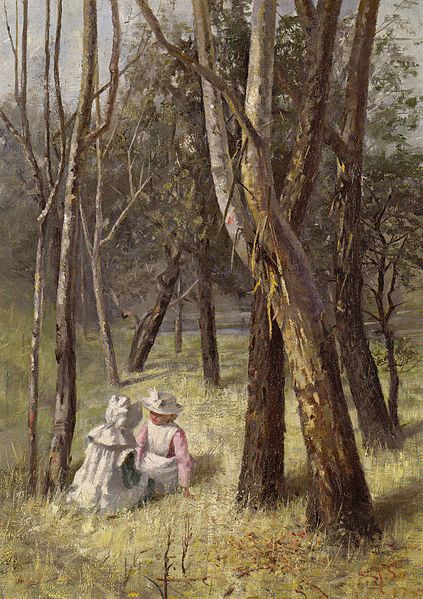
Little Gossips, 1888, Jane Sutherland (1853-1928). Australian.

Real discretion is something I value. So is an ability and willingness to work out misunderstandings and disagreements with open hands, and to let go of grudges. Both of those things are hard to come by in the work world and sometimes even in one’s private life, if there even is such a thing anymore. I believe that these are important ways that each of us can contribute to a more genuine world.

I come back around to Adrienne Rich again, this time as an essayist. In “Women and Honor: Some Notes on Lying” in the collection On Lies, Secrets and Silence, she notes the following:

“Lying is done with words and also with silence.”

“When a woman tells the truth she is creating the possibility for more truth around her.”

“An honorable human relationship—that is, one in which two people have the right to use the word ‘love’—is a process, delicate, violent, often terrifying to both persons involved, a process of refining the truths they can tell each other. It is important to do this because it breaks down human self-delusion and isolation. It is important to do this because in so doing we do justice to our own complexity.” [I would note that any honorable human relationship that is based on respect includes some love, and Rich clearly doesn’t mean only romantic love.]

“The unconscious wants truth. It ceases to speak to those who want something else more than truth.”

“The liar has many [so-called] friends, and leads an existence of great loneliness.”

Even silent stones can speak slander. The Three Gossips rock formations in Arches National Park, Utah. Photo by Tiziano Lombardi.

Remnants, or Songs from Fourth Grade

Posted on

Today, I am still keeping my cat alive. She has revived somewhat—her longer-term survival is still much in question, but she is holding her own and, we hope, healing. Because she was so near death this past week, I couldn’t help but think of “El Señor Don Gato,” the traditional children’s song about the cat that dies and then comes back to life at the smell of fish. We’re still hoping we’ll be so lucky around here, but we also know that it’s a brutal song with a tacked-on happy ending that’s not too realistic.

We knew that even in fourth grade, where I first encountered “El Señor Don Gato.” Whenever I think of the song, I also have to think of fourth-grade chorus, unfortunately probably the pinnacle of my musical education. Oh, yes, I took guitar lessons during high school, and I certainly had my ears opened when I went away to college and encountered whole new styles of music—New Wave and punk and so forth and so on.

When I look back now, though, I think fourth grade was a watershed in determining I would never be a musician. It’s something I regret, though it’s not difficult to live with. Both my parents had grown up singing at church and both had been put through the requisite piano lessons. Neither had taken to any of it, and they didn’t want to force my brother or me. We were given lots of lessons outside of school—as soon as my father was out of graduate school and well employed, we had a private French tutor (remembered primarily for his one blue eye and one brown eye), and my mother provided me with tap dance lessons, drama and acting lessons, and those doomed guitar lessons. The arts were poorly covered in our Tennessee public schools. Some things don’t change much.

But in fourth grade, we actually had a class specifically for singing. I always loved it and approached it with gusto. That is, until preparations began for our holiday-season performance. It was at that time when my best friend in class, Karen, informed me that she would not be able to stand beside me in the risers.

“Why?” I asked.

“Because,” she said, hesitating slightly, “you’ll make me sing off-key.”

I, of course, had no idea that I’d been singing off-key. I didn’t really even know what that meant. I had just been enjoying belting out the lyrics.

Karen, on the other hand, had a father who was a music professor at the local university and a mother who was a former opera singer and who gave private music lessons in their home. Immigrants from Germany, they had a certain, shall we say, highly disciplined, old-school approach to life.

I’d spent a good bit of time at Karen’s home, and her mother terrified me with her heavily accented and tremulous voice that could easily rise to a Wagnerian-Brunhilde pitch. I recall one day when Mrs. L gathered Karen and me in the kitchen to help make rhubarb pie. Rhubarb pie was something I’d never had before, and as a newly diagnosed diabetic I wasn’t sure I should be having anything to do with pie, but I tried my best to help. Mrs. L put me in charge of mixing together the dry ingredients for the crust.

Of course, I didn’t get far. As soon as Mrs. L saw me dip the measuring spoon into the sugar tin, she grabbed it out of my hand. “You have to mix the salt with the flour in the bowl before adding the sugar,” she said. “You must follow the order of the ingredients in the list.” I felt terrible that I couldn’t even properly mix together a mere three ingredients.

So, no doubt that Karen was under a great deal of pressure to perform well in the holiday concert at school. Still, it hurt my feelings that Karen refused to stand beside me on the risers, and no doubt I sang less well myself without her strong, well cultivated voice beside me. Now, I wonder at the fact that Karen’s mother never made any gesture to help her daughter’s friend develop better musical skills. In spite of a devotion to music, and in spite of the fact that Mrs. L would sometimes be doing complex vocal exercises or giving a lesson while we played, it wasn’t the kind of house where people sang around the piano together. Probably my mother knew better than to sign me up for formal lessons with her.

At any rate, that was a time in my life when I was encountering the wider world and realizing my own limited place in it. Karen’s German parents were one example, as was my friendship with a girl from India, Sonchita, with whom I played all through second and third grade. In fact, other than my failure as a singer, what I remember the most about my fourth-grade chorus class are the tunes from other cultures—the Spanish origins of “El Señor Don Gato” were explained to us, as were the Scottish ones of another of my favorites, “The Skye Boat Song,” a melancholy tune that might be more akin to my mood these days than the cheerful gato song. “The Skye Boat Song” opened my eyes to the complexity of history. It is a song of survival, but of survival after defeat. It’s a tune I will always love in its making of sorrowful beauty.

Animal Love and Genre Stereotypes

Posted on

It’s been a hard week. One of my cats nearly died. I won’t go into the details, but I will admit that it’s involved trips to three different vets, a lot of poop, and a lot of suffering. I had come to grips with the fact that this morning I would likely need to ask for her euthanasia. But, no, after four and a half days of dire illness, she has rallied. No little kitty will last forever, and her days are numbered, but maybe she will enjoy a little while longer.

When I try to think about writing about my pets and why I love them, I encounter whole layers of prohibition, disrespect, sentimentality, and boredom. Yet they are important enough to me that I feel compelled to include them in my literary world, or at least my communicative world. What I write about them may never achieve anything near the level of art, but I think somehow there must be ways of thinking about them that go beyond “Awww, how cute.”

Perhaps, in fact, my desire to write about animals is something akin to certain others’ devotion to genre fiction. My husband sent me this morning a short example of the frequent flailing of professors of creative writing for discouraging students from writing genre fiction—in this case science fiction. It uses a long quote by Michael Chabon expressing some outrage about how he’d been “limited” by this lack of acceptance of his favored genre in his youth.

This dissing of professors this way is a tired hobbyhorse. Genre fiction was far more disrespected before creative writing was commonly taught in universities, and creative writing professors certainly didn’t create the “limitations” Michael Chabon speaks of. That responsibility would have to lie at the feet of literature professors and literary reviewers and critics, though creative writing professors no doubt have partaken in it in their attempt to get a toehold in the academic world over the past fifty years.

However, it is also undeniably true that much genre writing—and much writing about animals—is pretty uninteresting and awful stuff.

The writing professors that I know (in composition and as well as creative writing) place “limitations” on students in order to try to avoid reading the worst of this kind of thing and to encourage students to shift away from the stereotypical thinking many of them are most familiar with. Most of us have tried a variety of strategies—and it is true that some forbid any genre element (monsters, vampires, magic of any kind, futuristic settings, etc.). Some use prohibitions about “realistic” topics as well—I once knew a composition instructor who forbade all broke-up-with-boyfriend or -girlfriend stories. Another banished all first-love stories for similar reasons. Some try less blanket warnings, like “I suggest you not use a gun in your story unless you are actually familiar with guns and know how they work.” I even knew one teacher who disallowed any student from writing about pets.

Mind you, these are from teachers who may admire Mary Shelley’s Frankenstein. Who may know that Paul Auster wrote Timbuktu very successfully from the point of view of a dog. Who may even think that the Harry Potter books are good. Even those professors who disallow genre elements entirely in their workshops are not unaware of exceptions in the general low quality of certain genre-like or realist-sentimental subjects.

But there’s another, little understood issue, and that is that we try to sort in order to focus our instruction somewhat. This starts, of course, with the more basic use of the word “genre” to distinguish between fiction, poetry, drama, and creative nonfiction (which also is distinguished from journalism). Slicing further, fiction becomes “literary” and “genre,” and then genre is divided further into particular genres like sci-fi, mystery, chick lit, and so on. Those genres are broken down even further: this website, for example, lists ten primary sub-genres of sci-fi.

These designations are seemingly designed to be descriptive, not necessarily evaluative, but, because people develop favorites and antipathies, they become evaluative, too. And, I would argue, also because there are certain goals that differ between those writing for “entertainment” purposes and those who at least aspire to loftier ideals. Whether the latter ever achieve them or not is uncertain, just as entertainment purposes or other ideological pursuits in writing don’t necessarily preclude profundity.

In other words, most creative writing professors that I know combine their aversion to the worst possibilities of genre fiction in their classes with an aversion to trying to teach everything in one course rather than any blanket condemnation of genre. How many different sub-genres must we be asked to examine in one semester? How many different conventions and their upending must students be asked to critique in each others’ manuscripts all mixed in together? At my university we actually offer a course on science-fiction writing, separate from the other fiction workshops that focus on literary realist fiction. No one who teaches fiction here disses genre—a couple of them even write and promote it. This may be a new development, distinct from the experience of someone like Michael Chabon from a tonier universe. We live in an era when literary realism is getting harder and harder to publish (at least in book form) and in which there’s an emphasis on the acceptability (even, perhaps, desirability) of hybrids and mash-ups. Genre elements creep in all over the place, and an array of examples are emerging of how to use them without being dominated by clichés and formulas. (One name for this is post-modernism, I suppose.)

Nowhere, though, does anyone talk about the less macho, might I say the less sexy issue of how to approach more domestic subjects without sentimentality. Science-fiction, fantasy, and horror have made inroads in academic creative writing circles. But the fiction world has cast the romance into the world of memoir and has dissed it one genre-definition level up: there are many fiction writers and critics who now claim that memoir (or even all of nonfiction) is inherently inferior as an entire genre to any and all fiction. In literary circles, in other words, it’s now more common for memoir to be dissed as unworthy than it is for sci-fi and fantasy to be.

Which reconnects to my own desire to occasionally write about my pets or about other animals and issues regarding them. A few years ago, I wrote an essay about an elderly neighbor of mine who was feeding strays and my efforts to help him and find real homes for these cats. (One of them became a permanent resident in my home, and I placed six others in good homes and got the one feral one spayed before she escaped capture and disappeared.) It was a great compliment to me when one of my writer-friends, who at that time was not an animal lover (though she has since become one) said to me that I had “managed to make the inner lives of cats interesting,” something, she said, she had not thought possible. Yet I still have not managed to publish this essay. I believe it’s a good essay, and I believe it’s a shame that “cats” are off-limits in most of the literary world.

Still, I have to acknowledge that this is not without reason—people react to the plethora of sentimental schlock about pets, and I can’t blame them even though I’m trying to do something different and even though I believe editors (and professors) might be able to take a little more responsibility for distinguishing value rather than dismissing entire subjects in their entirety. In fact, for a number of years, I have refused to place proscriptions on what subjects my students write about; on the rare occasion when I teach fiction, I suggest very heartily that if they would like to write something with genre elements, they need to make sure they do it in a non-formulaic way and that they toe to literary standards of character development. Few of them try it, but on at least a couple of occasions students have produced great stuff. So, I’m personally not into the proscriptions even though I find about 90% of the well-published sci-fi and crime/mystery stuff I’ve ever read to fall into the dreck category. Still, I believe it would be silly of me to attack lit mag editors for their antipathy toward cat stories.

Similarly, I believe that the genre-fiction aficionados lashing out at the literary realist world are wrong-headed. What they might more usefully do is examine what’s closer to home and begin to make real and substantial distinctions about what has merit within the realms of their specific genres.

In the usual sense of the word, of course, genre fiction refers to the kind of simplistic, poorly written, stereotypical character–filled, predictably plotted kind of stuff that creative writing professors disparage. That doesn’t mean that there isn’t terrific fiction that shares certain features of science fiction, fantasy, horror, romance, action, crime, or mystery. The many torrid memoirs don’t mean that there don’t also exist memoirs of the finest order. Whether we speak of any of this work as solidly ensconced in its specific genre or of it “transcending” its genre status doesn’t really matter to me. What matters is that we understand and make distinctions about what is art and what is on the borderland or what falls completely into the category we might call dreck.

Some people are capable of this. Jonathan Lethem, for instance. I just read his essay “You Don’t Know Dick,” in which he examines both the variable career of Philip K. Dick and his own youthful obsession with it. He notes more than once the “disastrous unevenness of his [Dick’s] prose.” Now, this is an intelligent examination of how a writer can fascinate us while we also see his flaws. I wish the same strategy could be applied more commonly to genres as a whole instead of the simplistic valorization of underappreciated genres or the alternate demonization of them.

There will always be contention in terms of the issue of quality in areas where it’s hard to pin down. Math is “easy” in this regard: either you get the right answer or you don’t. Engineering in this regard is “easy”: either the building or bridge stands up or it doesn’t. In both of those arenas, it may be difficult to master the correct answer, but you at least can identify it.

In many walks of life, however, there is no hard and fast answer. A book, for instance, may be good in a million different ways or bad in a million different ways. It can even be good in some ways and bad in others, or good and bad at the same time to different people in different circumstances. For instance, when I criticized Kris Carr and her Crazy, Sexy Cancer empire, one of my former students noted that she could see what I meant, but that Carr had been important to her in dealing with a chronic illness because it gave her a sense that she could still enjoy much of her life. I think Kris Carr is a hideous fake and her writing is awful, but I can’t and won’t try to deny that someone might find her bromides useful at times. In fact, she probably doesn’t even consider what she does “art,” and so is perhaps not the best example. But think of Ayn Rand’s The Fountainhead, think of Jack Kerouac’s On the Road, think of Harriet Beecher Stowe’s Uncle Tom’s Cabin, think Robert Pirsig’s Zen and the Art of Motorcycle Maintenance. All of these books have formed important cultural commentaries on their times, and all have inspired numerous readers to think in new ways. That doesn’t mean they are all well written or even particularly intelligent.

Well, I’ve already gone on way too long about this today. I’ll just have to revisit it later. This post will be a true rough, rough draft. There’s a place in the world for that, just as there is for laser guns and green slime creatures and murders on the orient express. Just as there is for the basic, accepting love between human and animal. Now I am off to retrieve my cat from the vet so that she may scratch out another day if not my eyes. She is not a particularly sweet cat.

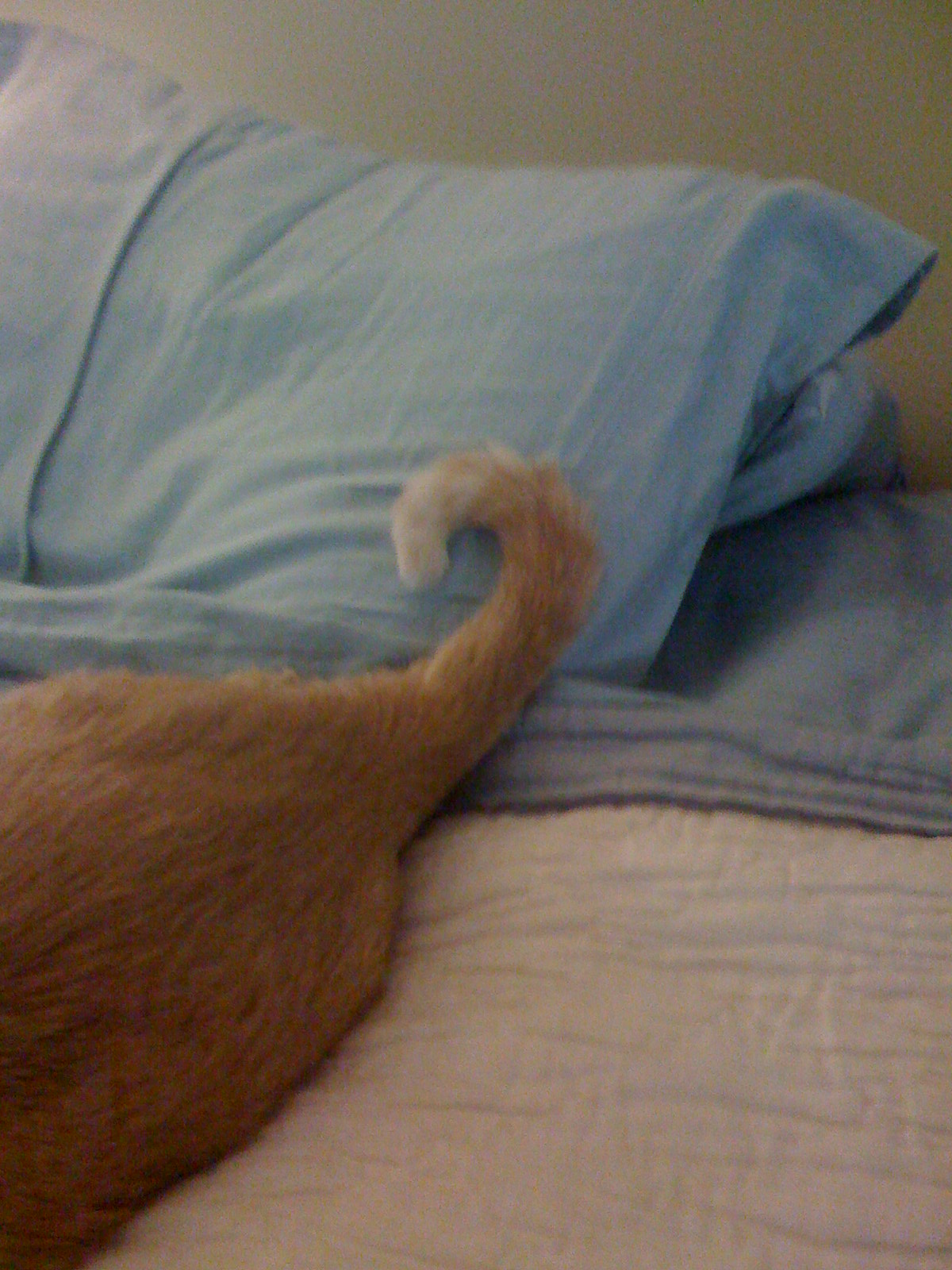
Ironically, when I adopted her, her shelter name was Candy. The only remnant of that is in the sound of her name, Cameo, and in the fact that we sometimes call her Candycane Tail because she is so uptight that she never uncurls her tail. Except, I should say, when she’s very, very sick. A limp tail is a terrible thing.

P.S. I really loved this discussion of “The Top 40 Bad Books” (It’s a PDF, so works only if you search the title or paste the URL into your browser: http://americanbookreview.org/PDF/Top40BadBooks.pdf). What variety! What disagreement! It takes a village to ferret out insights about what’s good and bad.

It’s My Party

Posted on

Today is my birthday, and on this occasion I’ve been thinking about my long struggle to be myself. It was on my birthday half my lifetime ago that my mother characterized me as having been “born seven pounds of resistance to the earth.” This blog demonstrates, I think, that the same trait still prevails in my personality. Why? No one knows. All the psychological explanations in the world fall a bit short of defining us, clarifying us, making us all make sense to ourselves and to each other.

I think that’s one reason why I have always been drawn to narrative over theory, as much as I see the usefulness in theoretical approaches and have flirted many times with various theories and their smacking smart practitioners. But, narrative, thank god, doesn’t quite have to make sense in the tidy way that theory does. Narrative accepts a lot of mystery, as Flannery O’Connor would put it. “Your beliefs will be the light by which you see,” she notes in Mystery and Manners, “but they will not be what you see and they will not be a substitute for seeing.”

Narrative is about seeing, and my blog obsession with a full range of emotions (rather than an enforced uniform positivity) is about seeing what is there, not just what we wish was there.

So, today I picked Bryan Ferry’s cover of “It’s My Party (I’ll Cry if I Want to).” It’s an anthem of defiance of social expectations, and it reminds me of my own perverse habit of pointing out the less-than-perfect in the world. I like its bald self-assertion—because, truly, denial of the self is desirable in only a very narrow range of circumstances. Most of the time, if we acknowledge ourselves and our own vulnerabilities, we can do the same for others as well. On my birthday, I like thinking about all these various paths we are each on and the ways they intersect and sometimes collide. A life, is, after all, an individualized journey, and I celebrate the unique natures of my friends and enemies alike (the latter at least in theory and narrative, if not in daily experience). Vive la différence.

The song was written by John Gluck, Wally Gold, and Herb Weiner and was most famously recorded by Lesley Gore in 1963. Her It’s My Party album has crying as its theme and includes the luck-and-love-have-shifted song “Judy’s Turn to Cry.” But Bryan Ferry’s cover is the version I remember, and when you start wishing that you could stop passing through more birthdays, retrospection seems to be built in. We also have the perspective that allows us to roll our eyes, especially at our previous youthful selves that put on relationships and discarded them like dirty clothes. And to laugh a little at our tears of yore.

“Why Don’t He Come In Here?”—Crying for Public Education

Posted on

The osprey is a common bird in Florida, but like problems with public education is also ubiquitous further afield.

I have been meaning to delve more into education issues since writing about Rick Scott’s attacks on higher ed in Florida last fall, but have been following different avenues lately. Fortunately, my friend and colleague Terry Thaxton has provided this terrific guest post, a tapestry of thoughts about childhood school days, her time in the public school trenches, and concerns about today.

L

* * *

“Why Don’t He Come in Here?”–Crying for Public Education

by Terry Thaxton

Just mention public education, and I’m likely to walk away. Or cry. I cannot fathom where to begin with what needs fixing. I don’t know how to articulate the enormous inadequacies of our education system. I’m a product of public education, and at one point I attempted to teach in our public school system.

I lasted two years as a teacher. The first year, almost every day, on the way to school, I had to pull my car off the road, open the car door, and vomit, worried about what lay ahead that day. On the drive home, I cried because of the conditions of the building, the poverty many of the children were living in, the lack of support for teachers to do their jobs, the expectations that created Catch-22s for students, teachers, and administrators. I cried because of the media which usually reported what some politician in power had to say, that all society’s ills lay at the feet of public school teachers. For my own sanity and health, I left high school to teach part time at the university, taking a huge pay cut, but I was no longer sick every morning or crying all night.

I still live in Seminole County, Florida, the county where I taught for those two years (1997-99). Last year, the School Board closed one elementary school despite community protests. The closing, the Board claimed, was a necessary measure because of state budget cuts by Governor Rick Scott which he began touting at a Tea Party meeting in February 2011, suggesting cutting the State’s education budget by $4.8 billion. By March—due in part to public outrage—he’d reduced the cut down to $1.75 billion. That money would not be lost, he assured us all. No, it would provide tax breaks to corporations. By December 2011, he declared an “increase” for this upcoming year’s education budget of $1 billion. Perhaps because of his low approval ratings, Scott changed his tune, but this still in reality represents a net loss to schools of $.75 billion over 2 years.

Just a month ago, January (2012), the Seminole County School Board announced the impending closing of at least two more elementary schools with several others on the chopping block. Thanks to the parents, students, and teachers of these schools, the Board has agreed to not close the schools (at least for now), and to look for other options for saving money. Teachers, however, haven’t had a raise in three years, and I’m betting most are still purchasing their own classroom supplies (as I did during the two years I braved the classroom). I know of at least two teachers who, in the past three days, have said after this semester, they’re leaving.

When I was in fourth grade, the Florida Education Association staged and successfully carried out a teacher’s strike. Teachers did not show up in their classrooms–in some schools for a couple of months. Before the strike began, the teachers at my elementary school told us they would not be in class during this time period because they were concerned, like all teachers, about budget cuts and lack of support from the State (I can’t recall how long our teachers were on strike, but I do remember it), and I remember all of the parents supporting them. I’m not sure why teachers aren’t uniting in a strike now, but perhaps it has something to do with the state of the economy.

In May 1970, Sarasota County School Board threatened to close Osprey School, the six-classroom schoolhouse where I attended elementary school. Parents, led by my father, protested. My father, already Vice Chairman of Osprey Chamber of Commerce, formed “Osprey Citizens Committee” and attended every School Board meeting from the moment the Board announced this possibility until the Board backed down. My father rallied parents and teachers, presented the school board with “petitions signed by about 450 Osprey residents.” His petition argued that “closing of the school would halt growth of the area and virtually assure that no school would ever be built or reopened in the community.” It was a valiant, and successful, effort to keep our small neighborhood school open.

At the time, I was in sixth grade and I had siblings in fifth, third, and first grades. The school had been built in 1927, and though there had been updates on the building, each grade level had one room. I still remember the hard-wood floors, the scoop of honey-peanut butter Mrs. Reardon gave us for dessert if we cleaned off our lunch plates, the parent and teacher organized Halloween party that included games like bean-bag tossing and (my favorite) the cake walk, which was held in Mrs. Draggoo’s classroom.

I should point out that there are of course, many factors that enter into a school board’s decision to close schools. In 1970, there was of course, the issue of desegregation. Osprey was an all-white school. This complicated things, but the “Osprey delegation indicated…they would have no objection to Negro children being bussed in”; however, they did not want their children bussed out.

My father’s motives to halt the closing of Osprey School were not pure, and were even tinged with racism. But 1970 wasn’t the first time the Board had threatened to close the school, nor would it be the last. In 1975, the Board again announced the closing of the school, and this time they succeeded, closing at the end of the 1975-1976 school year. In addition to desegregation, Osprey School served only about 145 students with another small school, Laurel School, two miles away serving another 100, and another larger school, Nokomis, about five miles away that could absorb the students from Osprey and Laurel. Fiscally, it was a wise decision.

And the school has continued to serve the community in other ways. For a couple of years, the building was used as a continuing education center for public school teachers, and then leased to the Spanish Point Historical Society, then eventually sold to the Historical Society. The building is still there, serving as the Visitor and Welcome Center for Spanish Point. Last time I visited, I walked through each of the old classrooms, each now serving some type of educational purpose—though no teachers standing in front of their group of students—now updated into gift shops, historical information about the Palmers and Webbs (wealthy land owners), displays of old ships, explanations of burial mounds, and meeting rooms.

Osprey School today has become the welcome center for the Spanish Point Historical Society.

I loved Osprey School. I loved knowing all of the other kids’ parents, knowing each teacher.

With less funding coming from the state, local parents here in Seminole County have realized the only way to keep their neighborhood schools open is by increasing property taxes. Last year, Seminole County residents voted down a property tax increase. This coming fall, I’m expecting it will pass because the parents are eager to do whatever they can to be able to walk their children to school where they know all the teachers.

While there are a few teachers who do less than others, and there are teachers who abuse their students, most teachers deserve much more than the even modest pay raises they’ve been denied in recent years. Every morning I am aware of the teachers who make an attempt at teaching our children. They do this in spite of their pay not keeping up with the cost of living, in spite of larger class sizes, in spite of inadequate supplies and buildings, and some do it in spite of the lack of parental or administrative support, mostly in spite of the lack of State and Federal support rather than with it.

I remember the day in 1997 when Governor Jeb Bush came to “tour” our school. I was teaching tenth grade English. I had forty students in a room with thirty desks. I’d gotten my own desk from “the shed” at the beginning of the school semester. I had no idea what color the carpet was originally because now it was stained with urine, gum, dirt, sweat, and who knows what else. The only markers for the marker board were ones I’d purchased at the office supply store. My students were referred to as “general” students, meaning they were not “honors,” a designation primarily for students whose parents had insisted they be in those types of classes; honors had very little to do with intellectual ability.

Anyway, as I was teaching in that classroom, Bush’s entourage of security, media, and school administration came down the exterior hallway. I knew this because all of the students in my class stopped whatever they were doing and ran to the side windows. They asked me what was going on. “Oh, Governor Bush is touring the school. He wants to see how well the school is doing,” I said.

“Why don’t he come in here?” several of them asked.

“He’s going to the Magnet Program classrooms and the IB classrooms.”

In the IB classrooms there were a maximum of fifteen students; in the Magnet Program classes, twenty. And though all of my classes had at least forty, the ratio of teacher/student at our school was well within the State’s requirements.

“He need to come in here,” my students argued. “We should be the ones showing him what be real.”

When politicians use education as platforms, I can only roll my eyes. They have no idea what happens in most classrooms every day. Like former Governor Bush, they see only the “pretty” parts of the schools. He saw the delightful art in the hallway of the IB building, the eager students, the caring administrators, and the bountiful supplies in the Magnet Program building. I’m sure this confirmed for him the need for the FCAT which began that following spring in 1998. Created to hold schools and particularly teachers accountable for their students’ learning, FCAT hassles have been the reason for many teachers, good teachers, leaving the school system.

For the most part those two hundred forty students I “taught” that year graduated. I watched them walk across the stage. I knew which of them still could not write, could not spell, and could not read a paragraph and comprehend it.

Despite what some politicians think, teachers do know what they’re doing and parents do care a great deal. Sadly, many politicians can’t comprehend what teachers and schools really need—an end to posturing and slashing and a start to genuine and consistent financial and practical support.

Imitation Isn’t Always the Sincerest Form of Flattery

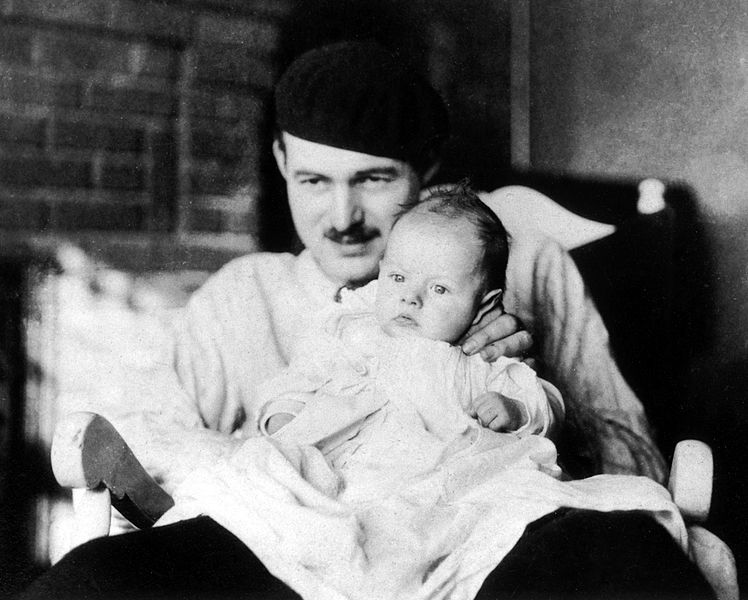
Ernest Hemingway with his son John Hadley Nicanor (Bumby), 1927.

One semester I had a student who turned in a story that I believed was plagiarized from Hemingway. The student had frequently spoken of his admiration of the minimalist master, and the story he turned in had the tell-tale traits, at least superficially. I had seen (even assigned) emulations before, but usually they were ham-fisted, amateurish, and identifiable as copies. Usually my students couldn’t keep their own personalities from peeping through. I had also seen completely plagiarized stories—once a student had turned in an entire Stephen King story with even the title intact. So I began searching for this Hemingway story.

I couldn’t find it. And I had to admit that if I couldn’t find it, the student probably hadn’t found it anywhere either. Creative writing students seldom plagiarize, and in my experience they never do so with enough leisure to hide their trails. The story, I decided, also didn’t quite have the Hemingway attitude toward women. I finally came to the conclusion that this student had just written a very good stylistic emulation of Hemingway. The following year I had him in another class, and by then he had begun to write like himself.

This is the usual trajectory for writers. But it might be different for a talented painting student.

At any rate, the production of fake manuscripts by dead famous authors is not a big business. It’s been known to happen, but the difficulties seem to surmount the temptation. Even though the Antiques Roadshow estimates that the lost suitcase of a pile of Hemingway’s manuscripts might reap $3 to 4 million if it was ever found, no one has tried to fake it. Instead, literary hoaxes tend to be more of the James Frey variety, with an author claiming a realm or set of experiences themselves that are false. These are the cases that seem to most common in accounts like Melissa Katsoulis’s Telling Tales: A History of Literary Hoaxes.

However, in the world of the visual arts, this kind of forgery is not at all uncommon. It’s one of the fundamental differences between the various arts, and it is based on the reproducible nature of the written word and music. Original manuscripts and scores may be valuable, but the real money is in an original artwork like a painting. A literary work may be experienced a million times over with the same power even from a cheap paperback copy, and the power of music lies in the details of its performance, but the original painting can only be experienced first-hand, in person, in the flesh. Even rough, imperfect, one-of-a-kind preliminary sketches made in preparation for prints can take on more value than the prints that were their ultimate end.

The New York Times covered such interesting happenings in the art world this week, with a different kind of retrospective from that of Cindy Sherman—an account of what is evidently a fraud perpetrated on the art world for nearly twenty years. A small-time art dealer, Glafira Rosales, is now tangled in legal troubles for numerous paintings she sold as works by some of the best-known Modernists—Rothko, Motherwell, Diebenkorn, de Kooning, and Pollock. Ann Freedman, former president at the famous Knoedler gallery, was evidently drawn into the fraud, bought several of the paintings herself, and helped to sell others for millions of dollars. Now Knoedler has closed and many of the paintings’ purchasers are suing for their money back.

And yet, the case points out the extent to which artists can be imitated, just as writers can. Pastiche, in fact, frequently forms part of an artist’s tutelage, and sometimes people are very good at it. What is viewed as a helpful learning practice becomes criminal, however, if someone gets too very good at it. And in the art world large profits can be had in this way.

In the recent case reported by the Times, there is no conclusion. No forger has been revealed, and some still claim that these paintings might, somehow, be authentic, even though some of the paints used in them were not available commercially at the dates they were claimed to have been painted. But I am compelled to think about that forger or those forgers and how he or she or they decided to produce these masterful paintings and put masterful names on them. These are paintings that fooled some of the world’s experts, and someone decided that money and the satisfaction of skill and cleverness would prevail over someone’s performance of his or her or their own talents. Well, being able to fool the experts is, I suppose, a talent of its own.

I can see the appeal, actually, of working for a fame in someone else’s name.

Of sticking it to an art world where fame and income are restricted to a very select few even though many have talent to spare.

Of playing a trick on a universe where work that is done out of deep, self-motivated reaches of the imagination is then commodified and traded like so much chattel.

And yet…

There is such a hateful despair in the theft involved. It’s hard for me to see one artist doing this to another or to herself or himself.

These cases seem to me to illuminate the chasm between the two channels of art: the need to communicate through whatever medium, on the one hand, and the business of buying and selling and making contacts and fostering fame on the other. It’s not a new conundrum, and different writers and artists and musicians have answered it differently over the centuries.

For myself, it is true that I would love to sell another book sometime, to be paid for my labor. But that isn’t why I do it. I watch so many of my cohort desperately scratching at the door, and I both admire their business sense and wonder what their work would be like without it. Obviously, balance is in order—I would not have all my writer friends starving and homeless, and I would enjoy a world where expertise and skill in the arts were respected far more than they are these days. I know that a lot of writers, musicians, and artists do what they think they have to do to survive and thrive. But I would not have us all pretending to be Motherwell or Rothko or Hemingway, in either name or fame. And I have a sneaking suspicion that the artist who engages with the world without constantly grasping at fame—whether in his or her own name or that of another—is all the more free to pursue the ragged path of art.

Cindy Sherman

A new exhibit recently opened at MoMA—a retrospective of the work of Cindy Sherman, photographer and chameleon extraordinaire. Sherman’s work is about as different as can be from that of Vivian Meier and Elsa Dorfman, two other photographers I’ve admired on this blog. Meier took gritty street portraits, Dorfman takes posed but simple and direct studio ones. Both of them have taken self-portraits, but most of their work depicts others in frank and realistic modes. Sherman, on the other hand, has used herself as a model for decades and has explored the idea of identity with a variety of costumes, wigs, make-up, props, and atmospheres.

Though on the surface a self-portraitist, Sherman doesn’t really consider most of her work self-portraiture. Rather, in her photographs she tries to take on personae and explore stereotypes and images, especially those of women. They are, in other words, fictional self-portraits. Or just fictional portraits with herself as a stand-in for others, though no doubt there is usually an element of herself in them too. Recently, for instance, she has been playing with stereotypes of aging and the various ways in which wealth can distort a woman’s life, both obviously questions that must be close to her as she approaches 60 a very successful artist.

One of the things that interests me the most about Sherman’s work is that, while her work’s intention is to disrupt female stereotypes, many of her photographs remain so sexy. She has indeed done series of works that are disturbing and that examine the nastier side of the human body, but in these she did not use herself as a primary model. This NYT review of the new exhibit at MoMa points out that this work is also largely ignored in the retrospective.

Sherman is clearly capable of extensive use of prosthetics and appearance-altering make-up. But she focuses these efforts on her face. She dresses and poses her body in a variety of ways, but she shops for costumes that fit her naturally thin shape. She is supreme at creating bulbous chins and noses, opulent lips, and even prostheses that augment her breasts, often in disturbing ways. Yet Sherman has never (as far as I know) done much to alter the traditionally attractive profile of her body.

There seems to me a deep irony in the fact that much of the work of this woman whose goal and mission has been to upturn stereotypes of women can still be viewed somewhat pornographically. Yes, it is a pornography that points out the complicit nature of the viewer, and it may therefore be unsettling. But even now that she’s exploring “women of a certain age,” they can be strikingly strong and fit, as is Untitled #466, which MoMA uses as its representative work on its page about the show and which depicts an imposing woman in a flowing aqua gown. Or like Untitled #463, in which Sherman has superimposed four images of herself dressed up as party-going friends with manicured nails and bare-shouldered clubbing outfits (included in this slide show).

That’s one reason I was so interested in the discussion of the evolution toward paunchy of one recent character (starting about 4 minutes into this terrific 20-minute art21 video). I would love it if she would push this even further and do a “fat women” series. It would be fascinating to see how such work would be greeted.

What I have always valued about Sherman’s work is the same in-your-face quality that makes them honest even though they are contrived. Amid all the various rather dumb debates about fiction vs. nonfiction in the writing world, the world of visual art has been playing with the categories often more successfully. Sherman has stood for me as a hinge between the two genres. She is a person who uses fantasy to tell the truth, at least a certain truth, about the women she becomes. There’s an intellectual honesty that can sometimes disappear from written fiction, but a self-awareness and playfulness that sometimes is absent in memoir. And there’s always this fascinating remnant of herself in her pictures, a remnant she uses rather than denies.

Additional imgaes/videos:

Excerpt from documentary on Sherman’s work by Paul Tschinkel, about her early work (about 4 minutes).

Art21 excerpt about her “fashion” photography (about 3 minutes).

The full PBS Art21 interview (about 1 hour).

An amateur video of a visit to the current MoMA show by James Kalm (not a great video, but fun to “be there,” about 16 minutes).

New York Magazine review with a good, short slide show.

Google images of much of Sherman’s work, for a sampling.

Mariella’s Cod Soup

In hard times, it’s important to spend time doing restorative things. Often in my life, I have cooked my way through crises. The beautiful colors and textures and smells of fresh foods; the satisfaction of chopping, stirring, tasting, and adjusting; and the pleasure of turning out a good meal for self and others is all truly restorative for me.

Yesterday, I got out an old recipe—maybe this has to do with a particular desire I have right now to be younger and healthier, but whatever the reason I had a craving for a meal I learned to make from a friend many years ago when I had just graduated from college and was working as a waitress in St. Paul, Minnesota, while I tried to figure out what to do with my life. My future was very uncertain, though in different ways than it is now.

Mariella, Marla for short, was a fellow waitress with me at the Minnesota Museum of American Art restaurant. This had been the closest I could come to a job in the arts, and although it wasn’t what I had in mind I still think more fondly of the experience than of most of the other jobs I’ve had in my life. Soile, the head chef, ran the place with European standards and attitudes, and the food was indeed something to be proud of. Before a shift would begin, Soile would make sure we had all tasted each new dish on offer. And after a long day, Soile would make sure that we all sat down and had a sumptuous meal of our own together. Mariella was a Finnish housewife and friend of Soile’s who sometimes waited tables, and she laughed like no one else I knew.

Once when we were serving a dinner to a large contingent of the Finnish American Society, the patrons kept mistaking blonde, broad-faced me for a Finn and chattering away to me in a language I didn’t understand. I asked Marla what to do, and she said, “Just go and pour more wine! All will be well!” And it was.

This soup, a version of which we sometimes served at the restaurant, reminds me of the little bit I learned about Finland from working with these wonderful women and occasionally serving those banquets to the Finnish American Society. It is healthful and piquant, basic and elegant all at once, friendly but surprising, and light in spirit as well as on the palate.

Here’s to Mariella’s Cod Soup and to the many warm and uproarious laughs we had in the cold, Minnesota air as we walked back to our cars–or in my case, the bus stop–after shifts at the restaurant. I hope she is still such a happy lady today, still sharing the genuine and simple joys with people in her life.

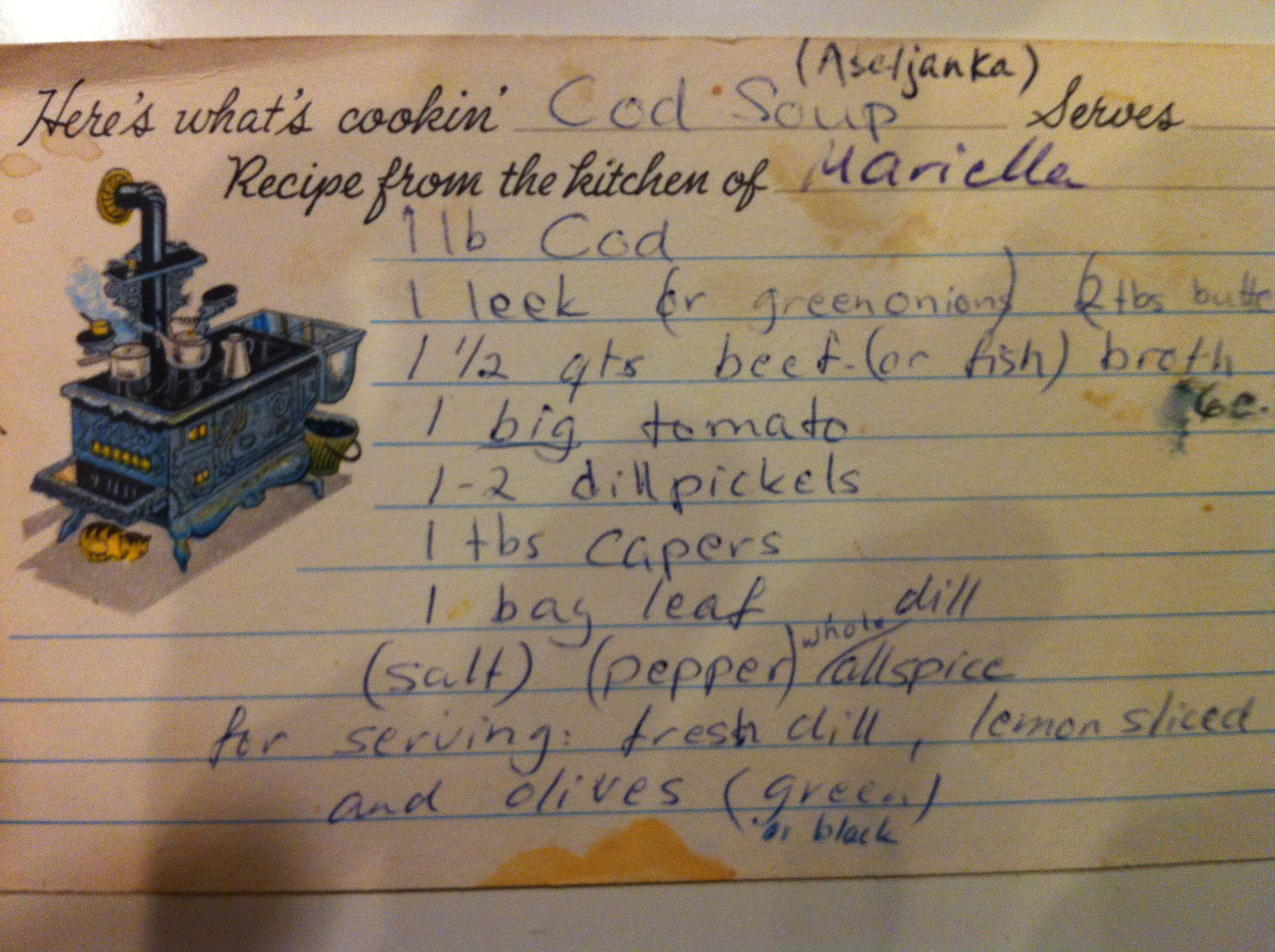
Cod Soup (Aseljanka or Seljanka)

1 lb. cod (fresh if you can get it, but frozen will do)
1 leek, sliced (or equivalent green onions)
2 T. butter (olive oil is fine)
1 1/2 qts. (6 c.) beef or fish broth
1 big tomato, diced
1-2 dill pickles, diced
2 c. diced, boiled potatoes (optional)
1 T. capers
1 bay leaf
dill, whole allspice, salt, and pepper to taste
(if you use canned broth, don’t add any more salt)
For serving–fresh dill, lemon slices, and sliced olives (green or black)

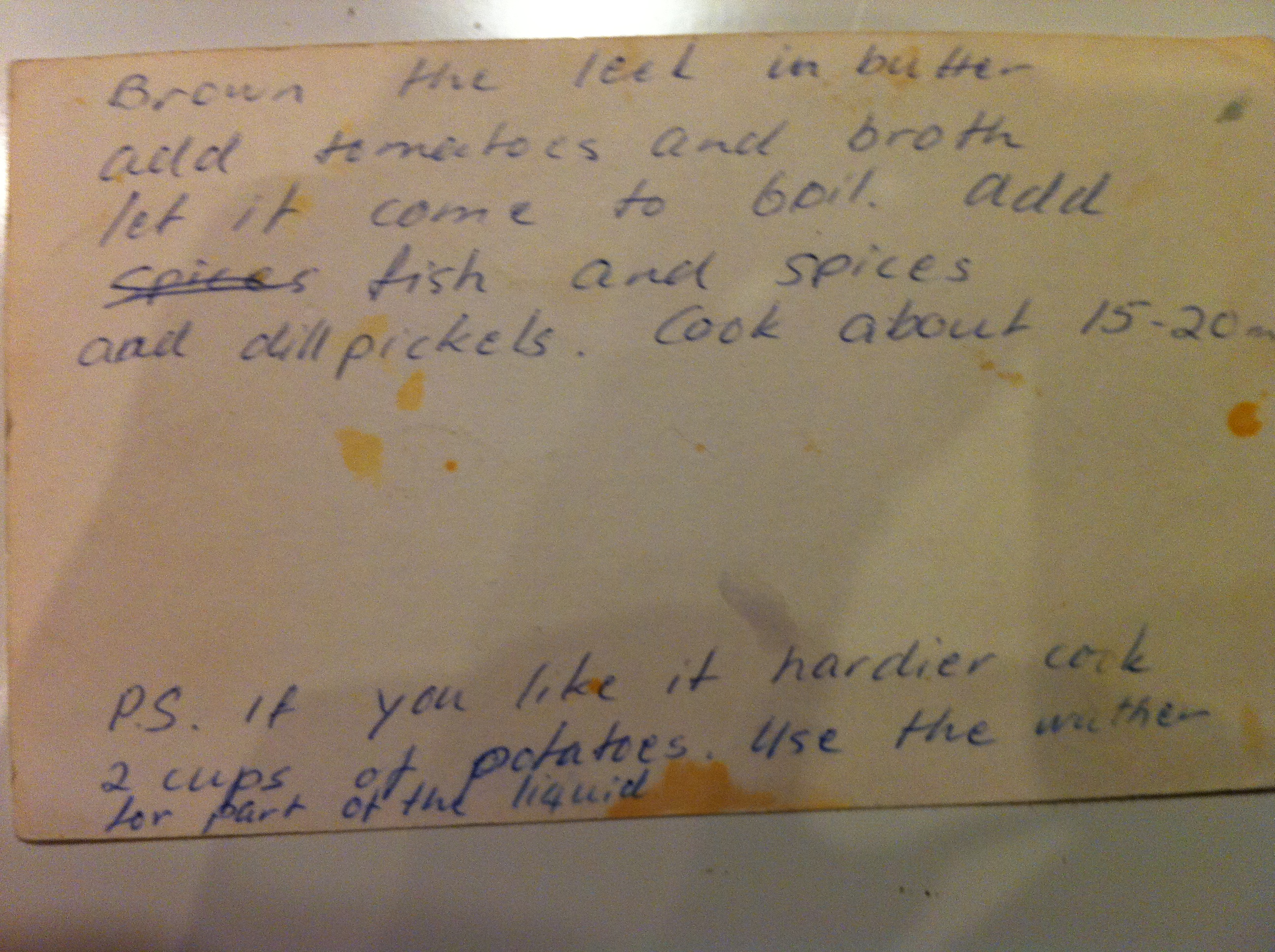
Brown the leek in the butter (or oil). Add tomatoes and broth. Let it come to a boil. Add fish, pickles, and spices. Cook about 15-20 minutes.

If you like it heartier, cook 2 c. diced potatoes separately, and then use the water as part of the liquid. Add with the tomatoes and broth for a total of 6 c. liquid.

(Sprinkle with fresh dill, add some olive slices and lemon slices. I usually also squeeze a quarter of lemon over each bowl for more lemon flavor.)

What Comes After Valentine’s Day

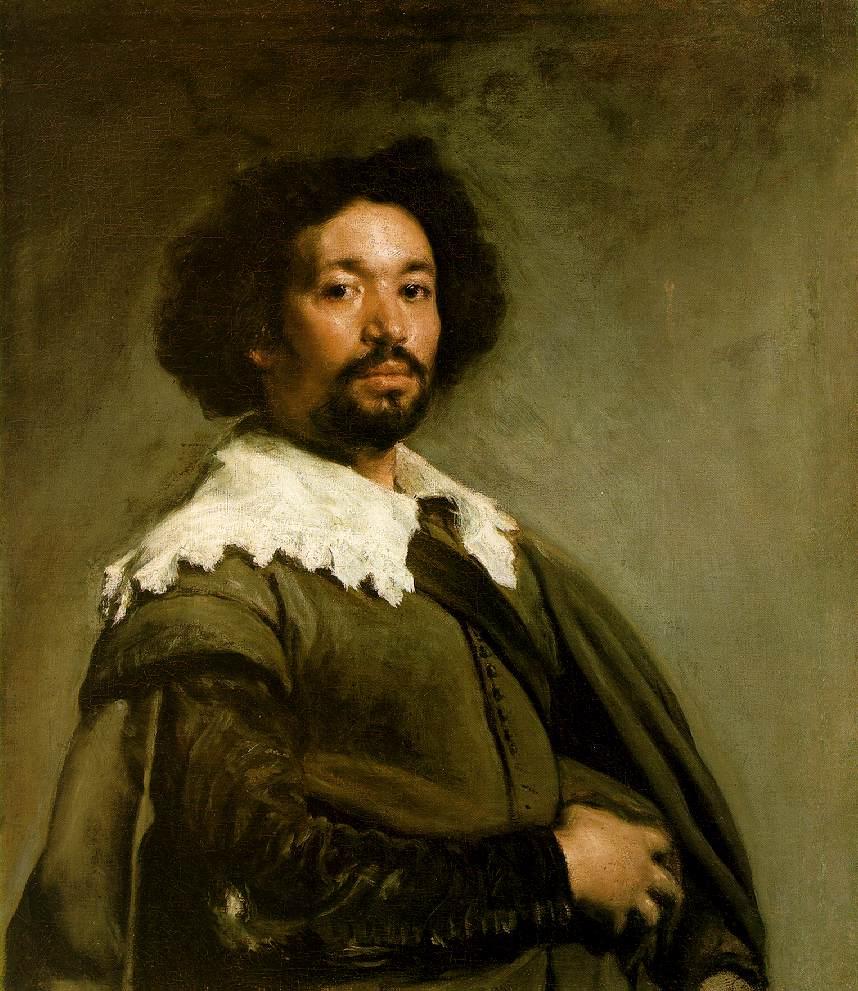
Diego Velázquez’s portrait of Juan de Pareja, c. 1650, in the collection of the Metropolitan Museum of Art, New York.

“Are you ready to make plans for New York now?” Bruce laughs a little hopelessly as he asks.

I feel the panic rise in my throat like a hairball, even though we are lying in bed. He thinks that a trip is in order for me to meet with my new editor at Oxford and with my agent, who has been unwilling to give me the time of day. He thinks my new relationship with Oxford will make her take notice. And last year we missed making our usual annual pilgrimage to see our dear friends there because I’d had a brain hemorrhage.

Bruce loves the city, loves clearing away all travel challenges with his efficient handling, loves touring galleries, sitting in cafes, and walking the bustling streets, hour upon hour. He loves the atmosphere of culture and excitement that we just don’t have in the city where we live, which is a suburb through and through. He loves to fall into step with our friend Craig, their long legs matching in pace and rhythm as they talk about Kant or Hegel while John and I try to keep up behind them. He loves revisiting his favorite painting in the Met, Velázquez’s portrait of Juan de Pareja, and holding my hand while we stand in front of the soulful eyes of a man long since dead whose pain and dignity we can still feel. He and I both love that a slave could hold himself so proudly, undaunted by the injustices of his world.

Last time we flew to New York, however, my feet swelled so badly I had to get a new pair of shoes. Now I have been diagnosed with arthritis in my right foot. Now I have mysterious and as yet undiagnosed damage in the left basal ganglia of my brain. Six months of doctor’s appointments and tests later, and I still feel uncertain in the world. I want to stay close to home.

So I cry and tell Bruce that I can’t do it. Not yet, while I don’t know what the future holds. I tell him angrily because I am afraid. I tell him that I know he wants to travel—he wants to take me to Berlin this summer and to Kenya someday soon—and that he may have gotten a bad deal when he married me just two and a half years ago. It has not been a very romantic time since we got married, especially the past year and a half since the brain hemorrhage—and now all this.

“It’s okay,” he says. “I may just have to travel by myself.”

I know this is his attempt at letting me off the hook, but it makes me cry harder. It makes me angrier.

“Oh, great,” I say. “It’s not like I don’t want to go. Don’t you understand? I can’t physically do it. I can’t pound the concrete with you and Craig. I can’t stand for hours on the hard museum floor. I will be in agony if I try to do that. But being left behind doesn’t sound like that nice of an alternative.”

We lie silent for a few minutes as disability wafts over us in the air from the slowly turning ceiling fan.

It is a couple of days before Valentine’s Day, but the day after I have a lumbar puncture scheduled for an analysis of my cerebrospinal fluid. We have no plans to celebrate the love holiday. We both know that it is a marketing ploy, and we agree with efforts to knock back the Romantic-Industrial Complex. We have also each spent enough Valentines Days alone over the years to have experienced the whole thing as yet another competitive way for some people to feel superior to others—“I’m loved and you’re not. So I’m a better person. Hah.” We are aware of all of that, but we also are just tired and distracted by my health and other depredations of things we hold dear (like our lives’ work in higher education). These things put a damper on the mood.

Bruce is no Newt, but I am also well aware that the divorce rate is higher among couples where one member becomes chronically ill or disabled, and I am well aware that men leave disabled women more often than the other way around. I have also been rejected many times in my life, and I wonder whether Bruce wouldn’t be happier with a spryer partner.

“You may not like this idea,” he says, and I steel myself. “But what about seeing the museum in a wheelchair?”

It is not what I feared, but exactly what I’d been thinking about myself—ways to make things at least somewhat possible. Accommodations, I’d told myself, that’s the key.

“I like it just fine,” I say, and I hear Bruce sigh a little with relief. “I mean, it’s not thrilling, but I have no problem with having a chair to sit in while I look at paintings.”

“We can just take cabs everywhere,” he adds.

“I like it,” I say. “You know, that seems a lot better to me than your leaving me, either on all your travels or completely.”

“That never occurred to me,” he says. Even though this is only one of the reasons I love him, it is a big deal. Maybe one day it will never occur to me either.